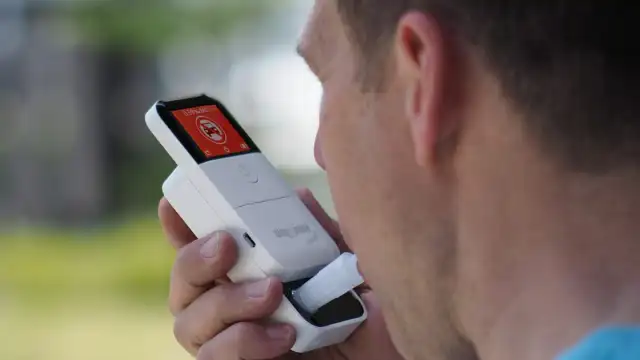
Many drivers across the UK use home breathalysers to check alcohol levels before driving. These small devices promise quick answers, but their accuracy can vary. Some models can estimate blood alcohol levels fairly well, while others may give results that differ from police-tested equipment. Most home breathalysers provide only an approximate guide, not a guaranteed measure of whether someone is under the legal limit.
- Home Breathalyser Accuracy Compared to Police Devices
- Technology and Sensor Differences
- Accuracy Margins and Legal Reliability
- Comparison of Home, Police, and Evidential Devices
- Key Factors Influencing Home Breathalyser Accuracy
- User Technique and Testing Timing
- Calibration and Maintenance Requirements
- Environmental Impacts on Readings
- Conclusion
Understanding how these devices compare with police-grade tools helps make better decisions before getting behind the wheel. Factors such as sensor type, calibration, and proper use can affect how close a result is to the true level. Even small differences matter, especially near the legal threshold.
Knowing the limits of home breathalysers helps prevent false confidence. By learning how accuracy, device quality, and use conditions connect, drivers can judge whether these tools offer enough dependability for safe choices.
Home Breathalyser Accuracy Compared to Police Devices
The accuracy of home breathalysers depends on sensor quality, calibration, and how well users follow instructions. Police models use advanced measurement systems with verified precision, while home units vary in design and reliability across different price levels. Those who want to find breathalyzer test online should understand these performance differences before buying.
Technology and Sensor Differences
Police breathalysers use fuel cell and infrared spectrometry sensors. These detect alcohol molecules through chemical reactions or light absorption, which gives consistent results even at low concentrations. Their technology separates breath samples accurately, removing interference from other substances.
Most home devices use semiconductor sensors that detect alcohol through an electrical change in a tiny chip. This method costs less but can react to temperature, humidity, or fumes, which affect readings. Single-use disposable models give one-time readings, while digital multiuse versions need calibration over time.
Fuel cell sensors measure alcohol in parts per million with high repeatability. In comparison, semiconductor units can misread if users blow too softly or test too soon after drinking. Sensor type strongly shapes the dependability of the result.
Accuracy Margins and Legal Reliability
Police breathalysers usually work within a ±3% margin of error, which means their readings remain dependable for legal use. Officers use these devices because they meet standards for court evidence.


Home units have a wider margin of error, often around ±5%. This difference may seem small, yet it can greatly affect whether a driver appears over the limit. Factors such as device age, calibration frequency, and storage conditions also change the result.
Readings from home models are not accepted for legal proof. If police stop a driver, only their tested equipment counts. Personal devices aim to inform, not to replace law enforcement tools. People who use them should treat outcomes as estimates rather than final proof of blood alcohol content.
Comparison of Home, Police, and Evidential Devices
Police carry handheld units for roadside use, then verify results with evidential machines at the station. Evidential instruments are larger, laboratory-grade systems that measure with extremely fine accuracy. They confirm results that may lead to prosecution or driving bans.
Police handhelds cost more than consumer devices because they include calibration systems and are serviced regularly. Home models often trade cost for durability and precision. Some higher-end personal units perform better, yet they still fall short of evidential machines.
The table below outlines approximate accuracy:
Device Type | Accuracy Margin | Use Case
Home breathalyser | ±5% | Personal estimate only
Police handheld | ±3% | Roadside screening
Evidential breathalyser | ±1–2% | Legal confirmation
Those aware of these differences can make better judgments before driving and assess their alcohol level more responsibly.
Key Factors Influencing Home Breathalyser Accuracy
Accurate results from home breathalyser test kits depend on proper handling, precise calibration, and the environment in which the test takes place. Small errors in use or storage can lead to results that differ from professional police devices.
User Technique and Testing Timing
How a person uses a personal breathalyser has a strong effect on its accuracy. Blow strength, breath duration, and waiting time after drinking each influence the reading. Alcohol left in the mouth from a recent drink can cause a much higher result than the actual blood alcohol concentration (BAC).
It is best to wait at least 15–20 minutes after a final drink before testing. This delay allows alcohol in the mouth and throat to dissipate. Following each device’s manual also helps prevent false readings. For instance, blowing too quickly can reduce sensor contact with the breath sample, while blowing too weakly may not trigger the test at all.
Many errors come from user habits rather than technical faults. By following consistent steps—waiting, reading the display correctly, and using a clean mouthpiece—a person increases the chance of an accurate result.
Calibration and Maintenance Requirements
Calibration keeps a consumer breathalyser close to the manufacturer’s accuracy level. Over time, the sensor wears down and the measurement shifts. Without recalibration, results may drift above or below the true BAC value.
Most home breathalysers need recalibration every six to twelve months or after a set number of tests. A calibrated unit aligns its sensor response with a known alcohol reference level. Devices with replaceable sensors often provide an easier way to maintain performance without professional service.
Users must also check for battery health, sensor damage, and firmware updates if the breathalyser supports them. A poorly maintained unit can show large variations between tests. Calibration and maintenance prevent small errors from turning into misleading data, giving a more dependable reading before a driver makes a decision.
Environmental Impacts on Readings
Environmental factors can shift how a home breathalyser behaves. High humidity, extreme cold, or heat can all affect sensor response. The same device might produce slightly different results indoors compared to outdoors due to temperature changes or air quality.
Strong odours or residual alcohol vapours near the device can also alter readings. Using a breathalyser in a well-ventilated area reduces this risk. Moisture in the breath path can interfere with electronic sensors, especially in cheaper units that lack protective coatings.
Storage conditions matter as well. Keeping a personal breathalyser in a car on a hot day or in a damp location can shorten its lifespan and lower accuracy. Storing it in a cool, dry place and allowing the device to reach normal room temperature before testing helps maintain consistent results.
Conclusion
Home breathalysers can help users gauge their alcohol level before driving, but their accuracy varies across models and conditions. Devices with fuel cell sensors often give results closer to professional standards, while cheaper semiconductor units may show wider differences.
Proper use has a strong influence on accuracy. Waiting at least 15 to 20 minutes after drinking, keeping the device calibrated, and following the manual reduces the chance of false results. Neglecting these steps can lead to readings that are too high or too low.
Legal limits in the UK remain strict, and only police‑approved devices give readings valid for enforcement. A personal test may suggest a person is under the limit, but official equipment could show otherwise.
Home units are most useful as a guide, not as proof of safety. The safest choice is to avoid driving after alcohol and allow more time for the body to clear it before getting behind the wheel.