Introduction to GMT Watch and Dual Time Watches
When it comes to watches, functionality meets style in fascinating ways. Two popular types that often spark debate among enthusiasts are GMT watches and dual time watches. Both serve the purpose of tracking time across multiple zones, but they do so with their unique twists. If you’ve ever found yourself torn between these two options or simply curious about what sets them apart, you’re not alone! Let’s dive deep into the world of horology and uncover the real differences between a GMT watch and a dual time watch—your next favorite accessory may just depend on it!
Understanding the Basics of Time Zones
Time zones are essential for keeping our world synchronized. They are regions where the same standard time is used, helping us coordinate activities across vast distances.
The Earth rotates on its axis, completing one full turn every 24 hours. This rotation creates natural divisions for measuring time. The globe is divided into 24 time zones, each typically spanning 15 degrees of longitude.
Greenwich Mean Time (GMT) serves as the reference point. It’s located at the Prime Meridian in Greenwich, England. As you move east or west from GMT, local times change by one hour for every 15 degrees.
Daylight saving time adds another layer of complexity to this system. Clocks may shift forward or back an hour depending on the season in certain regions.
Understanding these basics helps navigate travel plans and communications effortlessly across different parts of the globe.
The Features of GMT Watch
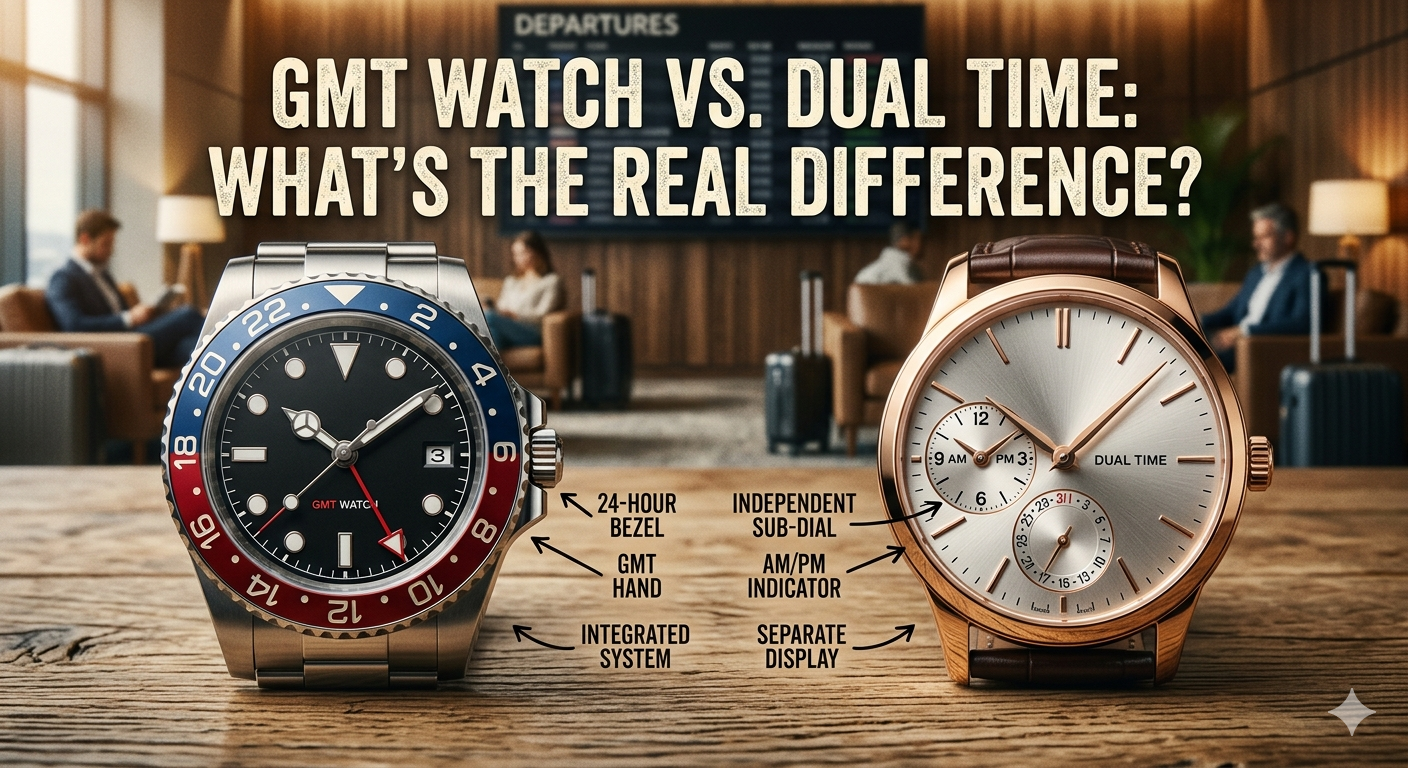
GMT watches feature a unique dual-time zone capability. This allows wearers to track time in two different locations simultaneously. Typically, they come with an extra hour hand that makes one full rotation every 24 hours.
Many GMT watches use a 24-hour scale on the bezel or dial. This design aids in distinguishing between AM and PM for the second time zone. The added functionality is ideal for frequent travelers and aviation professionals.



Durability is often key in these models, making them suitable for various adventures. They usually boast robust construction alongside water resistance features, ensuring reliability during outdoor activities.
Additionally, many brands offer stylish designs that blend function with fashion. Whether you prefer classic looks or modern aesthetics, there’s likely a GMT watch that suits your taste perfectly.
The Features of Dual Time Watches
Dual time watches are designed for those who need to keep track of multiple time zones simultaneously. They typically feature two distinct hour hands or digital displays, making it easy to read the time in both locations at a glance.
One common design includes an additional dial that shows the second timezone, often marked with different colors or styles for easy differentiation. This is particularly useful for travelers and professionals working across borders.
Many dual time watches also offer date functions. Some models even include world maps or indicators showing which regions correspond to specific times.
Additionally, these watches can come in various styles—analog, digital, or hybrid—catering to diverse preferences. With robust features like water resistance and luminous dials, dual time watches blend functionality with style seamlessly.
Pros and Cons of GMT Watch and Dual Time Watches
GMT watches offer a unique advantage for frequent travelers. They allow you to track multiple time zones simultaneously, making them ideal for those who fly often or conduct international business. The rotating bezel adds an extra layer of functionality, enabling easy adjustments.
However, GMT watches can be more complex than standard timepieces. Some users may find the additional features overwhelming. They also tend to come at a higher price point compared to simpler models.
On the other hand, dual-time watches are typically more straightforward and user-friendly. They provide clear views of two different time zones without unnecessary complications.
Yet, they might lack certain functionalities that seasoned travelers appreciate in GMT models. A dual-time watch usually doesn’t have the same aesthetic appeal as its GMT counterpart, especially among luxury options on the market today.
How to Choose the Right Watch for You
Choosing the right watch is a personal journey. Start by considering your lifestyle. Are you frequently traveling for work or leisure? A GMT watch might be more suitable, allowing easy tracking of multiple time zones.
Next, think about style and aesthetic preferences. Do you lean towards classic designs or modern looks? Dual time watches often offer versatility in design, catering to various fashion senses.
Functionality is also crucial. If you’re an adventurer who needs durability, look for robust materials like stainless steel or titanium in both types of watches.
Don’t forget comfort; a well-fitting strap can make all the difference during daily wear. Try on different styles to see how they feel on your wrist.
Consider your budget. Both GMT and dual time options vary widely in price range; find something that balances quality with affordability without compromising what you truly want.
Conclusion
Choosing between a GMT watch and a dual time watch ultimately comes down to personal preference. Each type has its unique charm and functionality.
If you’re frequently traveling or communicating across different time zones, the versatility of a GMT watch may appeal to you. Its ability to display multiple time zones simultaneously makes it an excellent companion for globetrotters.
On the other hand, if your needs are simpler—perhaps just tracking another local time—a dual-time watch could be more suitable. It’s easy to read and straightforward in design.
Consider your lifestyle, how often you travel, and what features matter most. The right choice enhances not just your wrist but also your daily routine. Both options offer style alongside practicality; it’s all about aligning them with your needs.
FAQs
What is a GMT watch?
A GMT watch is designed to display time in multiple time zones simultaneously. It typically features an additional hour hand that can be set independently, allowing the wearer to track two different times at once. This makes it particularly popular among travelers and professionals who work across various time zones.
How does a dual time watch differ from a GMT watch?
While both watches are used for tracking multiple times, a dual-time watch usually offers two separate dials or hands indicating local and home time. A GMT watch specifically uses one dial with distinct markings for 24-hour increments, making it easier to read the second timezone at a glance.
Can I use a GMT watch as my primary wristwatch?
Absolutely! Many people find that the functionality of a GMT watch not only serves their travel needs but also provides an elegant style suitable for everyday wear. Whether you’re on business trips or simply love globetrotting, it’s versatile enough for any occasion.
Are there specific brands known for quality GMT watches?
Several renowned brands specialize in high-quality GMT watches. Rolex is perhaps the most famous with its iconic Rolex Explorer II. Other notable mentions include Seiko, Omega, and TAG Heuer which offer reliable models catering to various budgets.
Do I need special skills to adjust these types of watches?
Adjusting your new gmt watch should be straightforward if you follow the manufacturer’s instructions provided in the manual—most modern designs have user-friendly mechanisms that don’t require specialized skills or tools.
Which type of person would benefit more from using a dual-time rather than a gmt model?
Individuals who often stay within one timezone but still want awareness of another location might prefer dual-time watches due to their more intuitive design featuring separate dials or indicators for each zone. They’re also great options if clarity and ease of reading are priorities!
Understanding your needs will help clarify whether you lean towards buying either type of sophisticated tool on your wrist!