Introduction to Can Dogs See in the Dark
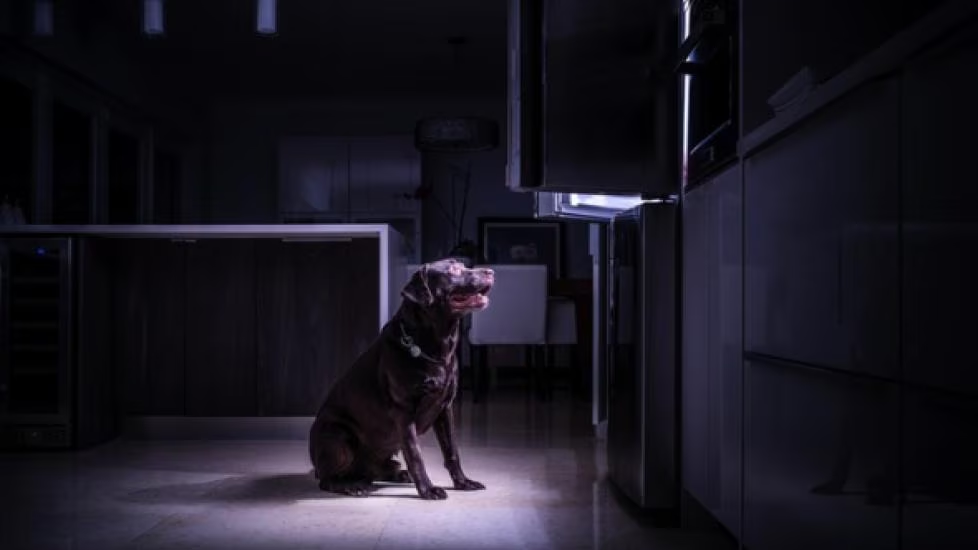
Have you ever wondered if your furry friend can navigate the backyard at night? As the sun sets and darkness creeps in, it’s fascinating to consider how dogs perceive their surroundings. While we humans rely heavily on light, our canine companions may have a different approach to seeing in low-light conditions. With their keen senses and unique eye structure, dogs possess some remarkable abilities when it comes to vision. Let’s dive into whether dogs truly can see in the dark and unravel the mysteries behind their nighttime sight!
- Introduction to Can Dogs See in the Dark
- The anatomy of a dog’s eye
- How dogs’ vision differs from humans’
- Can dogs see in the dark?
- Factors that affect a dog’s night vision
- Tips for helping your dog see better in low light conditions
- Conclusion: Understanding your dog’s vision and how to care for them in the dark
The anatomy of a dog’s eye
A dog’s eye is fascinating and uniquely adapted for their lifestyle. The structure allows them to see well in dim light, which is crucial for their natural instincts.
One of the key players in this anatomy is the tapetum lucidum. This layer reflects light back through the retina, enhancing their night vision significantly. It gives dogs that characteristic glow when a light shines on them at night.
Additionally, dogs have more rod cells than humans do. Rod cells are responsible for detecting motion and seeing in low-light conditions. This adaptation helps them hunt or explore during twilight hours.
However, they lack cone cells compared to us, which means they don’t perceive color with the same intensity. Instead of a vibrant world filled with hues, dogs see mainly shades of blue and yellow.
This unique design plays a vital role in how they navigate their surroundings day or night.
How dogs’ vision differs from humans’
Dogs perceive the world differently than we do. Their visual system is designed for a different purpose, focusing more on movement and less on color.
While humans have three types of color receptors, or cones, dogs possess only two. This means they see primarily in shades of blue and yellow. The vibrant reds and greens that captivate us are often indistinguishable to them.


Additionally, dogs have superior night vision thanks to a special layer called the tapetum lucidum. This reflective tissue enhances their ability to see in low light by bouncing light that passes through the retina back into their eyes.
Their field of view is also broader, allowing them to detect motion from various angles without turning their heads. However, this comes at a cost: detail perception is not as sharp as it is for humans, making close-up objects appear blurrier to our furry friends.
Can dogs see in the dark?
Many dog owners wonder about their pets’ abilities in low-light situations. Can dogs see in the dark? The answer is a bit nuanced.
Dogs do possess better night vision than humans. Their eyes have a higher number of rod cells, which are responsible for detecting light and movement. This means they can navigate surprisingly well when the sun goes down.
However, this doesn’t mean dogs can see perfectly in complete darkness. They still rely on some ambient light to make sense of their surroundings.
Moreover, dogs have a special reflective layer behind their retinas called the tapetum lucidum. This layer enhances their ability to see at night by reflecting any available light back through the retina, giving them that extra edge after sunset.
So while your canine companion may not be able to read in total darkness, they certainly excel compared to us mere humans!
Factors that affect a dog’s night vision
Several factors influence a dog’s ability to see in low light. One of the primary elements is the tapetum lucidum, a layer of cells behind the retina. This reflective surface enhances their night vision by bouncing light back through the retina.
Additionally, breed plays a significant role. Some breeds have evolved with better night vision for hunting or herding purposes. For instance, working dogs often excel in dim environments compared to others.
Age can also impact vision quality. As dogs grow older, they may develop conditions like cataracts that hinder their sight at night.
Overall health matters too. A dog suffering from certain health issues might experience impaired vision regardless of its natural abilities or breed traits. Understanding these factors can help pet owners provide better care and support for their furry companions during nighttime adventures.
Tips for helping your dog see better in low light conditions
To enhance your dog’s night vision, consider using reflective gear. Collars and harnesses made with reflective materials can help keep your dog visible during nighttime walks.
Moreover, ensure that their environment is safe and familiar. Removing obstacles in the yard or home can prevent accidents when light is low.
Training sessions in dim conditions can also improve their confidence at night. Gradually introduce them to darker spaces while rewarding positive behavior.
You might also want to invest in a good quality flashlight or headlamp for evening outings. This helps both of you navigate safely through poorly lit areas together.
Regular eye check-ups are essential. An annual visit to the vet ensures that any vision issues get addressed promptly before they impact your dog’s ability to see in dim light.
Conclusion: Understanding your dog’s vision and how to care for them in the dark
Understanding your dog’s vision and how to care for them in the dark is essential for every pet owner. Dogs possess unique eyesight that allows them to navigate their environment differently than humans. Their ability to see well in low light is attributed to the structure of their eyes, particularly the tapetum lucidum, which enhances night vision.
However, various factors can influence a dog’s performance in dim conditions. Age, breed, and health issues all play significant roles. As responsible pet owners, we should ensure our furry friends are comfortable and safe during nighttime adventures or walks.
Providing adequate lighting during outdoor activities can help dogs feel more secure as they explore after dusk. You might consider reflective gear or LED collars for better visibility too. Furthermore, maintaining regular veterinary check-ups will help you keep track of any changes in your dog’s eyesight over time.
By understanding these aspects of canine vision and taking proactive steps to support your dog at night, you enhance their quality of life while strengthening your bond with them on those late-night strolls or playful evenings outdoors.