Trying a new hairstyle sounds exciting until the change starts to feel real. A fringe can change how the forehead looks almost immediately. A shorter cut can bring more attention to the jawline than expected. Even taking off a few inches can shift the balance of the whole face. That is why so many people hesitate before a salon appointment, especially when the result may take months to grow out.
- Why haircut decisions feel more stressful than they should
- Seeing the style on your own face changes the decision
- Trend photos help, but they are not personal
- Where face shape analysis becomes useful
- Who benefits most from virtual hairstyle previews
- How to get a more believable preview
- From preview to salon conversation
- Useful, but still not magic
- A better way to make hair decisions
For years, most people made hair decisions by guessing. They saved celebrity photos, asked a stylist for advice, or tried to imagine how a certain cut might look in real life. The problem is that inspiration is not the same as personalization. A style that looks effortless on someone else may feel completely different on your own face.
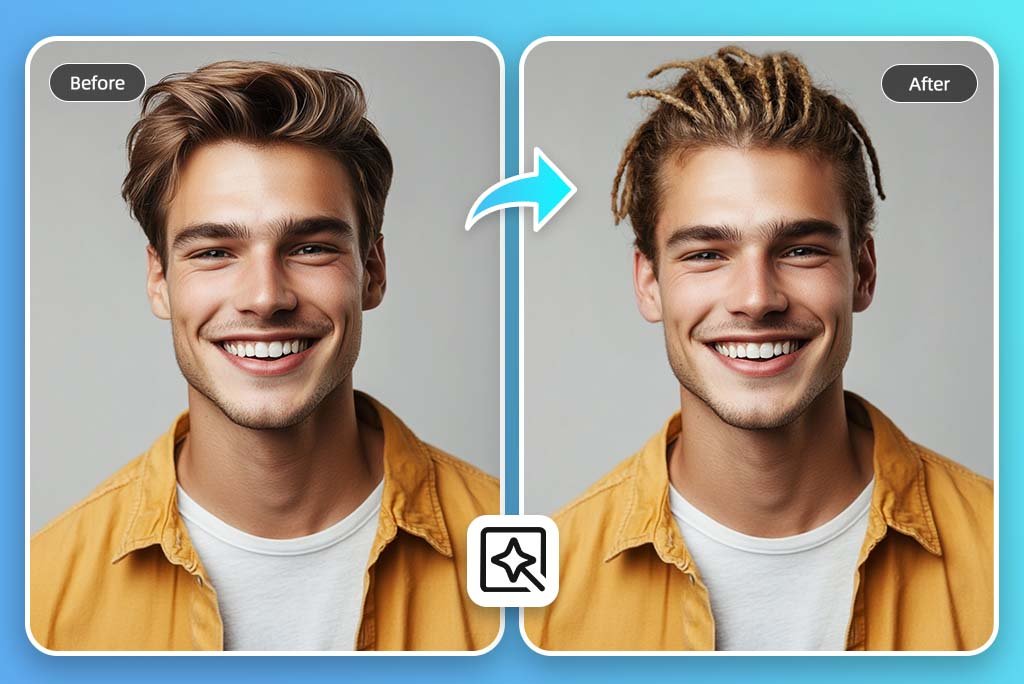
This is where AI hairstyle try-on has become genuinely useful. Instead of relying on guesswork alone, users can now test possible looks on their own photo before making a real change.
Why haircut decisions feel more stressful than they should
Haircuts carry a different kind of pressure from most beauty choices. Clothes can be changed in minutes. Makeup can be removed the same day. Hair is different. Once it is cut, you usually have to reshape it, wait for it to grow, or live with the result for a while.
That pressure becomes stronger when someone is considering bangs, a bob, short layers, or a major length change. In those moments, the real question is usually not whether a style is trendy, but whether it will actually feel right on them.
This is why a virtual hairstyle preview can be so helpful. It turns a vague idea into something visible and much easier to judge.
Seeing the style on your own face changes the decision
A good digital preview tool lets users upload a clear photo and compare different hairstyles on their own face. Instead of imagining what curtain bangs, soft layers, a blunt bob, or longer waves might look like, they can evaluate those options more directly.
The value is not just novelty. Seeing the style on your own features changes the whole decision-making process. It becomes easier to notice whether a cut makes the face look longer, softer, sharper, or more balanced. That kind of preview is far more useful than staring at a reference photo of someone with completely different proportions.



Platforms such as Righthair.ai have made this process much more accessible. A practical example is this AI hairstyle try-on tool, which helps users explore haircut directions on their own image before committing to a real salon change.
Trend photos help, but they are not personal
It is easy to fall in love with a hairstyle online. Social platforms are full of polished cuts, flattering angles, and perfectly styled results. But real-life hair decisions are not made under studio lighting, and most people do not have the same face shape, hair density, or styling routine as the person in the reference photo.
This is one reason people end up disappointed after copying a look they loved on someone else. A haircut can be beautiful in general and still feel wrong on a specific person. Heavy bangs may close off the forehead too much. A blunt cut may make the jaw feel stronger than expected. Long flat hair can sometimes pull the face downward instead of framing it well.
That is why a virtual preview works best when it is used as a personal filter rather than a trend machine. The goal is not to copy a style perfectly. The goal is to understand whether the direction fits you.
Where face shape analysis becomes useful
Hairstyles are not only about trends or length. They are also about visual balance. That is where face shape analysis becomes helpful.
Instead of reducing people to rigid labels, face shape analysis helps explain how certain cuts interact with features such as forehead width, cheekbone line, jaw shape, and overall facial proportions. Some people look better with softness around the cheeks. Others benefit from height at the crown, lighter movement around the jaw, or a cleaner outline that prevents the face from feeling too heavy.
When users combine a hairstyle preview with face shape analysis, the result becomes much more useful than guesswork alone. They are not just testing random looks. They are comparing options with a better understanding of why a style feels flattering or not.
Who benefits most from virtual hairstyle previews
Almost anyone can use digital hairstyle previews, but they tend to be especially helpful for people making changes that feel higher-risk.
Someone thinking about bangs often wants reassurance before covering part of the forehead. Someone considering a bob or shorter cut may want to know whether the new shape will feel sharper, wider, or more structured than expected. People with fine hair often want to compare styles that create more visible fullness. Others simply want a clearer idea of what suits their face before they walk into a salon.
In all of these cases, a virtual hairstyle preview reduces emotional guesswork. It does not make the decision for you, but it gives you something far more useful than imagination alone.
How to get a more believable preview
Digital previews are only as helpful as the image you start with. A few small adjustments can make the result much more realistic.
Use a front-facing photo rather than a slightly turned selfie. Keep the lighting soft and even so the jawline, cheek area, and forehead are clearly visible. Avoid filters, beauty edits, or heavy shadow across the face. If possible, keep the hair pulled back enough to show the natural outline of the face.
It also helps to compare more than one option in the same family. Instead of testing only one fringe or one length, compare a few close variations. A softer bang, a longer curtain fringe, or a slightly different cut line can change the overall impression more than people expect.
These details improve the quality of the preview and make the result more useful in real decision-making.
From preview to salon conversation
One of the most practical benefits of virtual hairstyle tools is that they make salon communication easier. Many people know the feeling of wanting something “soft,” “natural,” or “lighter around the face” without knowing how to explain that clearly. Those words can mean very different things depending on the stylist and the haircut.
A saved preview creates a stronger starting point. It gives the stylist something visual to react to, refine, and adapt based on texture, maintenance level, and real hair behavior. That does not guarantee an identical outcome, but it usually leads to a much clearer consultation and fewer surprises.
In that sense, this kind of tool is not just about trying hairstyles for fun. It is also a practical communication aid.
Useful, but still not magic
A digital preview is helpful, but it is still a preview. Photo angle, lighting, hairline visibility, natural texture, and styling effort all influence how close the final haircut will feel to the simulated version. A tool can help people choose direction, but it cannot fully replace a stylist’s judgment or the reality of how hair behaves day to day.
That said, even an imperfect preview is often much more helpful than guessing. For many people, seeing a possible outcome on their own face is enough to narrow choices, reduce stress, and avoid the most common haircut regrets.
A better way to make hair decisions
Choosing a new hairstyle does not have to feel like a leap of faith. With better previews and a clearer sense of facial balance, people can make decisions that feel more informed and more personal.
That is the real value of AI hairstyle try-on. It helps turn haircut decisions from abstract ideas into something visible, practical, and easier to trust. And for many people, that is exactly what makes the salon appointment feel less like a gamble and more like a plan.