

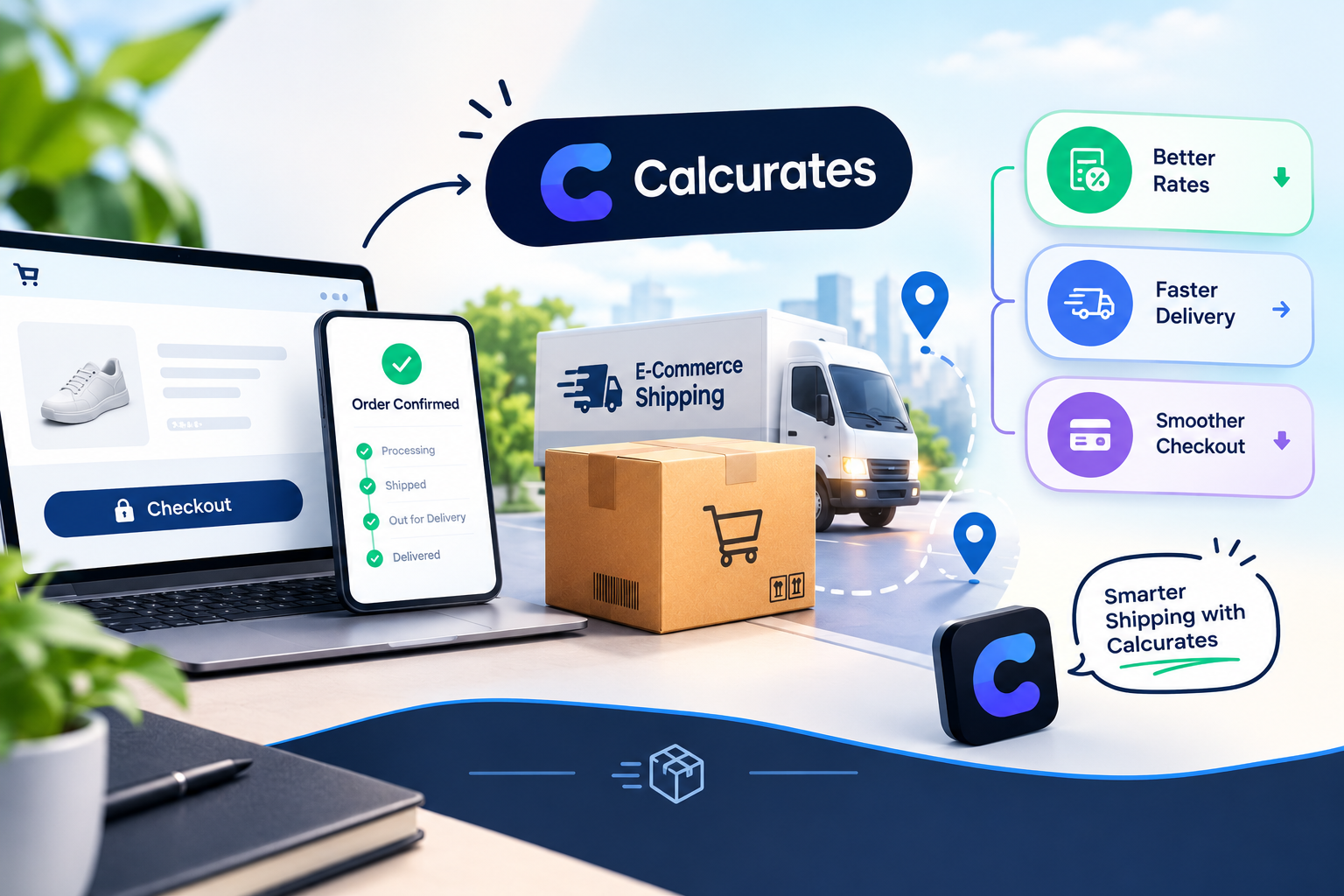
Shipping is far more than a last-mile delivery between a warehouse and the door of the customer when it comes to an online store. It’s a crucial element of the shopping experience, and can be a factor in whether a visitor completes an order or leaves the cart. Unexpected costs, delivery uncertainties, restricted shipping options, and the complex ordering process can all cause friction.
The key to a successful ecommerce shipping strategy is to deliver accurate information to customers and simplify the shipping process for the merchant. Solutions like Calcurates can allow online merchants to show shipping costs, shipping options, estimated delivery times, picking up options, and duties right at checkout.
Why Accurate Shipping Information Matters
Customers want to know the price and when they can expect their order before they make a purchase. If the shipping charge shown at the cart suddenly rises at the checkout, they may feel cheated and abandon the cart.
Some important factors to take into consideration are package weight, size, destination, product type and the carrier service chosen for the package. Business owners need to go back and check their shipping procedures often, so that the rates they are offering to customers match their shipping needs.
Businesses can take advantage of dedicated shipping calculation features to handle various shipping rate scenarios and help customers better understand their shipping costs. For stores that rely on major carriers, an ups shipping integration can also help connect carrier services with the checkout process, making it easier to provide customers with relevant shipping options and rates.
Offer Shipping Methods That Match Customer Needs
Not all customers are interested in the same delivery service. One shopper might seek a budget-busting, standard service, while another might require an urgent buy with an expedient service.
Providing multiple shipping options that are relevant to the customer will provide them with flexibility. These may range from normal, express, next day or local delivery.
But, an overload of options can simplify the checkout process. Stores need to emphasise services that will provide value to customers and make it clear what the price and timeframe for delivery will be.



Make Delivery Dates Easy to Understand
Speed of shipping and delivery dates are not synonymous. A time frame like 2–4 business days can create uncertainty about when a package will arrive for customers.
Showing an estimate of delivery dates can help make checkout more transparent. Customers are not making a choice between a service without knowing the final timeframe, but they are able to compare the options in terms of both price and estimated delivery time.
When estimating delivery dates, businesses should give consideration to processing time, weekends, holidays, destination and carrier schedule. Having more accurate information can help set expectations and eliminate questions about “slow” orders.
Manage Shipping Rules Efficiently
Shipping needs can get complicated as your online store expands. The rates may vary depending upon the product, some destinations might have restrictions and some orders may be eligible for special shipping conditions.
These scenarios can be easier to handle if you have clear shipping rules. These rules may be of any type, such as product category or order value, quantity, location, weight, etc.
A centralized shipping management strategy can moreover minimize manual work and facilitate the updating of policies as calls for evolve.
Prepare for International Orders
There are extra things to consider when importing from overseas. Depending on the destination and the kind of goods being purchased, duties or other charges may be applicable and the customer will have to pay those fees.
When these costs are not properly explained to customers, they could come as a shock when they receive their package or they might not make an order at check-out. Merchants should make clear information regarding duties and delivery charges before the order is placed wherever possible.
International shipping details that are clearly displayed can help establish trust and provide more predictable and predictable cross-border shopping experiences.
Include Pickup Where It Makes Sense
For brick-and-mortar stores or those with fulfillment centers nearby, local pickup might be another convenient choice. A few customers would prefer to pick up their order rather than wait for home delivery.
Stores should make available the location where items may be picked up, when they are available for pickup, who can pick up and what they must bring, if applicable. Including options for pick-up with delivery can help provide consumers with more choice over how their goods are delivered.
Keep the Checkout Experience Simple
The best shipping options can be undermined by a confusing checkout process. Customers should be able to easily see all the ways, price and delivery time.
Don’t take any unnecessary steps, and make shipping information easy to scan. There should be no confusing menus or unclear labels.
By streamlining the checkout process and ensuring accurate shipping estimates, this can minimize hesitation and make the purchasing experience more seamless for customers.
Common Shipping Challenges to Watch
Typical issues with eCommerce shipping include incorrect shipping rates, inconsistent rules, lack of delivery estimates, limited carrier options, and troubles with handling international orders.
One of the challenges is keeping shipping information as the business grows. Adopting a strategy that is successful for a small business and their limited number of products can be problematic as the company expands to operate across multiple regions and hundreds of orders.
Frequently auditing shipping performance and customer reviews can help merchants determine where they need to make changes.
Conclusion
The key components of e-commerce shipping are accuracy, transparency, and flexibility.Accuracy, transparency, and simplicity are the pillars of effective e-commerce shipping. Consumers must be aware of the various delivery methods and their associated costs, as well as the expected delivery date for the order and whether any extra charges are to be incurred.
For merchants, the idea is to deal with these details without introducing undue complexity in operations. An e-commerce shipping solution like Calcurates can assist businesses set their shipping charges, process, shipment date, pick-up and commitments during checkout, whilst displaying useful information to customers.
Online stores can build a smoother purchasing journey and make the delivery expectation much clearer with improvement in the behind-the-scenes shipping process and the customer-facing checkout experience.