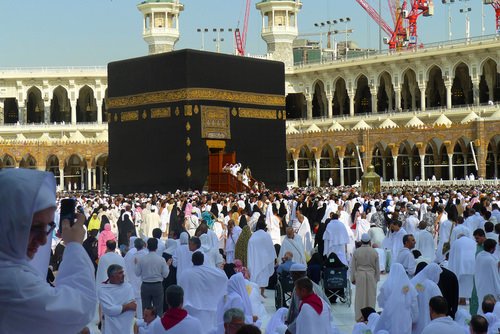
Scroll through social media in Ramadan and you will see it everywhere. Clips of the Kaaba at night, thousands of people breaking their fast together, and pilgrims sharing their first look at the Grand Mosque. Umrah content has become some of the most watched faith content online, and a lot of it is made by British Muslims.
- First, check your intention
- The rules on filming in the holy mosques
- Good etiquette: what is usually fine
- The best moments to capture (without the phone taking over)
- Tips to stay present
- Planning your trip from the UK
- Ramadan: the busiest time to film, and to go
- Before you fly: a short checklist
- Quick questions
- Can I take photos in the Grand Mosque?
- Can I post my Umrah on social media?
- Is it better not to film at all?
- Final word
It is easy to see why. For many people, Umrah is a once-in-a-lifetime trip, and they want to share it with family back home. But filming in the holiest place in Islam is not the same as filming a holiday in Spain. There are rules, there is etiquette, and there is the bigger question of why you are filming at all.
This guide is for UK pilgrims who want to capture their trip in a respectful way. It covers what you can and cannot film, how to keep your phone from taking over, and how to plan the trip itself.
First, check your intention
In Islam, the reward for a good deed depends on the intention behind it. Umrah is an act of worship, done for Allah alone. Scholars warn about riya, which means doing good deeds so that other people will see and praise you.
This does not mean you can never take a photo. Many people take a few pictures to remember the trip or to show elderly parents who cannot travel. The problem starts when filming becomes the main reason for being there, or when you are more worried about likes than about your prayers.
A simple test is to ask yourself: “Would I still do this if no one ever saw the video?” If the answer is no, it might be time to put the phone away.
The rules on filming in the holy mosques
Saudi authorities have become stricter about filming in the Grand Mosque in Makkah and the Prophet’s Mosque in Madinah. The aim is to protect worshippers’ privacy and to stop people blocking walkways while they film.
In general:



- Do not film other worshippers without their permission. This includes people praying, crying or making dua. Many people find this very upsetting.
- Do not stop in busy areas to film. Standing still during tawaf or sa’i to record a video slows down the crowd and can be dangerous.
- Avoid tripods, selfie sticks and big cameras. These are often not allowed and get in other people’s way.
- Do not go live during prayer times. Your focus should be on your own prayer.
- Follow what staff tell you. Mosque staff can ask you to stop filming, and in some cases delete what you have recorded.
The rules can change, and they are often enforced more strictly in Ramadan. If in doubt, do not film.
Good etiquette: what is usually fine
Most pilgrims take a few photos without any problem. Here are some ways to do it respectfully:
- Take a quick photo, then put the phone away. A few seconds is enough to keep a memory.
- Film from the edges. Upper floors and the outer courtyards give good views without getting in anyone’s way.
- Film yourself or your family, not strangers. Make sure other people’s faces are not the focus of your shot.
- Keep your voice down. Talking to the camera in the middle of the mosque disturbs people who are praying.
- Save the long videos for outside. Your hotel room, the streets of Madinah or historic sites on a ziyarat trip are better places to talk to the camera.
The best moments to capture (without the phone taking over)
You do not need to film everything. A few short, simple clips will mean more to you later than hours of shaky footage. Many pilgrims remember these moments most:
- Your first sight of the Kaaba. Many people choose not to film this at all, so they can take it in fully. You can always take a photo later.
- Iftar in Ramadan. In the holy month, the courtyards fill with people sharing dates, Zamzam water and laban at sunset. It is one of the most moving sights of the year.
- Madinah at night. The Prophet’s Mosque, with its white minarets and large umbrellas, looks calm and beautiful after Isha.
- Your family. A short clip of your parents or children after finishing Umrah will mean more to you in years to come than anything else.
Tips to stay present
Phones can easily take over a trip. Here are a few ways to keep yours in its place:
- Turn off notifications for social media while you are in the mosque.
- Set times for your phone, such as after Isha, to reply to messages and post updates.
- Write a short diary instead. A few lines each night can capture how you felt better than any video.
- Post when you get home. You do not need to share in real time. Posting after the trip lets you focus while you are there.
- Keep the phone for what you need. Your Nusuk permit, maps and family group chat are the most important things on it.
Planning your trip from the UK
Before you think about filming, you need to plan the trip itself. For most people in the UK, the easiest way is to book a package that covers flights, visa, hotels in Makkah and Madinah, and transport between the two cities.
Prices depend on three main things: when you travel, how close your hotel is to the mosque, and how many nights you stay. A 7-night trip with 3-star hotels can start from around £450 to £500 per person, sharing a room of four. Hotels with a view of the Kaaba can cost well over £1,000 per person.
When you compare Umrah packages from UK travel agents, check these things:
- ATOL protection. Every UK package with flights should be ATOL protected. You can check the number on the Civil Aviation Authority website.
- Hotel names and walking times. Ask how many minutes it takes to walk to the mosque. You may go five times a day.
- Departure airport. Many packages fly from London Heathrow, Gatwick, Manchester or Birmingham.
- What is not included. Meals, travel insurance and the meningitis ACWY jab are often extra.
- Payment plans. Many UK agents take a deposit and let you pay the rest monthly, with no interest.
Ramadan: the busiest time to film, and to go
Ramadan is when Umrah content is shared the most, and when the mosques are at their busiest. Ramadan 2027 is expected to start around 8 February and end around 9 March, depending on the moon.
The mood in Ramadan is special. Hotels near the Grand Mosque serve suhoor from around 3am. At sunset, people share food in the courtyards with whoever is sitting next to them. Night prayers go on for hours, and in the last ten nights, many people stay in the mosque until Fajr looking for Laylatul Qadr, the Night of Power.
It is also the time when filming rules are taken most seriously, because the crowds are so large. If you go in Ramadan, be extra careful about where you stand and who is in your shot.
Prices are higher in Ramadan, and the last ten nights cost the most. A 7 to 10 night trip can range from around £680 to over £1,200 per person, depending on the hotel. If you want to go next year, look at Ramadan Umrah packages soon. The last ten nights usually sell out months in advance, and booking early also gets you better prices.
Before you fly: a short checklist
- Passport valid for at least six months
- Visa and Nusuk permit sorted
- Meningitis ACWY jab, at least ten days before travel
- Travel insurance
- A power bank and a plug adaptor
- Offline maps of Makkah and Madinah
- Notifications switched off for social media
Quick questions
Can I take photos in the Grand Mosque?
Most people take a few quick photos without any problem. Just do not film other people without asking, do not block walkways and do what staff tell you.
Can I post my Umrah on social media?
Yes, but think about why you are posting. Sharing a few memories with family is very different from making content to gain followers.
Is it better not to film at all?
Many pilgrims choose to film very little, mainly on their first visit. It is your choice, but most people say they remember the moments they did not film the most.
Final word
There is nothing wrong with keeping a few memories of your Umrah. But the best moments of the trip often happen when your phone is in your pocket. Check your intention, follow the rules, respect the people around you and save most of your sharing for when you get home.
Plan the trip well, book with an ATOL-protected UK agent, and give yourself the space to be fully present. That is something no reel can capture.