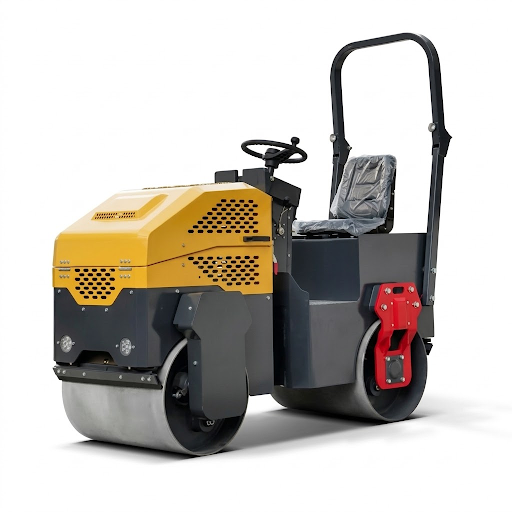
Every mile of asphalt, every gravel driveway, and every packed subgrade under a warehouse floor owes its longevity to one unglamorous step: compaction. The machine that gets it done is the road roller, and the difference between a good one and a mismatched one shows up years later in the form of ruts, cracks, and pothole repairs. For a paving contractor or a public works crew, that means the roller choice is not a cosmetic decision but a durability one.
This guide is written for buyers and site managers who want a clear framework rather than a spec-sheet dump. What kind of compaction does a given job need? Where does a single-drum unit shine, and where does a tandem model earn its keep? How does vibration affect the underlying material? Small paving firms, municipal roads teams, and site prep contractors all answer these questions differently, but the underlying logic stays the same. Get the roller right, and the surface it leaves behind holds up under traffic, weather, and time.
Why Compaction Determines Pavement Life
A finished road surface is only as strong as the layers underneath it. Loose subgrade settles under traffic, water infiltrates the void space, and freeze-thaw cycles pry cracks open until pavement failures appear. Proper compaction closes those voids at every layer of the build, from the compacted native soil up through the base course and the asphalt lift on top. Skip the step at any level and the surface will fail early, no matter how expensive the wearing course was.
That is why paving contractors treat their road roller lineup as a core asset rather than an afterthought. The rolling pattern, the number of passes, and the drum weight all determine whether a specification-grade density gets hit on the first attempt or requires rework the next morning. On public infrastructure jobs where density testing is contractual, that difference is directly measurable in retained payment and reputation.
Static Weight Versus Vibration
Two forces do the compaction work: dead weight pressing down and vibration shaking particles into their tightest packing. Static machines rely purely on mass, which suits sensitive surfaces such as thin asphalt lifts and finish passes where over-vibration would cause cracking. Vibratory machines add high-frequency oscillation that drives density much deeper into the material, which is what most base and subgrade work demands. Modern rollers usually offer both modes so the operator can dial vibration off for the last passes and leave a smooth, tight finish.
Choosing the Right Roller Class for the Job
Roller selection tends to fall into three broad buckets: single-drum, tandem, and pneumatic-tire units. Each has a home on the job site, and mixing them across a paving crew usually produces better results than trying to compact everything with one machine.
Single-Drum Rollers for Base and Subgrade
Single-drum machines pair a steel vibrating drum on the front with rubber-tired drive wheels on the back. The design puts the compaction energy exactly where subgrade and base work needs it, while the traction tires push the machine across soft or granular material without bogging down. Site prep contractors compacting road bases, building pads, and dam fills reach for this class first. Larger models handle interstate and industrial projects; compact versions serve residential streets and smaller lots without wasting fuel or footprint.
Tandem Rollers for Asphalt Finish Work
Tandem rollers place a steel drum at each end and are the standard finishing tool on asphalt paving. Their symmetrical geometry produces a uniform surface without the marks a rear tire leaves on hot mix. Articulated steering and split drums allow the operator to hold precise lines around curbs and manholes. On tight urban work, small tandem units are almost the only practical choice; on highway paving, larger tandems run behind the paver in coordinated rolling patterns to hit specified density before the mat cools.



Pneumatic-Tire Rollers for the Middle Pass
The third machine on a good paving train is a rubber-tired roller. Its overlapping tires knead the asphalt mat as it passes, sealing surface voids and blending aggregate with binder in a way steel drums cannot match. This intermediate rolling step is where the surface actually gains its long-term impermeability against water intrusion. Skipping the pneumatic pass may not show up on day one but almost always does within a few winters. MMS INDUSTRIAL and other established suppliers stock all three classes so paving crews can build a coordinated fleet rather than picking up mismatched machines over time.
Operating Practices That Protect the Investment
Even the best-specified roller loses ground if the operator does not follow good practice. Rolling patterns should be planned before the paver moves, with breakdown, intermediate, and finish passes assigned to specific machines and specific temperature windows. Rolling too cold and the mat locks up before density is achieved; rolling too hot and the drum picks up material and leaves marks. Water spray systems on drums must be checked at the start of every shift, since a dry drum on hot asphalt sticks immediately and ruins the finish.
Maintenance is equally decisive. Vibratory bearings, scraper bars, water pumps, and drum drives all wear with hours and need scheduled service. Small oversights, such as running a low-water tank into a hot mat or ignoring a dragging scraper, cause damage that costs multiples of the routine maintenance skipped. Operators who treat the roller as the last quality checkpoint, not just the last piece of equipment through, tend to run the same machine for many more years than those who see it as a rolling weight.
Fuel, Emissions, and Operator Comfort
Newer roller generations bring meaningful reductions in fuel burn and emissions, plus enclosed cabs that cut operator fatigue on long paving days. Vibration isolation in the seat and controls matters more than it seems, because a fresher operator at hour seven of a shift makes better rolling decisions and produces a better mat. For crews running municipal contracts with emissions requirements, current-tier engines are also increasingly part of the bid qualification, not just a comfort upgrade.
Compaction Choices That Outlast the Job
A well-built road tells the story of a well-run compaction plan. The right combination of single-drum, tandem, and pneumatic units, matched to the job’s layers and materials, is what turns a paving crew from adequate to reliable. Static and vibratory modes each have their place, and the discipline of switching between them at the right moment is often what separates a specification-passing surface from a costly rework. Layer that operational care on top of a maintained, correctly sized fleet, and the machinery quietly delivers what every owner and every driver ultimately wants: a road that stays smooth. For contractors bidding paving and site prep work, treating the roller as a strategic asset rather than an afterthought is one of the highest-leverage decisions on the entire project.