If you’ve ever struggled with a hobby knife that slips on hard foam, or spent hours sanding down a plastic component that just won’t cooperate, you know the frustration that comes with traditional scaling and shaping tools. Uneven cuts, sore hands, and piles of debris are all too familiar for hobbyists tackling DIY projects. The ultrasonic knife offers a modern alternative that addresses these pain points head-on. By harnessing high-frequency vibrations, this design tool delivers clean, precise cuts through materials that would otherwise demand significant manual effort. For model builders, crafters, and makers working on creative projects, it represents a genuine leap forward in workshop capability. In this article, we’ll explore how ultrasonic knives can simplify your scaling and shaping tasks, examining their core technology, key benefits for hobbyists, practical usage techniques, and real-world applications that make them an indispensable addition to any maker’s toolkit.
- What is an Ultrasonic Knife and How Does It Work?
- Key Benefits of Ultrasonic Knives for Hobbyists and Makers
- Step-by-Step Guide to Using an Ultrasonic Knife for Creative Projects
- Initial Setup and Tool Preparation
- Techniques for Effective Scaling and Shaping
- Safety Protocols and Maintenance
- Choosing the Right Ultrasonic Knife as a Design Tool
- Practical Applications for Model Builders and Creative Projects
- Elevate Your Workshop with Ultrasonic Precision Cutting
What is an Ultrasonic Knife and How Does It Work?
An ultrasonic knife is a cutting instrument that uses high-frequency vibrations—typically ranging from 20,000 to 40,000 cycles per second—to slice through materials with minimal physical force. Unlike conventional blades that rely on pressure and sawing motion, the ultrasonic knife’s blade tip oscillates at microscopic amplitudes, effectively melting or separating material at the point of contact. This vibration-based mechanism means the blade encounters far less resistance, producing cleaner edges without the tearing or crumbling that plagues traditional cutting methods.
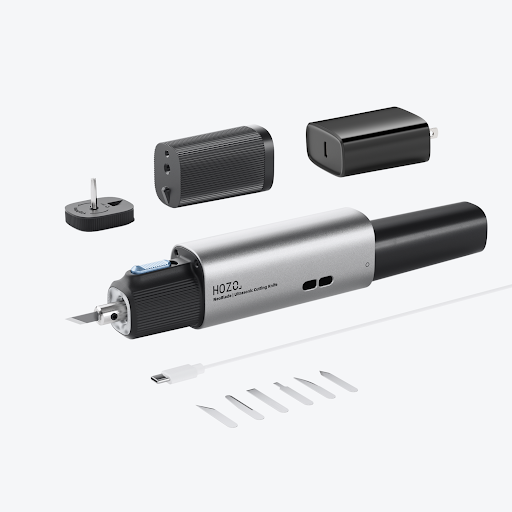
The tool consists of three core components: a power supply that converts electrical energy into high-frequency signals, a transducer that transforms those signals into mechanical vibrations, and a blade (or sonotrode) that delivers those vibrations directly to the workpiece. When activated, the blade moves so rapidly that it generates localized heat at the cutting interface, allowing it to pass through foam board, styrene plastic, ABS, resin, rubber, and even thin aluminum sheet with remarkable ease. For hobbyists seeking a versatile design tool, the ultrasonic knife bridges the gap between delicate hand tools and bulky power equipment, offering surgical precision in a form factor that fits comfortably on any workbench.
Key Benefits of Ultrasonic Knives for Hobbyists and Makers
For hobbyists and makers who spend weekends building scale models, crafting cosplay armor, or prototyping product designs, the ultrasonic knife directly addresses the most common workshop frustrations. The tool is remarkably easy to use—rather than applying force and hoping for a clean result, you simply guide the vibrating blade along your intended path and let the technology do the heavy lifting. This fundamentally changes how you approach creative projects, shifting your focus from fighting materials to executing your vision with confidence.
The precision advantage cannot be overstated. Traditional cutting methods often produce jagged edges on foam or leave stress marks on thin plastics, requiring extensive post-processing. An ultrasonic knife eliminates most of that cleanup work, delivering finished edges straight from the cut. The reduced physical effort also means less hand fatigue during extended sessions, which matters enormously when you’re scaling dozens of identical components or shaping complex organic curves for a diorama. Debris generation drops significantly too, since the blade separates material cleanly rather than grinding it into dust and shavings.
Enhancing Portability for On-the-Go Projects
Many ultrasonic knives designed for hobbyists feature compact, pen-style form factors that weigh under a pound, making them ideal for mobile workspaces. Whether you’re working at a community makerspace, a friend’s garage, or a convention hotel room finishing last-minute cosplay details, the tool slips easily into a carrying case alongside your other supplies. Battery-powered models add even more flexibility, freeing you from outlet dependency. This portability means your creative projects aren’t confined to a dedicated workshop—you can cut and shape wherever inspiration strikes.
Streamlining Complex Shaping Tasks
Where ultrasonic knives truly shine is in complex shaping work that would otherwise require multiple tools and passes. The high-frequency vibrations allow the blade to navigate tight curves, chamfer edges, and carve recessed details without the material catching or splitting. Model builders working with architectural foam can achieve window reveals and panel lines in a single pass rather than layering cuts with a hobby knife. The consistent vibration frequency means predictable results across different material densities, so you spend less time testing and more time building. For anyone tackling intricate scaling and shaping tasks, this streamlined workflow transforms hours of tedious handwork into minutes of controlled, satisfying cutting.
Step-by-Step Guide to Using an Ultrasonic Knife for Creative Projects
Getting started with an ultrasonic knife doesn’t require extensive experience or specialized training. With a few deliberate preparation steps and some foundational techniques, you can begin producing professional-quality cuts on your very first session. The following guide walks you through setup, core methods for scaling and shaping work, and essential safety practices that will keep both you and your tool in top condition.



Initial Setup and Tool Preparation
Begin by selecting the appropriate blade for your material—thinner blades work best for detailed foam work, while broader profiles handle plastics and composites more effectively. Attach the blade to the transducer according to your model’s instructions, ensuring the connection is snug and properly torqued. Loose fittings reduce vibration transfer and create inconsistent cuts. Power on the unit and allow it to reach operating frequency for a few seconds before touching it to any material. If your model offers adjustable power settings, start at a lower frequency and increase gradually until the blade moves through your test piece smoothly without excessive melting or dragging. Secure your workpiece with clamps or a non-slip mat so both hands remain free to guide the tool with control.
Techniques for Effective Scaling and Shaping
For straight cuts, use a metal straightedge as a guide and draw the blade along it at a steady, unhurried pace—let the vibrations do the work rather than pushing forcefully. When cutting curves, pivot the blade gently at the tip, rotating your wrist in small increments to follow your marked line. For scaling repetitive components, create a template from card stock and trace it onto your material before cutting, ensuring dimensional consistency across multiple pieces. Chamfering edges requires holding the blade at a consistent angle, typically 45 degrees, and sweeping along the edge in one fluid motion. When carving recessed details like panel lines or window frames, use short, controlled strokes with minimal downward pressure to avoid overcutting.
Safety Protocols and Maintenance
Always wear cut-resistant gloves and safety glasses when operating an ultrasonic knife, as the blade remains extremely sharp even when unpowered. Work in a ventilated area since some materials release fumes when subjected to localized ultrasonic heat. Never touch the blade immediately after use—residual heat can cause burns. After each session, wipe the blade with isopropyl alcohol to remove material residue that could impair performance. Inspect the blade tip regularly for chips or wear, replacing it when edges show visible damage. Store the tool in its protective case with the blade removed or covered, and keep it away from moisture to protect the transducer and electronics. Following these practices ensures your ultrasonic knife remains a reliable companion across countless creative projects.
Choosing the Right Ultrasonic Knife as a Design Tool
Selecting the right ultrasonic knife depends on matching the tool’s capabilities to your specific creative projects. Power output matters most when determining what materials you’ll cut regularly—units operating at higher wattages handle denser plastics and thin metals with ease, while lower-powered models excel at delicate foam and fabric work without risking overcut. Blade variety is equally important; look for systems that offer interchangeable tips including pointed blades for detail carving, flat profiles for long straight cuts, and angled edges for chamfering. A tool that accepts multiple blade geometries functions as an entire design toolkit rather than a single-purpose cutter.
Ergonomics directly affect how long you can work comfortably. Pen-style grips with textured surfaces reduce hand strain during extended shaping sessions, and models with balanced weight distribution feel natural whether you’re cutting vertically or horizontally. Manufacturers like HOZO have focused on making adjustable power controls intuitive, ensuring the knife is easy to use across varying material thicknesses without switching tools. For hobbyists who move between workspaces, consider whether a corded or cordless model better suits your routine. Corded units deliver consistent power for marathon build sessions, while battery-operated versions offer unrestricted movement. Ultimately, the best ultrasonic knife for your workshop is one that feels intuitive in your hand and adapts seamlessly to the range of design tools and techniques your projects demand.
Practical Applications for Model Builders and Creative Projects
Scale model builders find ultrasonic knives transformative when working on architectural models that demand crisp window openings, clean roof angles, and precisely scored panel lines in foam core or styrene sheet. Rather than making multiple passes with a dull hobby blade and risking material tear-out, a single guided stroke with an ultrasonic knife produces gallery-ready edges that need no further sanding. Railroad modelers use the tool to shape terrain contours in rigid insulation foam, carving realistic rock faces and embankments with organic curves that would take hours to achieve through traditional subtractive methods.
Cosplay builders have embraced ultrasonic knives for cutting EVA foam armor panels with sealed edges that accept paint more evenly, eliminating the heat gun sealing step that often warps thin pieces. The tool handles the compound curves of shoulder pauldrons and helmet visors without the foam buckling or compressing under blade pressure. Prototyping enthusiasts working in makerspaces use ultrasonic knives to trim 3D-printed parts, removing support material and trimming seam lines from resin or ABS components without the risk of cracking that comes with flush cutters. Jewelry makers cut intricate shapes from thin acrylic and rubber mold materials, achieving the kind of detail that previously required laser cutting access. For anyone engaged in creative projects that involve repetitive precision cuts—from dollhouse miniatures to drone chassis fabrication—the ultrasonic knife consolidates what once required a drawer full of specialized tools into a single, adaptable instrument that model builders can rely on session after session.
Elevate Your Workshop with Ultrasonic Precision Cutting
The ultrasonic knife has earned its place as a workshop essential by directly solving the frustrations that hobbyists face with traditional scaling and shaping methods. Instead of fighting materials with brute force and accepting imperfect results, makers now have access to a tool that delivers clean, precise cuts through foam, plastic, resin, and composites with minimal physical effort. The portability of modern designs means your creative projects travel with you, while the intuitive operation makes the technology accessible whether you’re a seasoned model builder or just starting your first scratch-build. From architectural miniatures to cosplay armor to rapid prototyping, the ultrasonic knife consolidates multiple cutting and shaping functions into one adaptable instrument that saves time and elevates quality. As maker culture continues to grow and materials become more diverse, design tools like the ultrasonic knife will only become more central to how we bring creative visions to life. If you haven’t yet added one to your toolkit, now is the time to explore what high-frequency precision can do for your next project.