
You’ve been there before — halfway through assembling a new bookshelf, you press down just a little too hard and hear that sickening crunch of a stripped screw. Or worse, the drill buries itself into soft wood, leaving a crater where a clean joint should be. These small disasters are incredibly common in DIY projects, and they usually share one root cause: too much force applied at the wrong moment.
- What is Torque Control and Why It Matters for DIYers
- Key Advantages of Using a Screwdriver with Torque Control
- How to Choose the Right Cordless Electric Tools for Your Needs
- Step-by-Step Solutions: Mastering Torque Control for Furniture Assembly
- Pre-Assembly Setup and Tool Calibration
- Adjusting Torque for Different Materials: Wood, Metal, and Plastic
- Common Mistakes and How to Avoid Them
- Exploring Innovation: The Rise of Smart Display Screwdrivers
- Torque Control as the Foundation of Smarter DIY Results
An electric screwdriver with torque control changes that dynamic entirely. By letting you set a precise rotational force limit, it stops driving the moment resistance reaches your chosen threshold — protecting both the fastener and the material beneath it. Whether you’re mounting cabinet hinges, assembling flat-pack furniture, or securing delicate electronics, this single feature transforms an ordinary power tool into a precision instrument.
Beyond preventing damage, torque control saves time, reduces frustration, and gives homeowners genuine confidence when tackling a wide range of projects. In the sections ahead, we’ll break down exactly how torque control works, why it matters, and how to use it effectively so every screw lands exactly where it should.
What is Torque Control and Why It Matters for DIYers
Torque, in simple terms, is rotational force — the twisting power your screwdriver applies as it drives a fastener into a surface. Torque control is the mechanism that lets you cap that force at a specific level. On most electric screwdrivers, this takes the form of an adjustable clutch: a numbered collar near the chuck that disengages the drive mechanism the instant resistance hits your preset threshold. The tool produces a distinctive click, the bit stops spinning, and the screw sits exactly where you intended it — flush, secure, and undamaged.

For homeowners, this matters more than most people realize before they’ve stripped their first screw or cracked their first cabinet panel. Different materials demand dramatically different amounts of force. Softwood accepts fasteners easily and punishes over-driving instantly, while MDF and particleboard — the backbone of most flat-pack furniture — can crumble around a screw head if you push past the right stopping point. Even metal and plastic components have their limits, and exceeding them means ruined parts and wasted money.
Without torque control, you’re relying entirely on feel and reaction time, which is an unreliable combination when you’re tired, distracted, or simply new to power tools. The clutch removes that guesswork. It acts as a consistent, mechanical safeguard that performs the same way on your first screw of the day and your fiftieth. For any homeowner who regularly tackles assembly projects, furniture builds, or home repairs, an electric screwdriver with torque control isn’t a luxury upgrade — it’s the feature that separates frustrating outcomes from clean, professional results.
Key Advantages of Using a Screwdriver with Torque Control
The most immediate benefit is precision. When you’re assembling kitchen cabinets, installing door hinges, or putting together flat-pack furniture, each fastener needs to sit at exactly the right depth — not a millimeter too deep, not slightly proud of the surface. A torque-controlled electric screwdriver delivers that consistency automatically, screw after screw, without requiring you to second-guess your grip or watch the surface anxiously. That reliability matters especially on visible joinery where an over-driven screw leaves an ugly divot that no amount of wood filler fully hides.


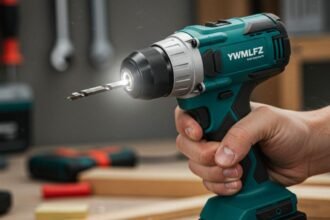
Safety is another underappreciated advantage. Excessive torque doesn’t just damage materials — it can cause the bit to cam out suddenly, sending the tool skidding across a surface or snapping back toward your hand. By capping the rotational force before that point, torque control keeps the tool behaving predictably throughout the drive cycle. This makes a genuine difference for anyone who uses power tools infrequently and hasn’t yet developed the instinctive muscle memory that experienced tradespeople rely on.
Time efficiency follows naturally from precision. When you’re not stopping to assess damage, back screws out, fill holes, or swap out stripped fasteners, projects move faster. Cordless electric tools with torque control compound this advantage by eliminating the cable management that slows movement between work areas — you can carry the tool across a room, reposition freely, and keep your workflow uninterrupted. Battery-powered models have become reliable enough that most homeowner projects finish well within a single charge.
Finally, material protection is where torque control earns its value most clearly. Softwood, MDF, particleboard, thin sheet metal, and plastic all have different tolerance thresholds. A single adjustable clutch lets you dial in the appropriate force for each material type, protecting surfaces that would otherwise crack, split, or compress under unchecked power — effectively making one tool suitable for a much wider range of projects.
How to Choose the Right Cordless Electric Tools for Your Needs
Torque range is the first specification worth examining. Entry-level electric screwdrivers typically offer somewhere between 3 and 15 Newton-meters, which covers most furniture assembly and light home repair tasks. If your projects regularly involve hardwood, deck screws, or structural fasteners, look for models that extend to 25 Nm or beyond. More important than the maximum figure, though, is the number of distinct settings between low and high — a tool with 20 clutch positions gives you far more nuance than one with five, especially when you’re switching between materials mid-project.
Battery life deserves honest evaluation rather than a glance at the voltage rating. A 3.6V lithium-ion screwdriver handles light assembly work comfortably, while 12V or higher platforms suit heavier fastening tasks and longer sessions. Check the charge time as well — some compact cordless electric tools, including those from brands like Fanttik that have expanded into precision power tools, fully recharge in an hour, which matters if you’re working through a weekend project in stages. Models with battery level indicators remove the guesswork about whether you have enough charge to finish a task before stopping.
Ergonomics affect both comfort and control. A pistol-grip handle suits longer screwdriving sessions and gives better leverage, while an inline or pen-style body works well in confined spaces like cabinet interiors or tight corners. Weight distribution matters too — a front-heavy tool causes fatigue faster and makes it harder to hold steady on delicate work. Whenever possible, hold the tool before buying to assess grip comfort and balance.
Durability indicators include the quality of the chuck mechanism, whether the housing is reinforced around high-impact zones, and the warranty length. For homeowners who use their tools occasionally rather than daily, a two-year warranty on the motor and clutch assembly provides meaningful reassurance. Innovative features like built-in bit storage, magnetic trays, or LED work lights add practical convenience without complicating the core function.
Step-by-Step Solutions: Mastering Torque Control for Furniture Assembly
Pre-Assembly Setup and Tool Calibration
Before driving a single screw, clear your workspace and lay out all components, hardware bags, and the assembly instructions. Set your electric screwdriver to its lowest torque setting — you’ll dial up from there rather than risk immediate damage. Insert the correct bit firmly into the chuck, confirming it’s fully seated and locked. Check your battery level, and if you’re working on a large flat-pack build, charge fully beforehand. A quick test drive into a scrap piece of the same material lets you verify your clutch setting before committing to the actual workpiece.
Adjusting Torque for Different Materials: Wood, Metal, and Plastic
Softwood and pine furniture typically require low-to-mid clutch settings — around positions 4 to 8 on a 20-position collar. MDF and particleboard, which dominate flat-pack furniture, need slightly less torque than solid wood because the compressed fibers strip easily once the screw head passes flush. For metal cam locks and connector bolts common in flat-pack assembly, step up two or three positions above your wood setting to achieve a firm seat without deforming the fitting. Plastic components and cam dowels need the lightest touch — start at position 3 and increase only if the fastener isn’t seating fully.
Common Mistakes and How to Avoid Them
The most frequent error is starting at a high torque setting to “get through it faster,” which leads to stripped cam locks and cracked panel edges within the first few pieces. Equally damaging is skipping the test drive on scrap material and going straight into visible surfaces. Rushing through pilot holes on dense hardwood causes screws to wander off-axis, splitting the grain. Always drive screws perpendicular to the surface — angling the tool even slightly increases the effective resistance, causing the clutch to disengage prematurely or the bit to cam out unexpectedly.
Exploring Innovation: The Rise of Smart Display Screwdrivers
Traditional clutch-based torque control works well, but it has one persistent limitation: you’re always estimating where you are within the range. Dial position 7 on one brand might deliver a completely different force than position 7 on another, and without a reference point, new users spend considerable time on trial runs before finding their ideal setting. Smart display screwdrivers solve this directly by replacing the numbered collar with a digital readout that shows your exact torque value in Newton-meters, removing the ambiguity entirely.

The practical difference becomes apparent quickly on complex projects. When you’re building a workbench that combines hardwood legs, MDF shelving, and metal bracket hardware, you’re constantly switching between materials that each demand a specific force threshold. A smart display screwdriver lets you save those values as programmable presets, so instead of re-calibrating by feel each time you change materials, you simply select the saved profile and drive with confidence. Some models also log torque data across a session, which sounds like overkill for home use but proves genuinely useful when you’re troubleshooting why one section of a cabinet feels looser than another.
For homeowners who use their tools infrequently, the learning curve on conventional clutch settings can reset between projects — you forget which position worked well on pine last month. Digital memory eliminates that problem. Beyond torque display, newer smart screwdrivers often incorporate variable speed triggers with digital feedback, automatic shutoff when a target value is reached, and companion apps that suggest settings based on fastener type and material. Fanttik, for instance, has applied similar precision-engineering principles from its automotive tool lineup to this growing category of smart cordless tools, reflecting a broader industry shift toward digital accuracy in everyday DIY equipment. These features make advanced torque management genuinely accessible to casual DIYers, not just professionals who’ve spent years developing calibrated instincts.
Torque Control as the Foundation of Smarter DIY Results
An electric screwdriver with torque control is one of those tools that quietly transforms how you approach every project. Once you’ve experienced the clean, consistent results it delivers — screws seated perfectly flush, materials intact, no stripped heads or cracked panels — it becomes difficult to imagine working without it. The clutch mechanism isn’t a complicated feature reserved for professionals; it’s a straightforward safeguard that makes precise fastening accessible to anyone willing to spend a few minutes dialing in the right setting.
For homeowners, the real value lies in adaptability. A single tool with an adjustable torque range handles softwood furniture, MDF flat-packs, metal hardware, and plastic fittings without requiring you to swap tools or rely on guesswork. Add the growing category of smart display screwdrivers — with digital readouts and programmable presets — and that adaptability extends even further, putting professional-grade control within reach of casual DIYers.
Investing in a quality cordless electric screwdriver with proper torque control pays for itself quickly in materials you won’t need to replace and time you won’t spend fixing avoidable mistakes. Whether you’re assembling flat-pack furniture on a Saturday afternoon or tackling a more ambitious home improvement project, the right tool makes every step more controlled, more efficient, and genuinely more satisfying. Start with a reliable model, learn your settings, and the results will speak for themselves.