The electric vehicle market is growing fast, but the EV charging infrastructure faces challenges. Different systems, platforms, and devices often struggle to communicate with each other. This is where charging standardization and interoperability become essential.
- What are Electric Vehicle Charging Protocols?
- OCPP (Open Charge Point Protocol)
- EV Charging Roaming Protocols
- OCPI (Open Charge Point Interface)
- OCHP (Open Clearing House Protocol)
- eMIP (e-Mobility Interoperation Protocol)
- OICP (Open InterCharge Protocol)
- Energy Management Protocols
- ISO 15118: Bidirectional Charging
- Why are Electric Vehicle Charging Protocols Important?
- EVB Charging Solutions
For charging point operators (CPOs) and e-mobility service providers (eMSPs), managing multiple networks and platforms is not simple. However, with unified EV charging protocols, scaling a business or entering new markets is more efficient.
What are Electric Vehicle Charging Protocols?
The EV charging protocol is a set of rules that allows different components within the charging network to communicate. These components include charging stations, backend management systems, vehicles, and third-party platforms.
In a complete electric vehicle charging ecosystem, multiple stakeholders are involved:
- Charging station manufacturers
- Charging point operators
- e-mobility service providers
- Distribution system operators
- EV drivers, etc.
Protocols ensure that data flows smoothly between these parties. For example, a charging station must send usage data to a backend system, while the backend must control pricing, authentication, and session management.
In simple terms, the EV charging protocol acts as the “language” that connects all elements of the ecosystem.
OCPP (Open Charge Point Protocol)
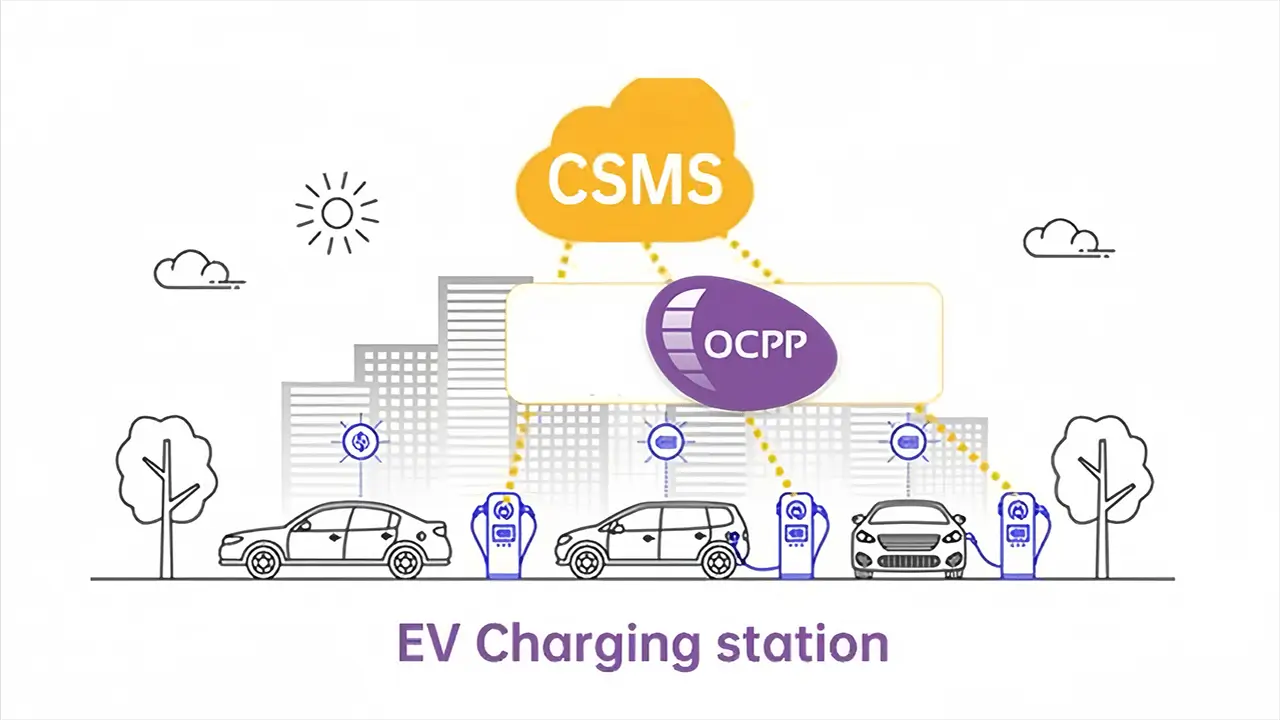
OCPP is a free EV charging protocol for communication between EV charging stations and central management systems.
Developed by the Open Charge Alliance, OCPP is an essential protocol between charging station manufacturers, charging network operators, and software developers.



Key features of OCPP include:
- Remote monitoring and control of charging stations
- Firmware updates over the air
- Real-time status notifications
- User authentication and billing support
OCPP plays a central role in electric vehicle charging management. It allows operators to manage large networks efficiently from a single platform.
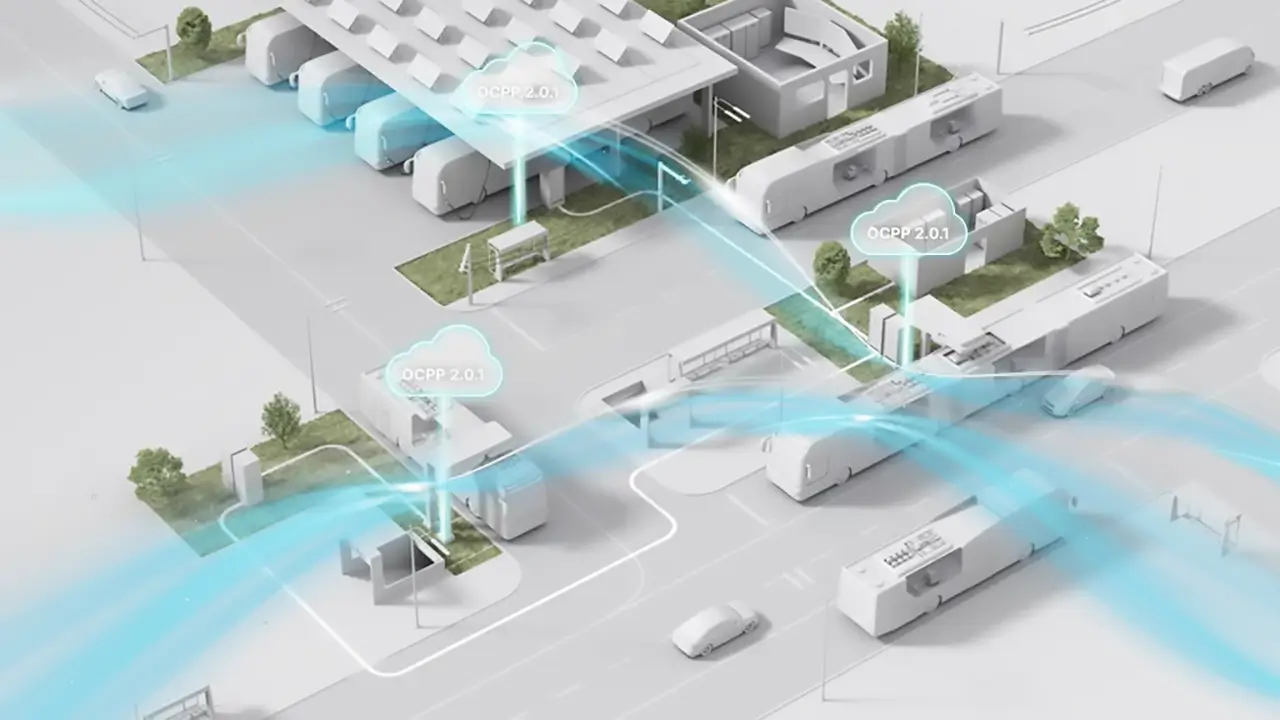
There are several versions of OCPP, including OCPP 1.6, OCPP 2.0.1, and OCPP 2.1. The newer version, OCPP 2.1, is the latest standard for advanced V2G and smart grid integration.
EV Charging Roaming Protocols
Roaming protocols are what enable a driver with a mobile app or RFID card to access charging stations across different networks. It covers operations between CPO and eMSP.
OCPI (Open Charge Point Interface)
OCPI is a leading protocol for data exchange between CPOs and eMSPs. It supports:
- Real-time charger availability
- Charging starts and ends
- Charging session authorization
- Reservation
- Pricing information
OCPI is essential for building a seamless electric vehicle charging ecosystem, where users can charge across networks without barriers.
OCHP (Open Clearing House Protocol)
OCHP operates on a “Clearing House” model. Instead of individual networks connecting to each other, they all connect to a central hub. This simplifies the contract process for smaller operators, as they only need to integrate once to reach a wide audience.
eMIP (e-Mobility Interoperation Protocol)
Developed by GIREVE, eMIP focuses heavily on the business rules and contractual security of roaming. It is a robust protocol often used in the European market to facilitate roaming and the exchange of charging point information.
OICP (Open InterCharge Protocol)
Created by Hubject, OICP is another “Hub” based protocol. OCPI allows direct communication between CPOs and EMSPs, whereas OICP requires all participants to connect to Hubject’s central platform, through which data and billing information are exchanged. This is very friendly to small and medium-sized operators.
Energy Management Protocols
Beyond basic charging, the grid needs to manage how much power is being pulled at any given time to prevent overloads. This is where energy management protocols come into play.
- OpenADR (Open Automated Demand Response): OpenADR enables communication between utilities and charging systems. Utilities can send signals to the charging network to reduce power consumption during peak hours.
- OSCP (Open Smart Charging Protocol): OSCP communicates the available capacity of the local power grid to the charging management system. It helps the system decide how much power can be safely distributed among multiple chargers at a specific site.
ISO 15118: Bidirectional Charging
ISO 15118 defines the communication between the vehicle and the charger. Its most famous feature is Plug & Charge, which allows the car to identify itself and pay for the session automatically upon being plugged in.
Crucially, ISO 15118-20 enables Bidirectional Charging. This facilitate Vehicle-to-Grid (V2G) and Vehicle-to-Home (V2H) applications. In this setup, your car’s battery doesn’t just take power, but can give it back to the grid or your home during peak demand, turning the EV into a mobile energy storage system.
Why are Electric Vehicle Charging Protocols Important?
- Security: ensures secure communication between systems. Encryption and authentication mechanisms protect user data and prevent unauthorized access.
- Interoperability: allows hardware and software from different vendors to work together. This increases flexibility for operators.
- Roaming Capabilities: Roaming protocols enable users to charge across multiple networks. This improves the user experience and supports wider EV adoption.
- Smart Charging: Protocols enable smart charging features such as load balancing, dynamic pricing, and demand response.
- Industry Development: Standardization accelerates innovation. It allows companies to focus on improving services instead of solving compatibility issues.
EVB Charging Solutions
Modern charging infrastructure requires flexibility and scalability. EVB provides charging stations that support the OCPP protocol, enabling seamless data transmission and remote access.
With OCPP support, EVB charging stations allow operators to implement advanced electric vehicle charging management features, including remote monitoring, smart charging, and real-time data analysis. This compatibility also ensures strong EV charging interoperability, making it easier to expand networks and integrate with third-party platforms.
If you have any needs about EV charging stations, feel free to contact them.