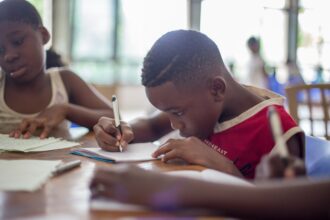
Many adults treat reading and writing as two separate skills. One is about understanding what is on the page. The other is about putting words there. For children, though, the two are closely tied. A child who learns how stories are built often becomes better at understanding the stories they read.
- Reading Becomes Stronger When Children Understand How Text Works
- Writing Stories Helps Children Notice Story Structure
- It Strengthens Vocabulary Through Meaningful Use
- Creative Writing Helps Children Infer, Not Just Decode
- It Encourages Closer Attention To Characters And Motives
- It Supports Memory And Recall
- It Makes Children More Aware Of Tone And Voice
- Reading Feels Less Passive When Children Also Write
- It Builds Confidence, Which Affects Comprehension Too
- Simple Ways To Use Creative Writing To Support Reading
- Rewrite A Scene From Another Character’s View
- Write A New Ending
- Describe A Setting From Memory
- Write A Letter From One Character To Another
- Predict What Happens Next And Then Write It
- Why This Matters In Primary School
- Final Thoughts
- FAQs
That is one reason creative writing for kids deserves more attention in conversations about literacy. It is not only a way to encourage imagination or make writing lessons more enjoyable. It also helps children read with greater focus, notice meaning more clearly, and make a stronger sense of what they are reading.
Reading Becomes Stronger When Children Understand How Text Works
Comprehension is not simply about knowing the meaning of words. It involves noticing structure, following ideas, understanding motive, recognising tone, and keeping track of what matters. These are not small tasks for a young reader.
Creative writing helps because it places children inside that process.
When a child writes even a simple story, they have to think about sequence, character, setting, and cause and effect. They begin to see that a story is not just a set of sentences. It is something built with choices. Once they start making those choices themselves, they become better at spotting them in books.
This changes reading. Instead of moving through a passage passively, children begin to engage with it more actively.
Writing Stories Helps Children Notice Story Structure
A child who writes stories starts learning how stories hold together. That understanding carries directly into reading.
Beginnings Start To Matter More
When children try writing their own openings, they begin to notice how books introduce a problem, a setting, or a character. They become more aware of how the first lines guide the reader.



Middles Feel Less Confusing
Some children struggle with comprehension because they lose track of what is developing in the middle of a story. Creative writing helps them understand that events build on each other for a reason. They start paying closer attention to the link between one moment and the next.
Endings Become Easier To Interpret
When children have tried ending a story themselves, they become more sensitive to how endings work in what they read. They notice whether an ending solves a problem, reveals a truth, or leaves something for the reader to think about.
That awareness supports deeper comprehension because children are no longer reading only for what happens. They are also reading for how the story is shaped.
It Strengthens Vocabulary Through Meaningful Use
Vocabulary is one of the building blocks of reading comprehension. But children do not always learn new words well through memorisation alone. They often learn them more deeply when they use them.
Creative writing creates that opportunity.
A child who wants to describe a setting, a feeling, or a character starts looking for more precise language. They may move from “nice” to “cheerful,” or from “scary” to “uneasy,” because the story needs something sharper. That search strengthens word knowledge in a practical way.
Later, when the same child meets rich language in a book, the words are less likely to feel distant or unfamiliar. They already have some experience of how language creates meaning.
This matters for comprehension because understanding a text depends heavily on understanding the words that carry its tone and detail.
Creative Writing Helps Children Infer, Not Just Decode
Many children can read the words on a page but still miss what the passage is suggesting. They may follow the surface of the text without fully grasping what is implied. This is where comprehension often becomes difficult.
Creative writing can help because writers must constantly think beyond what is directly stated.
When children write, they decide:
- What a character feels without always spelling it out
- How to hint that something is wrong
- How dialogue can reveal personality
- How setting can create mood
These are acts of inference in reverse. The child who learns how to plant clues in writing often becomes better at spotting clues while reading.
That is a major step in comprehension. It moves children from simply reading words to reading meaning.
It Encourages Closer Attention To Characters And Motives
Good comprehension often depends on understanding why characters say, do, or avoid certain things. This is not always easy for younger readers. They may know what happened in a story but struggle to explain why it happened.
Creative writing sharpens this skill.
When children invent a character, they have to make decisions. Why did this person hide the letter? Why is that child worried about school? Why does the friend suddenly go quiet? Even if the answers stay simple, the process teaches children to think in terms of motive.
That habit improves reading.
Children begin asking better questions when they read:
Why did the character react like that?
What is this person trying to hide?
Why does this conversation feel tense?
These questions lead to more thoughtful comprehension. They help children move beyond plot summary into interpretation.
It Supports Memory And Recall
Comprehension is tied to memory. A child who does not hold onto what they have read will struggle to make sense of a longer text. Creative writing helps here too.
Writing a story requires children to keep track of details. They have to remember who the characters are, what happened earlier, what problem is unfolding, and what still needs to be resolved. This kind of mental tracking strengthens the same habits needed to follow a book or passage.
Over time, children become more used to holding multiple parts of a text in mind. That makes it easier to:
- Retell what they have read
- Answer questions accurately
- Notice patterns across paragraphs or chapters
- Connect one scene to another
In other words, writing helps train the mind for the demands of sustained reading.
It Makes Children More Aware Of Tone And Voice
Comprehension is not only about facts. It is also about sensing the mood of a piece and understanding how it sounds. A cheerful passage, a tense scene, and a mysterious description all ask the reader to notice different signals.
Creative writing makes tone easier to understand because children try creating it themselves.
A child who writes a funny scene learns that word choice, timing, and dialogue shape the effect. A child writing something eerie begins to see how detail and pacing change the mood. That hands-on experience makes it easier to recognise tone in reading.
This is useful in both storybooks and school texts. Children who can pick up on tone often understand the deeper purpose of a passage more clearly.
Reading Feels Less Passive When Children Also Write
One of the quiet benefits of creative writing is that it changes a child’s relationship with books. Reading becomes less about receiving information and more about noticing craft.
A child who writes starts seeing books differently. They notice:
- How an author introduces a problem
- How description is used sparingly or richly
- How dialogue moves the story
- How one sentence creates suspense
This kind of noticing leads to stronger engagement. And engaged readers usually comprehend more because they are alert, curious, and mentally involved.
Children may not describe it in those terms, but they often show it in simple ways. They ask more questions. They make better predictions. They talk more about what they think a character meant. These are all signs of deeper reading.
It Builds Confidence, Which Affects Comprehension Too
Confidence plays a larger role in literacy than people sometimes admit. A child who sees themselves as “bad at reading” may approach every text with hesitation. That hesitation can reduce attention and persistence.
Creative writing can help shift this.
When children create something of their own, they begin to feel more capable with language. They start seeing words as tools they can use, not obstacles they must get past. That growing confidence often carries into reading.
A child who feels more comfortable with language is usually more willing to:
- Attempt harder books
- Think aloud about meaning
- Take time with unfamiliar passages
- Answer comprehension questions without fear
This does not happen overnight, but it builds steadily. Confidence in writing can support confidence in reading, and the reverse is true as well.
Simple Ways To Use Creative Writing To Support Reading
Children do not need long, complicated assignments for this link to work. Even short writing activities can strengthen comprehension when used well.
Rewrite A Scene From Another Character’s View
This helps children think about motive, perspective, and inference.
Write A New Ending
This encourages them to understand the story deeply enough to extend it in a believable way.
Describe A Setting From Memory
This builds attention to detail and helps children notice how authors create place.
Write A Letter From One Character To Another
This helps children think beyond events and into feelings, relationships, and subtext.
Predict What Happens Next And Then Write It
This turns reading into active thinking and tests whether the child understands the story’s direction.
These activities are simple, but they ask children to engage with text in a deeper way than surface recall alone.
Why This Matters In Primary School
Primary school is where many literacy habits begin to settle. If children learn to see reading as only decoding and writing as only correctness, they may miss the richer connection between the two. Creative writing helps restore that connection.
It shows children that language is not only something to get right. It is something to understand, shape, and enjoy.
When children write creatively, they become more attentive readers. They notice how texts work. They understand meaning with more depth. They ask better questions. And they become more comfortable moving between reading and writing as linked parts of the same skill.
Final Thoughts
Creative writing improves reading and comprehension because it helps children enter the world of language from the inside. It teaches them how stories are built, how meaning is suggested, how characters are shaped, and how details work together.
That knowledge does not stay on the writing page. It comes back with them when they read.
For children, especially in the primary years, that link can make a real difference. The child who writes with imagination often reads with greater insight. And when that happens, comprehension stops being only about finding answers. It becomes about truly understanding what a text is doing and why it matters.
FAQs
Can Creative Writing Really Help A Child Read Better?
Yes. Creative writing helps children understand structure, vocabulary, tone, and character motivation. These are all important parts of strong reading comprehension.
Is This Useful For Children Who Already Read Well?
Very much so. Strong readers can still deepen their comprehension through writing. It helps them notice how texts are built and engage with books in a more thoughtful way.
What If A Child Likes Reading But Dislikes Writing?
That is common. Starting with short, low-pressure writing tasks linked to stories they already enjoy can help. They do not need to write long pieces for the benefit to appear.
Does Creative Writing Help With School Comprehension Questions?
Yes. It can improve how children interpret passages, explain character actions, identify themes, and support answers with clearer thinking.
How Often Should Children Do Creative Writing For It To Help?
It does not need to be daily to be useful. Even regular short sessions can make a difference, especially when the writing connects to stories the child is reading or discussing.