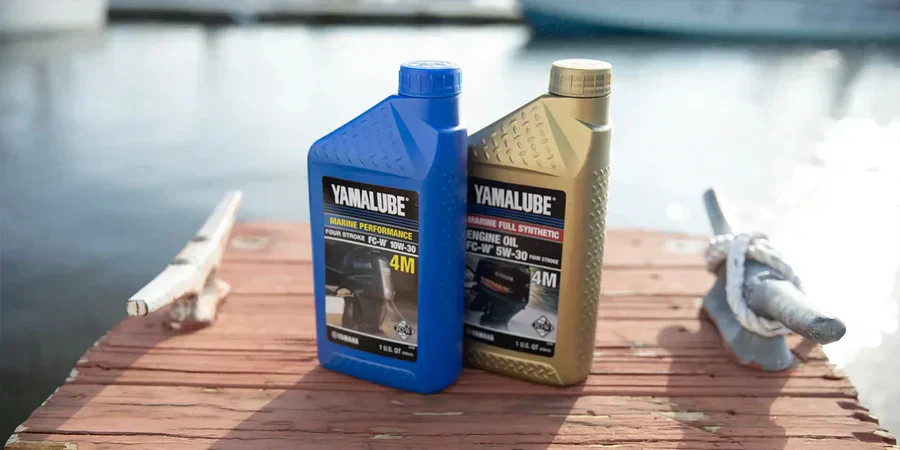
Oil debates around outboards usually get simplified too much. Someone sees “10W-30” on two bottles and assumes they are basically the same. That is where the confusion starts. Viscosity matters, but it is not the whole story. For a Yamaha 4-stroke outboard, the more important question is whether the oil was built for marine use, not just whether the weight matches.
- Decide in 5 Minutes: Yamalube 4M vs 10W-30
- What “FC-W” and “Marine 10W-30” Actually Mean
- Why FC-W Marine Oil Makes More Sense for Yamaha Outboards
- Save $10 Now or Avoid a Bigger Problem Later
- Best Practices to Protect Your Yamaha 4-Stroke
- FAQ
- Can I use 10W-30 in a Yamaha 4-stroke outboard?
- What does FC-W mean, and do I really need it?
- Is Yamalube 4M different from automotive 10W-30?
- What oil should I use for saltwater boating and storage?
- Will using non-marine oil affect warranty or engine life?
- Can I mix Yamalube 4M with another 10W-30 oil?
- Final Thoughts
If you are comparing oil options for a four-stroke Yamaha, a look at Yamalube products makes one thing clear right away: marine oils are designed around moisture, storage, corrosion, and sustained engine load. That is very different from the environment most car engines see.
This is why the conversation is really Yamalube 4M vs automotive 10W-30, not just “10W-30 vs 10W-30.”
Decide in 5 Minutes: Yamalube 4M vs 10W-30
The fastest way to make the right choice is to look at how your outboard is actually used.
If you run in saltwater, store the boat for long stretches, or regularly operate under load, the safest answer is simple: use FC-W oil made for marine engines. That is exactly where Yamalube 4M makes the most sense. It is built for the kind of humidity, corrosion risk, and storage-related wear that outboards deal with all the time.
If your use is lighter, such as freshwater boating, short storage intervals, and routine recreational running, the question becomes more specific: Can I use 10W-30 in Yamaha outboard applications if the viscosity matches? In some cases, possibly, but only if that oil also meets the right marine specification. That detail matters more than many owners realize.
A practical decision flow looks like this:
- Check the owner’s manual first for viscosity and specification requirements.
- Confirm whether Yamaha calls for FC-W oil.
- Be honest about your environment: saltwater, humidity, long storage, or heavy-duty use.
- If any of those apply, use Yamaha 4 stroke outboard oil designed for marine conditions.
- If 10W-30 is used temporarily, make sure it is the correct marine type, not just car oil with the same viscosity.
That is the simplest way to avoid a bad shortcut.



What “FC-W” and “Marine 10W-30” Actually Mean
This is the part that causes most of the misunderstanding.
FC-W is not a viscosity grade. It is a marine performance standard for four-stroke outboards. It exists because outboards do not live like automotive engines. They often run at steady, sustained RPM, operate in humid or salty environments, and spend long periods sitting between trips. Those conditions change what the oil needs to do.
That is why marine 10W-30 and automotive 10W-30 are not automatically interchangeable. The viscosity number only tells you how the oil flows at certain temperatures. It does not tell you whether the additive package is designed for rust resistance, moisture handling, or marine corrosion protection.
Here is the simplest comparison:
| Oil Type | Designed For | What It Prioritizes |
| Yamalube 4M / FC-W marine oil | Four-stroke outboards | Corrosion resistance, storage protection, and marine load |
| Automotive 10W-30 | Passenger vehicles | Automotive engine conditions, not marine exposure |
That is the real issue in the outboard oil vs car oil debate. The same viscosity does not mean the same protection.
Yamalube 4M vs Automotive 10W-30
Yamalube 4M oil is formulated for marine use, specifically for four-stroke outboards that deal with humidity, salt exposure, and long storage periods.
Automotive 10W-30 is built for car engines, where the operating pattern is different. Cars generally do not sit in a damp marine environment, and they are not exposed to the same internal corrosion risks between uses.
That does not mean car oil instantly damages an outboard. It means the oil may not protect it as well over time, especially if the engine sees saltwater, heavy use, or offseason storage.
Why FC-W Marine Oil Makes More Sense for Yamaha Outboards
Most owners who follow Yamaha outboard oil recommendations are not doing it out of habit. They are doing it because it removes uncertainty.
When you use FC-W oil, you know the oil was built for the way an outboard actually lives. You are not guessing whether an automotive formula is “close enough.” That matters most in situations where outboards quietly age: internal moisture, corrosion during storage, and long periods of sustained load.
This is where Yamalube 4M stands out. It matches the conditions Yamaha owners are actually trying to protect against, not just the viscosity chart in the manual.
And that is the point many people miss. Wrong oil choices do not always cause obvious problems right away. More often, they show up later as deposits, wear, or corrosion that builds slowly over time.
Save $10 Now or Avoid a Bigger Problem Later
This is the real cost question.
Automotive 10W-30 often looks cheaper at first glance, so the temptation is understandable. But the meaningful cost is not the price per quart. It is how well the oil protects the engine under real marine conditions.
If you boat in saltwater, store the engine for long periods, or run under load regularly, the difference between the right oil and the “good enough” oil becomes much more important. In those situations, Yamaha 4 stroke outboard oil built to marine standards is easier to justify.
That said, there is a difference between a temporary workaround and a long-term plan. If you are low on oil and need to protect the engine immediately, correct viscosity still matters. Running low is worse than topping off with a temporary substitute. But that should stay what it is: a short-term fix, not your maintenance strategy.
Best Practices to Protect Your Yamaha 4-Stroke
No oil can make up for inconsistent service, so the basics still matter.
- Change oil on schedule by hours and season.
- Change oil before long storage, not after.
- Replace the filter with every oil change.
- Keep a simple log with hours, date, and oil type.
- Avoid mixing random oils unless it is an emergency top-off.
Those habits do more for engine life than most people realize.
FAQ
Can I use 10W-30 in a Yamaha 4-stroke outboard?
Possibly, but the better question is whether it is marine 10W-30 that meets the right spec. If it is just automotive oil, it is a weaker choice for regular outboard use.
What does FC-W mean, and do I really need it?
FC-W is a marine oil standard for four-stroke outboards. It is designed around corrosion resistance, moisture, and marine operating conditions. If you want to stay close to Yamaha outboard oil recommendations, yes, it matters.
Is Yamalube 4M different from automotive 10W-30?
Yes. Even when the viscosity matches, Yamalube 4M oil is designed for marine use, while automotive oil is designed for car engines and different operating conditions.
What oil should I use for saltwater boating and storage?
That is exactly where FC-W oil is the stronger choice. Saltwater and long storage intervals are the two situations where marine oil has the clearest advantage.
Will using non-marine oil affect warranty or engine life?
It can create questions about whether the engine was maintained to the recommended standard, and over time, it may reduce protection against corrosion and wear.
Can I mix Yamalube 4M with another 10W-30 oil?
In an emergency top-off situation, it may happen. But it is better not to rely on mixing oils as a regular practice. Return to the correct oil and filter service as soon as possible.
Final Thoughts
The real comparison is not just Yamalube 4M vs 10W-30 as numbers on a label. It is marine oil versus non-marine oil, and that is what actually matters. If your Yamaha outboard lives in saltwater, sits between trips, or works under steady load, FC-W oil is the safer and smarter choice. Viscosity matters, but marine protection matters more.