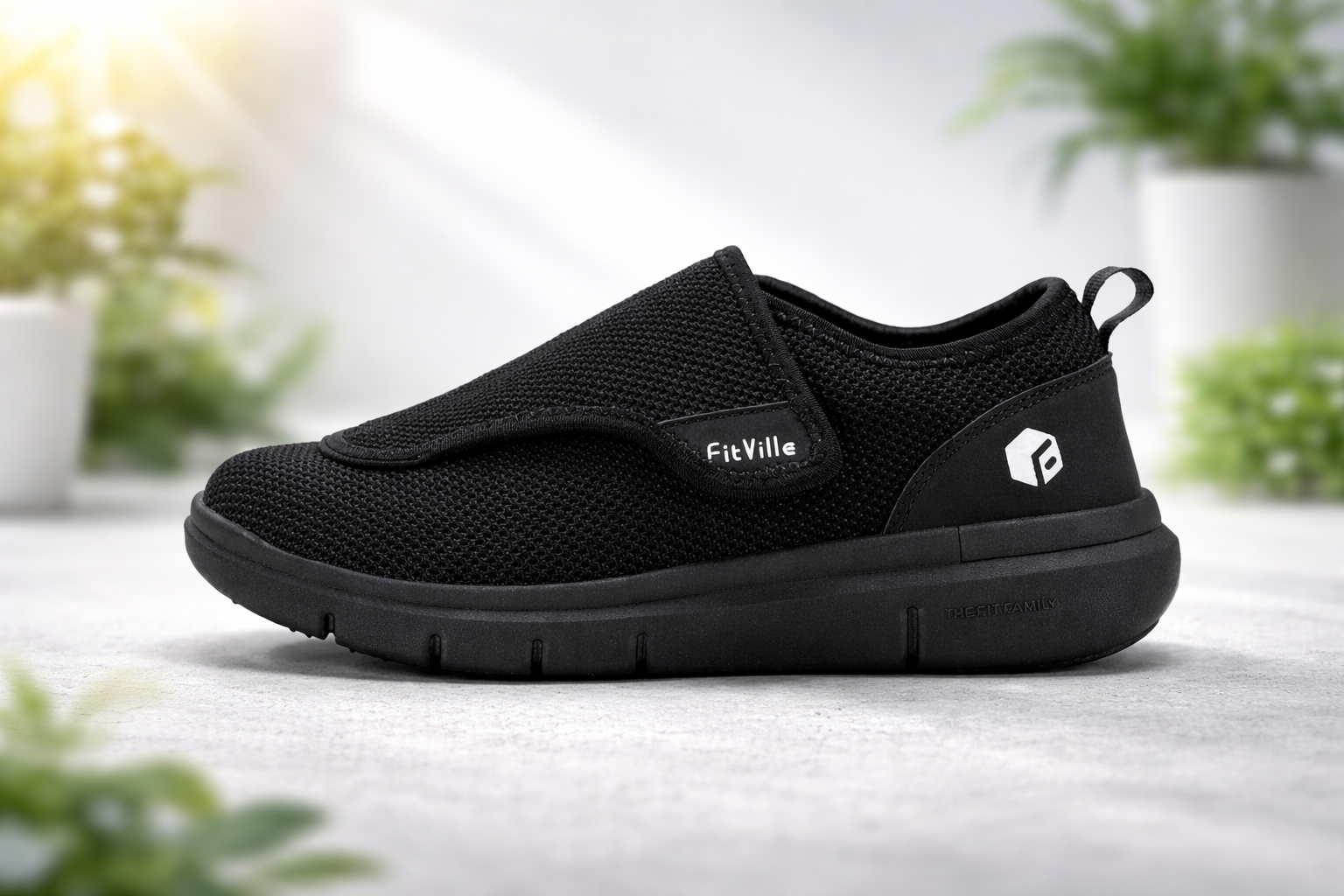
You know that moment in a shoe store when the length feels perfect, but the sides feel like they are negotiating with your feet?
Your heel sits fine. Your toes are not jammed into the front. But the midfoot feels squeezed, the little toe is getting sacrificed, and after five minutes you are already thinking, “Maybe I just need to break them in.”
If that sounds familiar, the issue is usually not the size. It is the width.
That is where 4E wide sneakers come in. They are made for men whose feet need significantly more room across the forefoot and midfoot than standard shoes provide.
What does 4E mean in sneakers?
A 4E width is commonly considered extra-wide in men’s footwear. In the most common North American width ladder, men’s D is the typical “standard” width, 2E is wide, and 4E is extra wide. The exact feel still varies by brand and shoe model, but the idea is consistent: 4E gives more space across the foot without forcing you to size up in length.
Why width matters more than most men realize
A lot of guys can tell you their shoe length instantly. Ask about width and you will get a shrug. That is understandable, because for years most stores carried “D” and maybe one “wide” option if you were lucky.



But width is not a niche detail. It changes everything:
- Comfort after a full day on your feet
- Whether you get hot spots, rubbing, or blisters
- Toe alignment and how “cramped” your forefoot feels
- How stable you feel when walking, especially if you wear insoles or orthotics
And here is the thing people miss: if the shoe is too narrow, your foot does not magically become narrower. It pushes into the sides and up into the top of the shoe. That pressure shows up as numbness, tingling, red marks, calluses, and the classic “I can’t wait to take these off” feeling.
The men’s width system, explained like a human being
Shoe widths often use letters and “E” increments. In the North American system, men’s widths commonly run from narrower to wider like this:
B, C, D, E, EE (2E), EEE (3E), EEEE (4E), and sometimes beyond.
“D” is typically the standard width for men, while wider sizes go up in E steps. Some charts use “E” as wide and “EE/2E” as extra wide, and some skip “E” and jump straight from D to 2E, depending on the brand’s convention. This is why two shoes labeled “wide” can feel totally different.
The key takeaway is simple: 4E is near the far end of the mainstream width range for men. It is built for feet that do not just need a little extra room, but need a noticeably broader fit.
4E vs 2E vs D: what changes in real life?
Let’s make it practical.
D (standard width)
This is what most men end up wearing by default. If your feet are average width, D often works.
2E (wide)
This is the “wide” option you see most often. It helps if your forefoot is slightly broad, or if you want more toe box comfort.
4E (extra wide)
This is for men who try 2E and still feel squeezing. The difference is not subtle if you need it. A 4E shoe is usually the first time some guys feel like their foot is sitting inside the shoe rather than fighting it.
If you have ever said, “The length is right, but the sides hurt,” you are exactly the person who should at least try 4E.
Does 4E mean a specific measurement?
Not a single universal one.
Width sizing is tied to length, and it is influenced by how each brand builds its shoe “last” (the foot-shaped mold used to create the shoe). Even the Brannock Device company, which is central to modern measuring standards, notes that manufacturing differences and style variations can require fit adjustments beyond the measured size.
So think of 4E as a category more than a fixed millimeter value. It is “extra wide for that length,” not a single measurement that applies to every shoe on earth.
Who should consider 4E wide sneakers?
Some people assume wide shoes are only for “big guys.” Not true. Plenty of men with normal body size have wide feet. Genetics alone can do it.
Here are common reasons men end up needing 4E:
Naturally wide forefoot
Some feet are simply broad across the ball. If your pinky toe is always cramped, that is often why.
High instep
Even when the bottom of the foot is not extremely wide, a high instep can make shoes feel tight across the top and sides.
Bunions or toe crowding
When the front of the foot needs more room, a wider toe box can make walking feel normal again.
Swelling after long hours
Feet can expand during the day. If shoes feel fine in the morning and awful by evening, you might need more width, more depth, or both.
Orthotics or supportive insoles
A decent insole takes up space. A shoe that is “just barely” okay in D width can become tight instantly with orthotics.
Diabetes or sensitive feet
If you have diabetes, good fit matters even more because friction and rubbing can become a bigger problem. The American Diabetes Association emphasizes shoes that fit properly and do not pinch or rub.
Even if diabetes is not your situation, the principle holds: a shoe that rubs is not a “break-in” project. It is a bad fit.
How to tell if you actually need 4E (without overthinking it)
If any of these sound familiar, you are probably in 2E or 4E territory:
- You see bulging along the sides of the shoe.
- You get red marks on the outside edge of your forefoot.
- Your pinky toe feels pressed inward.
- Your foot tingles or goes numb after walking.
- You keep loosening laces but the shoe still feels tight.
- You size up and the length becomes sloppy, but width still feels wrong.
That last one is a huge clue. Sizing up in length is the most common mistake wide-footed men make. It creates heel slip and friction, and it still does not solve the squeeze.
Measuring your width the right way
If you want a clean, no-drama approach, do this:
1) Measure later in the day
Feet often swell as the day goes on. If you measure first thing in the morning, you may underestimate what you need.
2) Measure both feet
One foot is frequently larger. Fit the bigger foot.
3) Use a Brannock Device if you can
A Brannock Device measures length, arch length, and width. That arch length piece matters because some men buy shoes based on toe length only, then wonder why the shoe feels “off.”
If you are measuring at home, tracing your foot on paper and measuring the widest point can still help, but store measurement is usually more accurate.
4) Pay attention to your arch length result
Some men need more room because the shoe bends in the wrong place for their foot. If the flex point is off, it can feel tight and tiring, even if the width is okay.
The 60-second fit test for wide sneakers
When you try on a sneaker, do not just stand there.
Walk. Turn. Do a few quick steps. Then check these:
- Toe room: You should have roughly a finger’s width between your longest toe and the front of the shoe.
- Toe box height: Your toes should not press into the top when you walk.
- Forefoot comfort: The widest part of your foot should sit inside the widest part of the shoe, without pressure.
- Midfoot security: Roomy does not mean sloppy. You want space, but you also want a stable hold.
- Heel stability: Minimal heel lift. If your heel is popping up, the shoe may be too long or the shape may be wrong.
If a shoe fails in the first two minutes, it will not improve with time. You will just get better at tolerating it.
What to look for in a good 4E wide sneaker
A true wide sneaker is not just “more fabric.” It is designed to work with a wider footprint.
Here are the features that usually matter most:
A real wide toe box
This is what keeps toes from stacking or rubbing.
Extra depth (when available)
Depth helps if you have a higher instep, mild swelling, or orthotics.
Flexible, forgiving upper materials
Mesh, knit, and stretch panels can help the shoe adapt without feeling restrictive.
A stable base
This gets overlooked. Wide feet often need a supportive platform so the foot is not spilling over the edges of the sole.
Removable insoles
This is useful if you plan to use your own inserts, or if you need a bit more room.
Good closure control
Laces, straps, or hybrid systems matter because they let you lock in the midfoot while still giving your forefoot space.
Are 4E wide sneakers only for older men?
No.
Wide feet show up in teenagers, in athletes, in office workers, in guys who walk a lot, and in men who never thought about shoe width until their knees or feet started complaining.
The difference is that younger men often “power through” discomfort and assume it is normal. It is not. The right width can instantly change how walking feels.
Wide sneakers for different lifestyles
Not every wide sneaker has the same job. If you want a pair that actually earns its place, match the shoe to how you live.
Daily walking and errands
Look for cushioning and a stable heel, plus breathable materials.
Standing all day at work
Support and pressure distribution matter more than light weight. You want a shoe that still feels steady at hour six.
Casual everyday wear
Toe box room is the big win here. Even a casual sneaker can feel premium if it stops squeezing your forefoot.
Light training and gym use
Traction and lateral stability matter more, especially if you move side to side.
If you shop wide sneakers as if they are all the same, you end up with shoes that are comfortable but wrong for the activity, or supportive but annoying to wear.
The most common myths about wide-width sneakers
Myth 1: “I’ll just size up”
Sizing up changes length more than width. You often get heel slip and still feel pressure across the forefoot. If you are truly wide, go wider, not longer.
Myth 2: “Wide shoes look bulky”
Some do. Many do not. Design has improved a lot. Also, nobody notices your shoe silhouette as much as you do.
Myth 3: “They’ll stretch out”
A little, maybe. But if the shoe is tight across the forefoot, stretching usually means the material is under stress every time you walk. That is not a comfort strategy. That is wear and tear.
Myth 4: “Width is only for people with foot problems”
Wide feet are not a problem. They are a shape. The problem is forcing that shape into narrow shoes.
A practical shopping shortcut (without guessing)
If you already know you need extra room, it helps to shop collections built around wide-width options rather than hoping a random sneaker “runs wide.”
Here is one place to start: mens 4e wide sneakers.
Rotation sounds boring, but it works. Alternating pairs helps cushioning rebound and can keep shoes feeling supportive longer.
FAQ: 4E wide sneakers for men
What does 4E mean in men’s shoes?
In many men’s sizing systems, 4E indicates an extra-wide width. It is generally wider than 2E (wide) and much wider than D (standard).
Is 4E the same as “extra wide” everywhere?
Often, yes, but labeling varies by brand. Some brands use “XW,” some use “EEEE,” and some use 4E directly. Always check the brand’s width chart and fit notes.
Can I wear 4E if I do not have wide feet?
You can, but it may feel unstable or sloppy, especially in the heel and midfoot. Wide shoes should still hold your foot securely. If you do not need the width, you might lose that secure feel.
How do I know if I need 2E or 4E?
If 2E still feels tight across the forefoot or causes rubbing on the sides, try 4E. If 2E feels roomy but controlled, 2E may be enough.
Should I buy 4E sneakers bigger to allow for swelling?
Start with width first, not length. If you swell a lot, you may need extra depth and adjustability as well. Trying shoes later in the day helps you choose based on your “largest” foot size.
Is there a medical reason I might need extra-wide shoes?
Sometimes. Bunions, swelling, diabetes-related sensitivity, and foot deformities can make a roomy toe box and proper fit more important. If you have diabetes, foot care guidance commonly emphasizes avoiding shoes that pinch or rub.
Do 4E wide sneakers help with bunions?
They can reduce pressure on the forefoot by giving more space. You still want a shoe shape that matches your foot, plus a toe box that does not squeeze the big toe joint.
What if my forefoot is wide but my heel is narrow?
Look for shoes with good closure systems and stable heel construction. A shoe can be wide in the front and still lock down the heel with the right design.
How much toe room should I have?
Many foot health resources recommend around a finger’s width between your longest toe and the end of the shoe when standing.
Should wide shoes feel comfortable immediately?
Yes. If they hurt on day one, that is usually a fit issue, not a “break-in” phase.
Final thoughts
Wide feet are common. The frustrating part is how long men go before realizing they have been wearing the wrong width for years.
If your shoes feel fine on length but wrong on comfort, 4E is worth trying. It is not a specialty gimmick. It is just the right shape for a foot that does not fit into standard sizing.
Once you get your width right, a lot of things get easier. Longer walks feel normal. Standing does not turn into a countdown. You stop thinking about your shoes every ten minutes, which is the real goal.