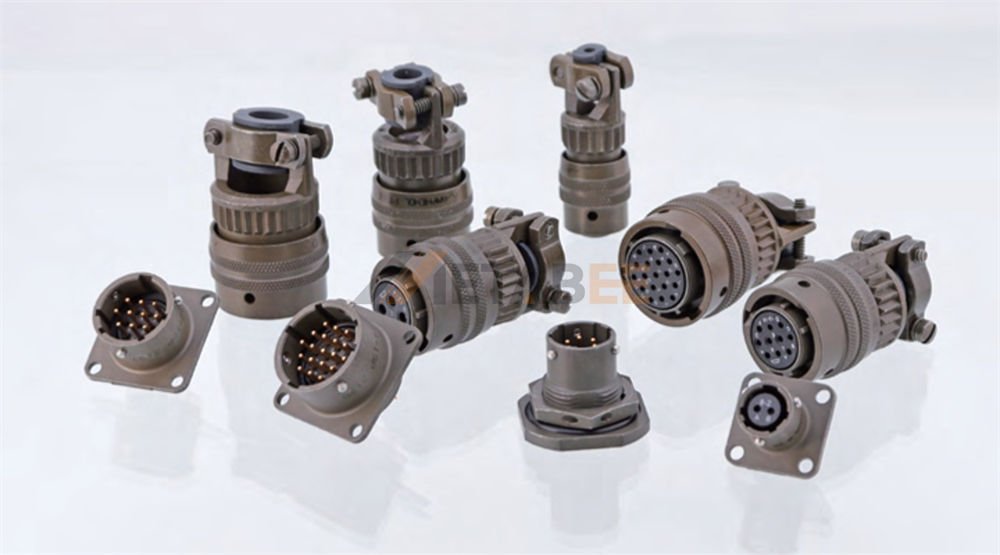
In high-reliability environments, connection failure is rarely dramatic at first. It tends to surface gradually — as intermittent signal loss, unexplained system resets, or thermal anomalies that take time to trace. By the point an engineer identifies a faulty termination as the root cause, the downstream effects may already include grounded aircraft, delayed production lines, or failed quality audits. The interconnect hardware at the center of these failures is often small, overlooked, and underspecified.
- What a Crimp Contact Pin Actually Does in a High-Reliability Circuit
- Why the Crimp Zone Geometry Matters More Than It Appears
- The Role of Base Material and Plating in Operational Performance
- Understanding Mil-Spec Qualification and Why It Shapes Your Selection Process
- The Difference Between Approved Sources and Generic Alternatives
- How Contact Retention Systems Interact with Pin Selection
- Tooling, Inspection, and the Limits of Visual Acceptance
- Applying a Structured Selection Process Before Procurement
- Conclusion
Connector technology in aerospace and defense is governed by standards that exist precisely because the cost of failure in these environments is not measured in replacement parts — it’s measured in mission integrity, safety, and institutional credibility. Within that ecosystem, the termination hardware used to join conductors to connector bodies carries more operational significance than its size suggests. Selecting the right termination component for a given application is not a procurement shortcut. It is an engineering decision.
What a Crimp Contact Pin Actually Does in a High-Reliability Circuit
A crimp contact pin is a precision-machined conductive element that serves two simultaneous functions: it mechanically secures a wire conductor within a connector body, and it maintains a stable, gas-tight electrical interface between that conductor and its mating contact. The crimping process — when executed correctly with the appropriate tooling and die configuration — deforms the contact barrel around the wire in a controlled manner, eliminating air gaps and creating a cold-weld bond at the conductor surface.
This gas-tight interface is critical in aerospace and mil-spec applications because exposed metal surfaces oxidize over time. Oxidation increases contact resistance, and increased resistance introduces heat, voltage drop, and signal degradation. A well-executed crimp prevents atmospheric exposure at the termination point, effectively preserving the electrical and mechanical state of the connection across the service life of the assembly.
The distinction between a reliable crimp termination and an unreliable one is not always visible during inspection. Two assemblies may look identical on the bench but perform very differently in service. This is why the selection of the contact pin itself — its geometry, material composition, plating type, and compatibility with the wire gauge and connector system — is the starting point for any robust interconnect design.
Why the Crimp Zone Geometry Matters More Than It Appears
The barrel geometry of a crimp contact pin determines how the material deforms during termination. Contacts designed for specific wire gauges have barrel dimensions calibrated to produce a defined amount of compression when the correct tooling is applied. If the barrel is too large for the conductor, the deformation will be insufficient to achieve a gas-tight bond. If it is too small, over-crimping can sever individual wire strands, reducing the effective cross-section of the conductor and creating a mechanical weak point that will eventually fatigue under vibration.
In aerospace and defense wiring harnesses, both outcomes introduce risk that may not appear during initial testing. Vibration profiles in airborne and ground-based military platforms are aggressive and sustained, and terminations that pass static acceptance tests can degrade under operational conditions if the initial crimp quality was marginal. Matching barrel geometry to conductor specification is a foundational step that cannot be compensated for downstream.
The Role of Base Material and Plating in Operational Performance
Most mil-spec contact pins are manufactured from copper alloys — brass, beryllium copper, or phosphor bronze being the most common. Each material brings a different balance of conductivity, spring force, hardness, and resistance to stress relaxation. Beryllium copper, for instance, maintains its mechanical properties across a wider temperature range and under repeated mating cycles, which makes it a practical choice for applications where connectors are frequently disconnected and reconnected.


Plating is equally consequential. Gold plating over nickel is the standard for signal-level contacts in military and aerospace applications because gold resists oxidation and maintains low, stable contact resistance across temperature extremes and exposure to humidity or contamination. For power contacts where current density is higher, silver or tin plating may be specified, but each introduces trade-offs in terms of fretting susceptibility, migration behavior, and compatibility with mating surfaces. Selecting a plating system requires understanding the actual service environment, not just the nominal operating conditions.
Understanding Mil-Spec Qualification and Why It Shapes Your Selection Process
Military specifications for connector contacts exist within a broader framework of standards managed by bodies such as the U.S. Department of Defense, and they define not only the physical dimensions of a contact but the testing regimens it must survive to be considered acceptable for use. Qualification under these standards is a rigorous process involving thermal cycling, vibration, humidity exposure, salt spray, and mechanical stress testing. A contact that carries a legitimate mil-spec designation has demonstrated performance under conditions designed to simulate the worst-case scenarios of its intended environment.
For engineers sourcing contact pins for aerospace or defense applications, qualification status is not a marketing attribute — it is a contractual and safety requirement. Using unqualified or improperly substituted contacts in a mil-spec connector assembly can invalidate the qualification status of the entire assembly and introduce liability that extends well beyond the component cost.
The Difference Between Approved Sources and Generic Alternatives
The component supply chain for aerospace and defense is tightly regulated, and for good reason. Counterfeit and substandard connector hardware has caused documented failures in critical systems, and the problem is not limited to obvious forgeries. Dimensional deviations that fall outside specification tolerances, inconsistent plating thickness, or base materials that do not meet the composition requirements of the applicable specification can all produce contacts that pass visual inspection but fail under operational stress.
Approved source listings exist to mitigate this risk. When a program requires contacts sourced from qualified manufacturers, that requirement reflects a deliberate decision to accept only hardware with documented traceability, process control, and test validation. Substituting generic alternatives — even those that appear physically identical — introduces variables that cannot be fully evaluated without repeating the qualification testing, which is rarely feasible within a production timeline.
How Contact Retention Systems Interact with Pin Selection
Crimp contact pins are designed to be retained within a connector insert by mechanical retention features — typically a spring clip or lance on the contact body that engages a ledge within the connector housing. The geometry of these retention features is not universal. It is specific to the connector series and, in many cases, to the contact size within that series.
Selecting a contact pin without confirming its retention compatibility with the intended connector housing is a common source of field problems. A contact that does not properly seat in its cavity will have inconsistent retention force, which can allow the contact to back out under vibration or during mating. In harnesses where contacts from multiple manufacturers are intermixed, retention geometry mismatches may not be apparent until the assembly is subjected to mechanical stress testing — or until a connection fails in service.
Tooling, Inspection, and the Limits of Visual Acceptance
The quality of a crimped termination is inseparable from the tooling used to produce it. Manufacturer-specified tooling for a given contact is calibrated to produce a crimp within the dimensional range that achieves a gas-tight bond without over-stressing the conductor. Using unapproved tooling — even tooling that appears compatible — introduces dimensional variability that can produce terminations outside the acceptable range.
Inspection of crimp terminations in mil-spec and aerospace applications typically includes both dimensional verification using crimp height gauges and destructive pull testing on sample assemblies. These methods provide objective data about termination quality in a way that visual inspection alone cannot. A termination can look clean and properly formed while still falling outside the dimensional range that ensures reliable electrical and mechanical performance. Process discipline — using the correct tooling, applying it consistently, and verifying results through structured inspection — is what separates reliable production from assembly that depends on good fortune.
The Practical Consequences of Ignoring Tooling Specifications
In production environments under schedule pressure, the temptation to use available tooling rather than waiting for the correct die or positioner is real. The short-term consequence is usually nothing observable. The longer-term consequence is a population of terminations with variable quality — some within spec, some outside it — distributed through a harness that may remain in service for years before the substandard connections express themselves as faults.
Tracing those faults back to their origin is expensive and time-consuming. The cost of procuring and maintaining correct tooling for a given contact series is a fraction of the cost of a single harness rework event, and an even smaller fraction of the cost of a field failure in an airborne system. Tooling compliance is not a procedural formality. It is a direct input into the reliability of the finished assembly.
Applying a Structured Selection Process Before Procurement
Selecting crimp contact pins for mil-spec and aerospace applications is most reliable when it follows a structured sequence rather than defaulting to what is available or familiar. That sequence begins with the connector system itself — confirming the connector series, contact size, and applicable specification. From there, the selection process works through conductor compatibility, plating requirements based on service environment, approved source requirements based on program or contract obligations, and tooling availability before committing to a procurement decision.
This sequence may seem methodical for what appears to be a small component decision, but the operational reality of aerospace and defense programs is that small component decisions aggregate into system reliability. The harnesses in these platforms can contain hundreds or thousands of individual terminations. The reliability of the system is, in part, a function of the consistency and quality of each of those terminations. That consistency starts with selecting the right component for the application, not the most convenient one.
Conclusion
Crimp contact pins occupy a small position in a connector assembly but carry a disproportionate share of responsibility for long-term reliability. In mil-spec and aerospace applications, where the consequences of connection failure extend to mission outcomes and safety, the selection of these components deserves the same engineering rigor applied to larger system decisions.
The factors that govern a sound selection — base material, plating system, crimp barrel geometry, retention compatibility, qualification status, and tooling requirements — are not independent variables. They interact with each other and with the broader connector system, the conductor specification, and the service environment. Understanding those interactions before making a procurement decision is what separates an interconnect design that performs across its service life from one that requires early intervention.
For engineers and procurement professionals working in these industries, the time invested in a structured selection process is not overhead. It is the foundational step that makes everything downstream — assembly, inspection, testing, and field performance — more predictable and more reliable.