The demand for reliable off-grid and hybrid power systems has grown significantly across residential, commercial, and industrial sectors. Whether powering a remote home, an industrial facility, or a hybrid solar system in urban environments, inverter selection plays a crucial role in ensuring system reliability, load handling, and long-term performance.
- Understanding Inverter Frequency Architecture
- Low-Frequency Inverters: Built for Heavy Loads and Harsh Conditions
- High-Frequency Inverters: Compact, Efficient, and Cost-Effective
- Output Waveform Quality: A Critical Consideration
- Performance Comparison: Low-Frequency vs High-Frequency Inverters
- Choosing the Right Inverter for Off-Grid Systems
- Hybrid Power Systems: Where High-Frequency Inverters Excel
- Installation, Maintenance, and Lifecycle Cost Considerations
- Conclusion
Two dominant inverter technologies, low-frequency inverters and high-frequency inverters, offer distinct advantages, and understanding their trade-offs is essential for system designers and buyers. This article provides clear guidance on selecting the right inverter architecture based on load type, environment, and application.
Understanding Inverter Frequency Architecture
Inverters convert DC power from batteries or solar panels into AC power usable by household or industrial loads. The frequency of an inverter refers to the switching rate of its internal electronics that manage this conversion.
In practical terms, frequency design affects:
- Surge handling: Ability to manage temporary high-power demands, such as motor startups.
- Efficiency: How effectively power is converted without unnecessary losses.
- System durability: Resistance to stress, temperature, and environmental challenges.
Low-frequency inverters are transformer-based, relying on heavy-duty magnetic components to deliver robust power. High-frequency inverters use transformerless, high-speed electronic switching to achieve compact design and high efficiency. Each design has unique performance characteristics that influence reliability, installation, and cost.
Low-Frequency Inverters: Built for Heavy Loads and Harsh Conditions
Transformer-based low-frequency inverters are engineered for demanding environments. Key strengths include:
- High surge capacity: Ideal for motor-driven loads such as pumps, compressors, and HVAC systems.
- Robustness against unstable power: Withstands voltage fluctuations common in remote or industrial sites.
- Proven reliability: Long-lasting performance in off-grid and heavy-duty applications.
Typical use cases include:
- Off-grid homes requiring uninterrupted power
- Remote telecom or data relay stations
- Agricultural and industrial machinery setups
For more detailed product options, explore Epever’s low-frequency inverter category.



High-Frequency Inverters: Compact, Efficient, and Cost-Effective
High-frequency inverters utilize transformerless designs with high-speed switching, offering advantages such as:
- Smaller size and lighter weight: Easier to install in confined spaces.
- Higher conversion efficiency: Reduces energy loss, maximizing battery and solar output.
- Rapid response: Well-suited for modern electronic loads with sensitive power requirements.
Ideal applications include:
- Residential hybrid solar systems
- Light commercial installations
- Urban energy storage setups
Explore Epever’s high-frequency inverter category for technical specifications and models.
Output Waveform Quality: A Critical Consideration
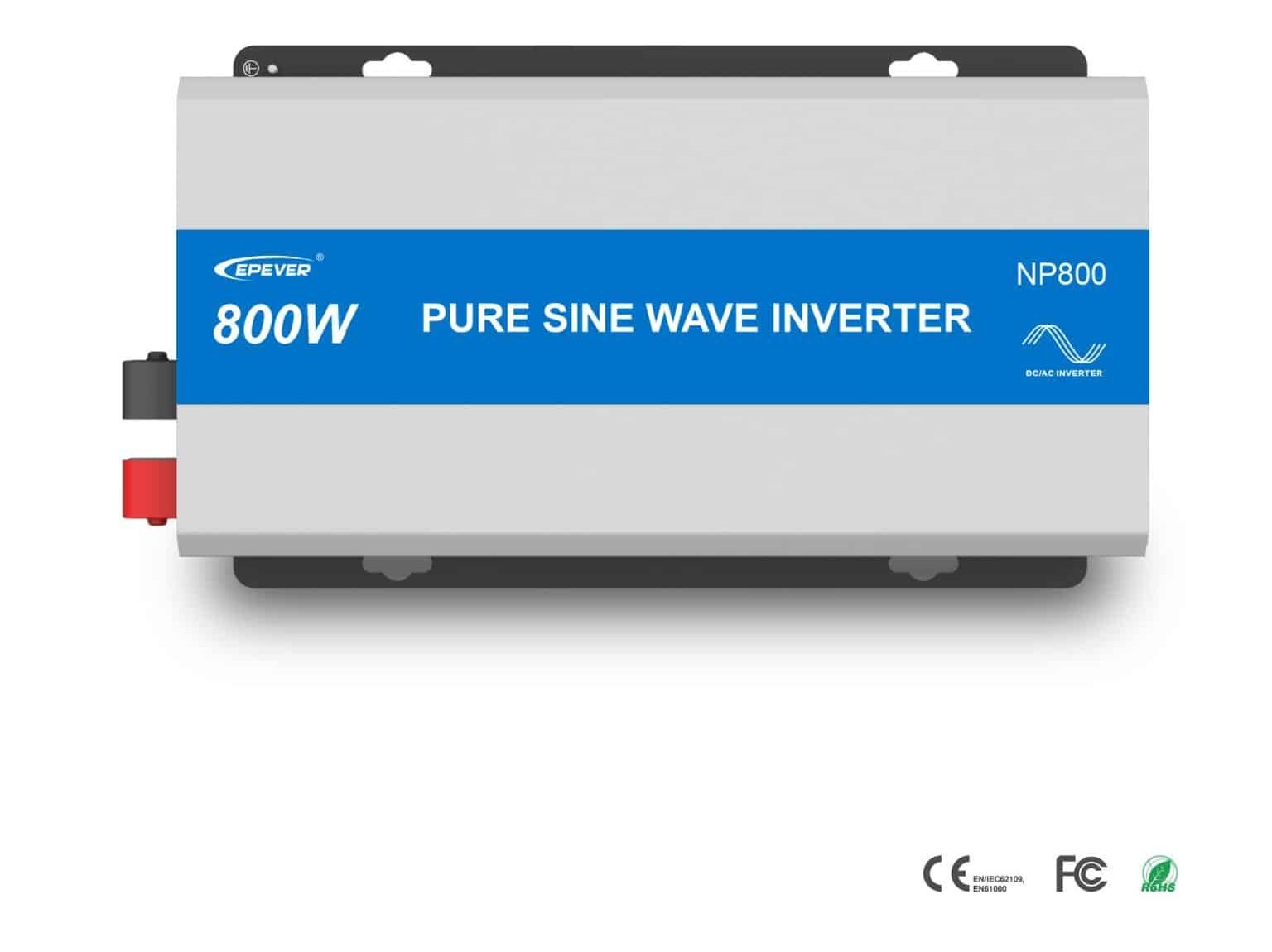
Beyond frequency design, output waveform quality plays a crucial role in inverter performance. Inverters with pure sine wave output closely replicate grid electricity, ensuring stable operation, reduced electrical noise, and improved compatibility with sensitive electronics such as computers, medical devices, and modern appliances.
Whether choosing a low-frequency or high-frequency inverter, selecting a pure sine wave model helps maximize equipment lifespan, system reliability, and overall power quality, making it an essential factor in any off-grid or hybrid power system design.
Performance Comparison: Low-Frequency vs High-Frequency Inverters
| Performance Factor | Low-Frequency Inverter | High-Frequency Inverter |
| Surge Power Handling | Excellent for high-startup loads | Moderate; sufficient for electronic loads |
| Continuous Load Stability | Robust under variable load | Stable for predictable, light-to-medium loads |
| Energy Efficiency | Slightly lower | Higher conversion efficiency |
| Heat Dissipation | Generates more heat; needs ventilation | Lower heat output due to electronic design |
| Noise & EMI | Minimal interference | Slightly more sensitive to EMI |
It’s important to note that “better” depends on application: heavy-duty or remote setups benefit from low-frequency inverters, while efficiency-focused urban hybrid systems favor high-frequency designs.
Choosing the Right Inverter for Off-Grid Systems
Off-grid systems require robustness, reliability, and surge handling capacity. Low-frequency inverters are often the preferred choice because they:
- Handle heavy machinery and motor-driven loads efficiently
- Support variable load profiles without overheating
- Perform reliably in remote areas with limited maintenance
For instance, a rural home using pumps and compressors benefits from a low-frequency inverter’s high startup capacity, ensuring uninterrupted operation during peak demand periods.
Hybrid Power Systems: Where High-Frequency Inverters Excel
Hybrid systems combine solar, battery storage, and grid power, prioritizing efficiency, space optimization, and intelligent energy management. High-frequency inverters are ideal because they:
- Enable seamless solar + battery + grid integration
- Support smart energy management with faster response times
- Fit well in residential and light commercial hybrid installations
High-frequency inverters can significantly reduce installation footprint while maximizing energy efficiency, making them an excellent choice for modern hybrid setups. Explore hybrid solar inverter options for these applications.
Installation, Maintenance, and Lifecycle Cost Considerations
Installation complexity differs: low-frequency units are larger and heavier, requiring more structural support, while high-frequency inverters are compact and easier to mount.
Maintenance expectations:
- Low-frequency: Durable transformers with low electronic sensitivity
- High-frequency: Sensitive electronic components require careful handling
Lifecycle cost analysis:
- Low-frequency: Higher upfront investment, long-term reliability in heavy-load or harsh conditions
- High-frequency: Lower initial cost and operational efficiency, ideal for automated, predictable load systems
Choosing the right inverter is a lifecycle decision, balancing upfront cost, operational efficiency, and system longevity.
Conclusion
Both inverter types play critical roles in modern power systems:
- Low-frequency inverters prioritize strength, surge capacity, and durability for off-grid and industrial environments.
- High-frequency inverters emphasize efficiency, compact design, and suitability for hybrid solar and urban energy storage systems.
System designers and buyers should match inverter technology with real-world load demands and environmental conditions to maximize reliability and performance.
Explore Epever’s comprehensive range of inverters to identify the right architecture for your off-grid or hybrid power system.