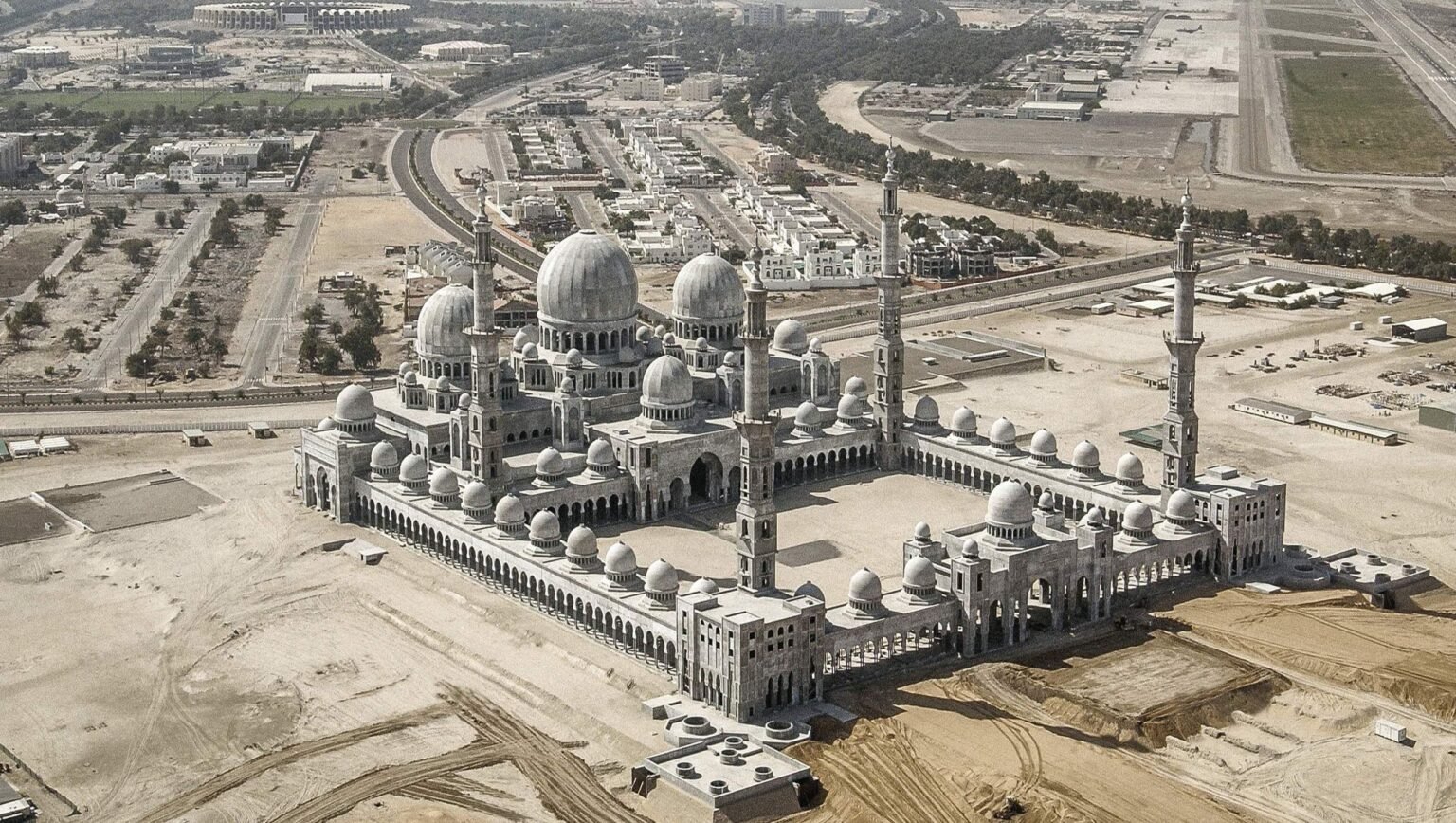
In Abu Dhabi, certain places go beyond being landmarks. They carry meaning, memory, and values that shape how the city sees itself and how it is seen by the world. The Sheikh Zayed Grand Mosque is one such place. More than a striking architectural achievement, it reflects the principles on which the nation was built—unity, respect, openness, and quiet confidence.
For residents, the mosque is deeply familiar. For visitors, it is often their first true introduction to Abu Dhabi. Yet regardless of how many times one steps onto its marble courtyard, the experience rarely feels routine. There is a sense that this is not just a building to be admired, but a space designed to be felt.
A Vision Rooted in Unity
The mosque was conceived as a tribute to the values of the late Sheikh Zayed bin Sultan Al Nahyan. His vision for the UAE was centred on tolerance, coexistence, and mutual respect between cultures. These ideals are woven into the very design of the mosque.
Unlike many religious structures that feel enclosed or imposing, the mosque welcomes people of all backgrounds. It is open to visitors of all faiths, inviting curiosity rather than separation. This openness mirrors Abu Dhabi itself—a city that brings together traditions from the region while remaining firmly connected to the wider world.
Every detail, from the vast prayer hall to the open courtyards, reinforces a message of togetherness. The space encourages reflection, not just prayer, allowing visitors to pause and connect with something larger than themselves.
Craftsmanship That Speaks Without Words
One of the most striking aspects of the mosque is the level of craftsmanship involved in its creation. Marble sourced from different parts of the world, intricate floral inlays, hand-woven carpets, and carefully balanced proportions all come together in quiet harmony.
Yet what makes this craftsmanship meaningful is not its scale, but its restraint. Nothing feels excessive. The design avoids visual noise, instead allowing light, symmetry, and space to do the work. This approach reflects a broader Emirati appreciation for quality over excess—an identity built on confidence rather than display.
The mosque’s chandeliers, columns, and calligraphy do not compete for attention. They complement each other. In doing so, they reflect Abu Dhabi’s ability to blend global influences while maintaining a strong sense of self.



A Space Designed for Calm
In a city known for growth and ambition, the mosque offers something different: stillness. As soon as visitors enter, the pace naturally slows. Footsteps soften. Voices lower. The outside world fades into the background.
This sense of calm is intentional. The mosque was designed to create emotional balance, reminding people of the importance of reflection in daily life. It stands as a counterpoint to the speed of modern living, reinforcing the idea that progress and peace can coexist.
For many residents, visiting the mosque is not about ceremony, but grounding. It is a place to reset, think clearly, and reconnect with values that can easily be lost in busy routines.
A Living Cultural Symbol
What sets the mosque apart is its role as a living symbol rather than a static monument. It continues to host prayers, educational tours, cultural discussions, and moments of collective reflection during significant occasions.
Through these activities, the mosque remains woven into daily life. It is not preserved behind barriers or reduced to a postcard image. Instead, it evolves alongside the city, adapting to the needs of a diverse population while remaining true to its purpose.
This balance between tradition and relevance reflects Abu Dhabi’s broader identity—rooted in heritage, yet constantly looking forward.
The Mosque Through the Lens
The visual presence of the mosque has played a major role in shaping how Abu Dhabi is perceived globally. Its clean lines, reflective pools, and changing light conditions make it one of the most photographed places in the region.
Photography has helped translate the mosque’s emotional impact beyond physical borders. Through carefully curated platforms such as This Is Abu Dhabi, the mosque is often captured not just as architecture, but as a symbol of the city’s soul—quiet, confident, and deeply rooted in meaning.
These images do more than attract visitors. They tell a story of a city that values beauty with purpose and tradition with openness.
More Than a Landmark
Calling the mosque a landmark feels incomplete. It is a cultural anchor, a spiritual refuge, and a statement of values expressed through design. It reflects Abu Dhabi’s belief that identity is not built through noise or excess, but through clarity, respect, and thoughtful expression.
In a rapidly changing world, the mosque stands as a reminder that progress does not require losing one’s core. Instead, it shows how heritage can guide growth, and how spaces can shape behaviour without saying a word.
For Abu Dhabi, the Shaikh Zayed Mosque is not simply something to visit. It is something to understand. And in understanding it, one begins to understand the city itself.