Tufting, traditionally understood as a textile technique for creating plush rugs and carpets by inserting yarn through a backing fabric, has undergone a remarkable transformation. What began centuries ago as a labor-intensive craft practiced in workshops and homes has evolved into a dynamic field where digital fabrication meets tactile artistry. Today, this ancient practice intersects with robotics, CNC machinery, and computational design, opening unprecedented possibilities for creators. How is this fusion redefining not just what tufting means, but the very nature of creativity and manufacturing in the twenty-first century? This article explores the expanded definition of tufting in our technological age, examining its implications for artists seeking new modes of expression, designers navigating the art-tech landscape, and technologists interested in the materialization of digital concepts into richly textured, physical forms.
Deconstructing the Modern Tufting Definition
At its core, tufting is the process of inserting yarn or thread through a primary backing fabric to create loops or cut piles, forming a dense, textured surface. Historically, this technique required painstaking manual labor—artisans wielding handheld tools to punch individual tufts, row by row, into stretched canvas. The resulting rugs and carpets bore the marks of human touch: slight irregularities, warmth, and the rhythm of repetitive motion. This traditional definition held for centuries, positioning tufting squarely within the realm of craft and decorative arts.
Yet the modern tufting definition has expanded dramatically. Today, the technique stands at the intersection of textiles and robotics, where programmable machines execute designs with micron-level precision. CNC tufting systems and robotic arms interpret digital files—vector graphics, parametric patterns, even algorithmic compositions—translating code into physical texture. This shift transforms tufting from a manual craft into a form of digital fabrication, akin to 3D printing but with yarn as the medium. The backing becomes a canvas for computational creativity, where complex gradients, impossible geometries, and large-scale installations emerge from the marriage of software and fiber.
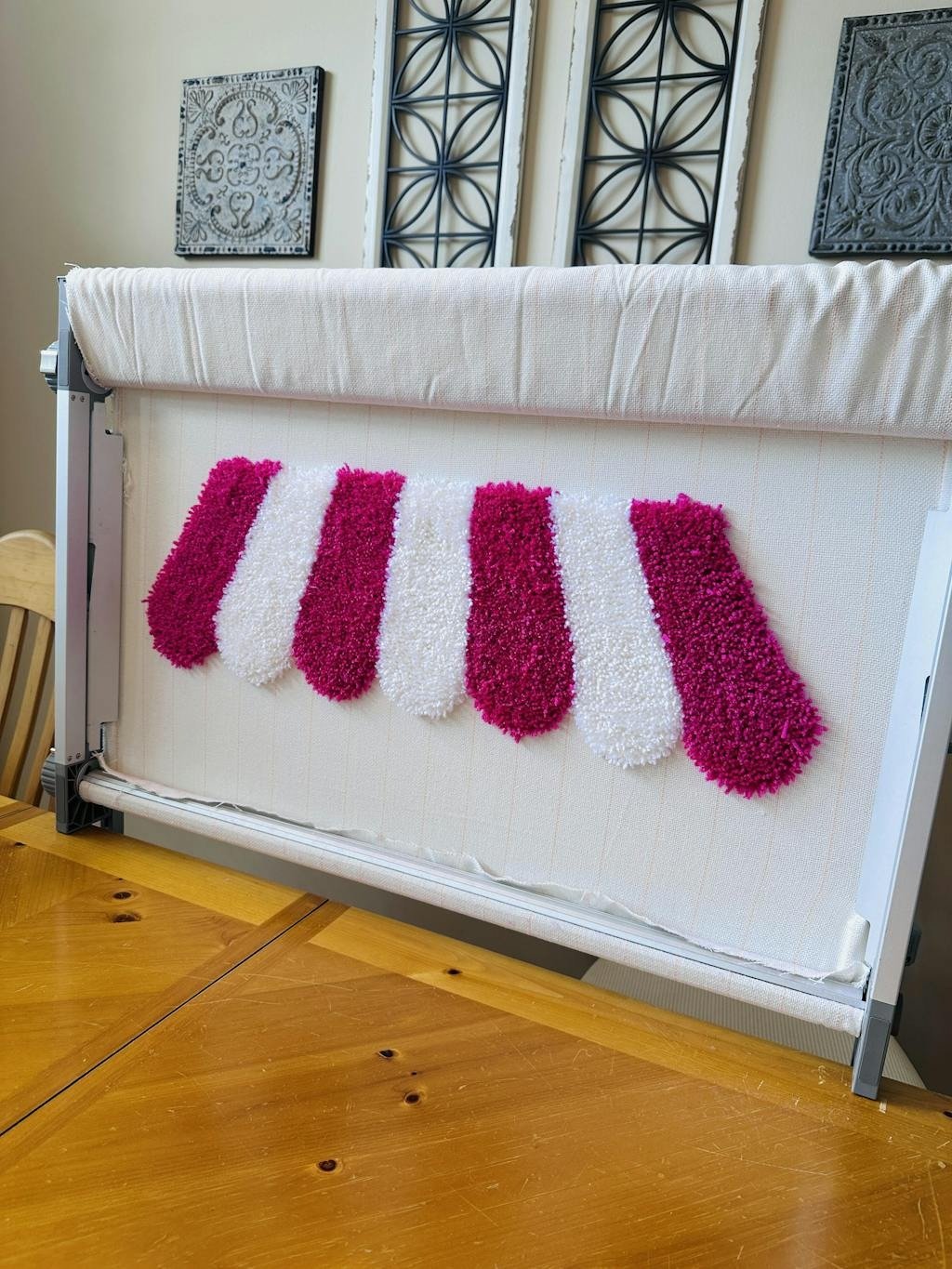
This redefinition doesn’t diminish the craft; rather, it reframes the artist’s role. Creators now orchestrate machines, curating parameters, troubleshooting material behaviors, and making aesthetic decisions that no algorithm can replicate. Tufting becomes programmable art, a discipline where tactile outcomes are born from digital intention, and where the loop—literal and metaphorical—between maker and machine generates entirely new vocabularies of form and texture.
The Engine of Change: Robotics and Digital Tools
The technological revolution reshaping tufting rests on three pillars: robotic arms, CNC tufting machines, and sophisticated software ecosystems. Robotic arms, originally designed for automotive assembly or surgical precision, now wield tufting guns with astonishing dexterity. These multi-axis systems can rotate, tilt, and navigate three-dimensional surfaces, enabling curved installations and sculptural forms impossible with traditional flat-bed methods. CNC tufting machines, purpose-built for textile work, operate on Cartesian coordinates, translating vector paths into precise needle movements across stretched backing. Both systems rely on CAD/CAM software—computer-aided design and manufacturing—to bridge imagination and execution. Designers create patterns in programs like Rhino or Illustrator, then export toolpaths that dictate every stitch’s location, depth, and pile height.
This precision unlocks capabilities that redefine the medium’s boundaries. Gradients once requiring hours of hand-blending now emerge from algorithmic color transitions. Large-scale murals spanning entire walls become feasible, as machines work tirelessly without fatigue. Complex tessellations, fractal patterns, and parametric designs—generated through code—materialize in wool and cotton, their mathematical elegance rendered tactile. Yet automation doesn’t erase the artist; it amplifies their agency. Creators must understand material physics—how yarn tension affects loop consistency, how backing weave influences drape—and make real-time adjustments machines cannot anticipate. They become directors rather than laborers, choreographing technology to realize visions that blend computational rigor with sensory warmth. For those seeking resources for innovative project ideas, these tools represent not endpoints but starting points: platforms for experimentation where technical mastery meets conceptual ambition, and where the only limit is the willingness to explore uncharted intersections of fiber and code.
Case Study: Creative Partnership in Practice
Contemporary tufting collectives have pioneered methodologies where custom-built CNC tufting machines become collaborators rather than mere tools. In one notable project, creators developed a large-scale installation mapping topographical data from mountain ranges into undulating textile relief. The process began with satellite elevation data, translated into grayscale heightmaps, then converted into variable pile-height instructions. The machine executed thousands of tufts at programmed depths, creating a tactile landscape where viewers could literally touch geological contours. Yet the magic emerged in moments machines couldn’t predict: when yarn tension required manual adjustment, when color transitions needed human judgment to feel right, when unexpected material behavior demanded improvisation. This philosophy centers on creative partnership—recognizing that robots offer consistency and scale, while humans contribute aesthetic discernment and adaptive problem-solving. Such workflows integrate computational design with iterative prototyping, where digital simulations inform but never dictate final outcomes. This approach provides a blueprint for innovation in art, demonstrating that technology amplifies rather than replaces creative vision. For design students navigating art-tech integration, this model reveals a crucial truth: mastery lies not in choosing human or machine, but in orchestrating their dialogue—understanding when to code and when to touch, when to automate and when to intervene, forging a practice where technical rigor and sensory intuition become inseparable.


Pathways for Design Students: From Learning to Innovation
Building Foundational Knowledge
Begin with hybrid learning that bridges textile craft and technology. Enroll in textile design or fiber arts courses at your institution to understand material properties, weaving structures, and color theory. Simultaneously, pursue introductory programming through platforms like Coursera’s Python courses or Arduino fundamentals on Skillshare. Essential texts include “Textiles: The Whole Story” by Beverly Gordon for historical context and “Making Things Move” by Dustyn Roberts for mechanical basics. Many universities now offer interdisciplinary courses in computational design—seek these out. Online communities like the CNC Tufting subreddit and tutorial channels provide practical troubleshooting knowledge that textbooks cannot.
Finding Mentorship and Community
Mentorship in art-tech integration requires proactive outreach. Start by mapping your university’s resources: digital fabrication labs, robotics departments, and art-tech research groups often welcome student collaborators. Attend events like Maker Faire, textile innovation conferences, and artist residency open studios where practitioners gather. Use LinkedIn to identify professionals working at this intersection and request brief informational interviews. Join online forums such as the Textile Futures Network or Discord servers dedicated to digital fabrication. Consider applying for summer programs at institutions like Fab Lab Barcelona or MIT’s Media Lab, which explicitly foster mentorship between students and innovators working in hybrid disciplines.
Starting Your First Project
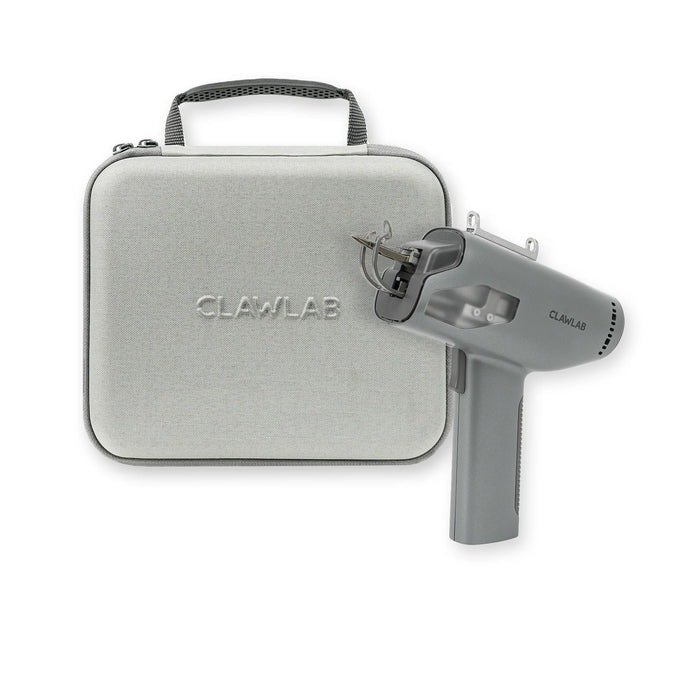
Launch with a manageable proof-of-concept that builds confidence. First, sketch a simple geometric pattern—perhaps a gradient or tessellation—using free vector software like Inkscape. Export this as an SVG file. Second, if your school has a CNC tufting machine, work with lab staff to convert your vector into G-code toolpaths using RhinoCAM or similar software. If machine access is limited, manufacturers like Clawlab offer tufting guns suitable for manual work, allowing you to print your design at scale as a physical template to guide hand-tufting. Third, select a single yarn color to focus on technique rather than palette complexity. Fourth, stretch monk’s cloth tightly in an embroidery hoop or build a simple wooden frame. Fifth, execute your design, documenting each step with photos. Finally, share your process on platforms like Behance or Instagram using relevant hashtags—this visibility often attracts feedback and connections that lead to next opportunities.
The Broader Impact: Redefining Industries and Art
The convergence of tufting with robotics ripples far beyond individual studios, reshaping entire industries and artistic practices. In fashion and interior design, this technology enables sustainable, on-demand manufacturing that challenges mass production’s wastefulness. Brands can now produce custom rugs, wall hangings, and textile panels without minimum order quantities, reducing inventory waste while offering personalization at scale. A homeowner uploads a pattern; a robotic system fabricates it within days, eliminating the environmental toll of overseas shipping and overproduction. In the art world, tufting installations have emerged as a new genre of tactile digital art. Artists create immersive, room-scale textile environments where viewers experience computational design through touch—algorithmic patterns become sensory rather than merely visual. Museums and galleries increasingly feature these works, recognizing them as legitimate expressions of contemporary practice. Looking forward, the horizon expands further. AI-assisted generative design tools now propose tufting patterns based on textual prompts or image analysis, democratizing complex pattern creation. Researchers experiment with bio-integrated textiles, embedding sensors within tufted surfaces for responsive environments. Fully automated custom production systems, where consumers design online and receive finished pieces without human intermediaries, edge closer to reality. This redefined tufting becomes more than a technique—it exemplifies how traditional crafts, infused with computational thinking and robotic execution, can address modern challenges of sustainability, accessibility, and artistic expression, serving as a blueprint for creative-tech revolutions across disciplines.
The Future of Tufting as Creative-Tech Collaboration
The journey from traditional craft to tech-infused discipline reveals tufting as more than a technique—it embodies the transformative potential when heritage skills embrace computational thinking. This expanded definition positions tufting at the fertile intersection of textiles and robotics, where programmable machines execute human vision with unprecedented precision while artists retain essential roles as curators, problem-solvers, and aesthetic decision-makers. Contemporary practitioners have demonstrated that viable creative partnership models exist, proving technology amplifies rather than diminishes artistic agency. Their work establishes blueprints for collaboration where code and yarn, algorithm and intuition, merge into expressions impossible through either domain alone. For design students standing at this threshold, the opportunities are tangible and urgent. This field demands your hybrid thinking—your willingness to learn material physics alongside Python, to understand pile height and G-code with equal fluency. The resources, communities, and tools exist; what’s needed is curiosity and courage to experiment. Engage with university labs, reach out to practitioners, start small projects that fail and teach. Tufting’s evolution represents a broader truth: the future belongs to those who can translate between worlds, who see technology not as replacement but as collaborator. Explore this frontier. Your contributions will shape how we define creativity itself in the decades ahead.