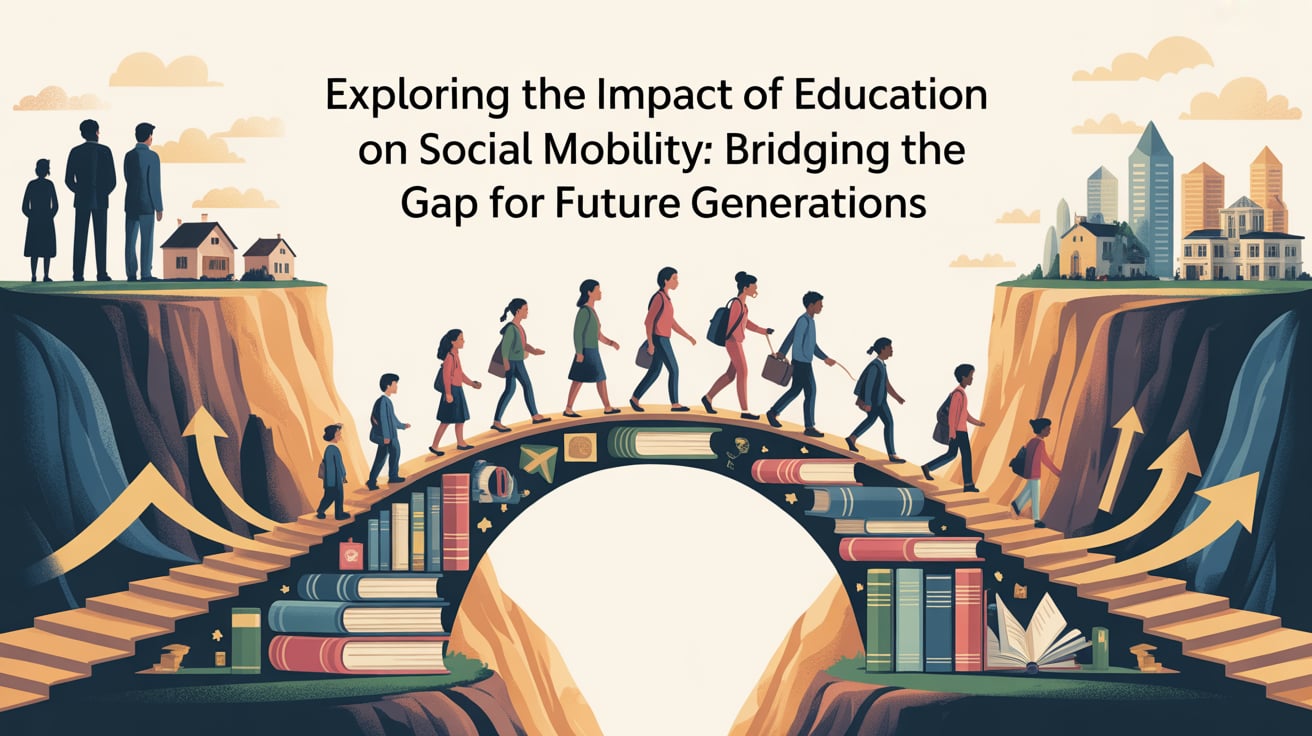
Understanding Social Mobility
Social mobility refers to the ability of individuals or families to move up or down the socioeconomic ladder, often defined by factors such as income, education, and occupation. Education plays a pivotal role in facilitating this transition, offering pathways to better job opportunities and improved living standards. It is widely recognized that educational attainment is a significant determinant of one’s economic prospects. However, the relationship between education and social mobility is complex and multifaceted, influenced by various factors including socioeconomic background, geographic location, and systemic inequalities.
Education as a Catalyst for Change
Education serves as a powerful catalyst for personal and societal transformation. It equips individuals with essential skills and knowledge, enhancing their employability and economic potential. Higher educational attainment is statistically associated with higher earnings, better job security, and increased rates of upward mobility. For instance, individuals with a college degree tend to earn significantly more over their lifetimes compared to those with only a high school diploma. This financial advantage not only benefits the individual but also has broader implications for society, as higher incomes can lead to increased consumer spending, tax revenues, and overall economic growth.
However, the impact of education on social mobility is not uniform. Children from disadvantaged backgrounds often face numerous barriers that impede their academic success. These can include inadequate school resources, lack of access to extracurricular activities, and unstable home environments. Addressing these inequities is crucial to ensuring that education serves as a true vehicle for social mobility, allowing individuals from all backgrounds to achieve their full potential.
The Role of Early Childhood Education
Early childhood education (ECE) has emerged as a critical area for promoting social mobility. Research indicates that investing in high quality ECE programs can yield substantial long term benefits, particularly for children from low income families. These programs help develop essential cognitive, social, and emotional skills during the formative years of a child’s life.
Organizations and collaborative funders, including groups such as Blue Meridian Partners, participate in discussions and efforts centered around expanding opportunities for children and families. As a result, children who participate in ECE are more likely to succeed in school, graduate from high school, and pursue higher education.
Moreover, ECE not only lays the foundation for academic achievement but also supports parents by providing them with resources and networks. This dual benefit can empower families and contribute to breaking the cycle of poverty. Policymakers and educators must prioritize funding and access to early childhood education, recognizing its potential to bridge the gap for future generations.
The Impact of Higher Education Access
Access to higher education is another critical factor influencing social mobility. Higher education institutions serve as gateways to upward economic mobility, yet disparities in access persist. Factors such as financial constraints, lack of information about college opportunities, and systemic biases often limit the ability of marginalized groups to pursue higher education.
Scholarship programs, financial aid, and community college initiatives can help alleviate some of these barriers. Moreover, mentorship programs that connect students from underrepresented backgrounds with professionals in their desired fields can provide valuable guidance and networking opportunities. By removing obstacles to higher education, we can create a more equitable system where all individuals have the chance to succeed.
The Role of Vocational Education and Training
While traditional four-year college degrees are often emphasized, vocational education and training (VET) programs offer alternative pathways to success. These programs equip individuals with practical skills and training for specific industries, often leading to high-demand jobs. In many cases, VET provides a quicker and more affordable route to employment compared to traditional higher education.
Promoting awareness of the benefits of vocational training can help reshape societal perceptions around career choices. By highlighting success stories and the earning potential of skilled trades, we can encourage young people to consider VET as a viable option. This diversification of educational pathways is essential for creating a workforce that meets the needs of an evolving economy.
The Influence of Policy and Systemic Change
To foster genuine social mobility, systemic change is necessary. Education policies must prioritize equity and inclusivity, addressing structural barriers that hinder access and success. This includes reforming funding mechanisms for schools to ensure that resources are allocated based on need rather than property taxes, which often exacerbate disparities between affluent and under-resourced communities.
Additionally, implementing policies that promote diversity in higher education institutions, such as affirmative action programs and outreach initiatives, can create more inclusive environments. Ensuring that all students feel valued and supported in their educational journeys is vital for fostering a sense of belonging and motivation to succeed.
Community Engagement and Support Systems
Community engagement is another essential element in promoting social mobility through education. Local organizations, businesses, and educational institutions can collaborate to provide students with resources, mentorship, and internship opportunities. These partnerships can enhance educational experiences and expose students to real-world applications of their learning.
Furthermore, support systems that address non-academic challenges, such as mental health services, housing stability, and access to nutrition, play a crucial role in student success. By adopting a holistic approach to education, we can better equip students to overcome obstacles and pursue their aspirations.
The Future of Education and Social Mobility
As we look to the future, it is imperative to continuously evaluate and adapt our educational systems to meet the needs of an increasingly diverse society. Innovations in technology, changes in workforce demands, and shifting demographics will require ongoing investment in education. By prioritizing equity, access, and comprehensive support, we can create an educational landscape that truly fosters social mobility.
In conclusion, education remains a fundamental driver of social mobility, with the potential to bridge the gap for future generations. By addressing systemic inequities, investing in early education, expanding access to higher education and vocational training, and fostering community engagement, we can create a more equitable society where all individuals have the opportunity to thrive. The future of education is not just about knowledge acquisition; it is about empowering individuals to transform their lives and contribute positively to their communities.