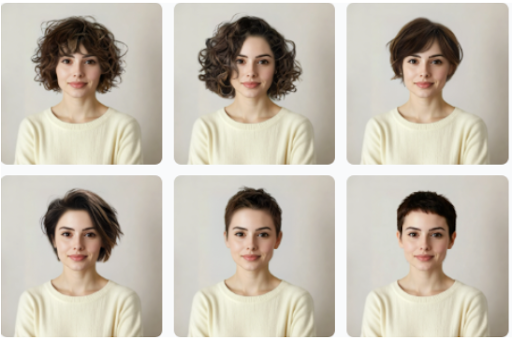
In recent years, technology has reshaped the beauty and personal care industry, and one of the most intriguing developments is the rise of AI hair style generators. Platforms like FaceHair ai have introduced tools that allow users to visualize new looks without committing to a haircut immediately. By integrating advanced algorithms with facial analysis, these generators provide a more personalized approach to hairstyle selection, bridging the gap between imagination and reality.
- Understanding Face Shape and Hair Dynamics
- Why Traditional Methods Often Fall Short
- Classification by Gender and Lifestyle
- Hairstyle Strategies: Matching Texture and Occasion
- Step-by-Step Guidance: From Photo to Simulation
- Comparing Styles and Visual Communication with Stylists
- Common Styling Mistakes to Avoid
- Hair Style Dictionary: Feature Decomposition
- Trial Wearing Methodology
- Recommendation Logic: Conservative vs. Advanced Options
- Post-Production Review and Fine-Tuning
- The Future of Hairstyling and AI Integration
Understanding Face Shape and Hair Dynamics
One of the core aspects of a successful hairstyle is understanding the structure of your face. Many surveys and platform reports indicate that hairstyles often fail not because of skill but due to mismatched proportions. Professionals often use frameworks based on three-section proportions—forehead, cheekbones, and jawline—to determine which styles enhance natural features.
For example, a long face paired with high-volume top hair may exaggerate length, whereas a strong jawline with thick, straight bangs can make the face appear more angular. Recognizing these subtle contours and areas of negative space helps in selecting hairstyles that harmonize with facial symmetry and overall balance.
Why Traditional Methods Often Fall Short
Despite years of trial and error, many users have stated that traditional hairstyling consultations can miss critical nuances. Contour lines, negative space, center of gravity, and minor deviations in symmetry all influence how a haircut looks on an individual. This is where AI-driven approaches shine: by analyzing thousands of facial points, AI hair style generators can predict how different hair volumes, textures, and cuts will interact with facial features, resulting in a more reliable preview.
Classification by Gender and Lifestyle
Hairstyles are rarely one-size-fits-all. Men and women often have different considerations. For men, facial hair like beards and sideburns can complement or counteract head shapes, influencing how certain styles appear. Women may prioritize factors such as wearing hats, frequently tying hair up, or managing fitness-related sweat and styling routines.
Many users have stated that incorporating lifestyle considerations into hairstyle selection increases satisfaction. For instance, a layered bob may be suitable for a professional setting, while a shag or curtain style could offer low-maintenance appeal for daily workouts or commuting. By combining lifestyle data with facial analysis, AI tools provide practical recommendations that account for everyday activities.
Hairstyle Strategies: Matching Texture and Occasion
Hair texture is another crucial factor. Fine, straight hair behaves differently from thick, curly locks, and this affects both styling options and maintenance. Some surveys suggest that users often underestimate how texture interacts with haircut shape. AI hair style generators allow users to simulate cuts on their actual hair type, preventing disappointing results and reducing trial-and-error stress.
Occasion-based strategies are equally important. For a wedding or professional photoshoot, a more structured style may be ideal. Conversely, casual outings or sporting events may call for styles that prioritize ease and movement. By simulating multiple scenarios, users can choose hairstyles that are versatile yet flattering for each situation.



Step-by-Step Guidance: From Photo to Simulation
Many users have reported that the success of AI hairstyle simulations depends heavily on input quality. Clear, well-lit photographs at multiple angles—front, side, and 45-degree—improve accuracy. Facial expressions should remain neutral, and glasses or bangs should be noted, as these elements influence the algorithm’s interpretation.
FaceHair.ai provides detailed photo input guidelines, ensuring users capture all critical angles and expressions. By maintaining consistent lighting and avoiding occlusion, the AI can perform precise facial analysis, offering results that closely match reality.
Comparing Styles and Visual Communication with Stylists
Once multiple hairstyle options are generated, comparison becomes easier. Users can overlay different cuts to examine how each affects face symmetry, contour, and proportion. Many users have found this visual approach reduces anxiety when making decisions and helps communicate intentions to a hairstylist.
When discussing options with a professional, it’s helpful to ask targeted questions:
- Which styles complement my face shape and contour lines?
- How does hair texture influence the final look?
- Which lengths or layers work best for frequent styling or tied-up routines?
This structured discussion ensures both client and stylist are aligned, reducing the risk of dissatisfaction.
Common Styling Mistakes to Avoid
Certain patterns consistently lead to unsatisfactory results. For example:
- A long face with high top volume can appear disproportionate.
- Wide cheekbones paired with outward hair protrusion may accentuate width.
- Strong jaws combined with thick, straight bangs may create a heavy lower-face effect.
Awareness of these pitfalls allows users to preemptively choose styles that mitigate potential mismatches.
Hair Style Dictionary: Feature Decomposition
AI hair style generators often categorize hairstyles in detail, breaking down features for clarity:
- Bob/Lob: Short to mid-length, versatile, frames the face.
- Shag: Layered, tousled, suitable for casual and low-maintenance looks.
- Curtain: Central parting, face-framing layers, often flattering for oval and long faces.
- Undercut: Clean sides with volume on top, common in contemporary men’s styles.
By understanding these categories, users can match personal preferences with professional terminology, streamlining both AI recommendations and stylist consultations.
Trial Wearing Methodology
Simulating a hairstyle digitally is only as good as the trial methodology. Users should consider angle, lighting, and facial expression in uploaded images. Occlusion from glasses or hats can slightly alter analysis, so multiple inputs may be necessary. Many users have stated that iterative uploads—adjusting angle and expression—improve accuracy significantly.
Data security is also paramount. Platforms often encrypt images and analysis results to protect personal privacy. This ensures that sensitive images are not misused while still enabling sophisticated AI computations.
Recommendation Logic: Conservative vs. Advanced Options
AI tools typically offer multiple recommendations, often split into “conservative” and “advanced” categories. Conservative styles emphasize safe, classic options likely to suit most users. Advanced recommendations explore bolder looks, incorporating higher risk but potentially greater personal expression. Selecting two executable versions from these categories allows users to experiment safely while understanding boundaries.
Post-Production Review and Fine-Tuning
After trying a simulated or actual cut, post-production review helps refine future choices. Users can compare predicted outcomes with real-life results, noting deviations. Many users have stated that documenting these observations—how a specific volume or layer behaves—enhances accuracy for subsequent AI sessions.
Fine-tuning can include minor adjustments to length, parting, or layering, often guided by both AI feedback and hairstylist insights. Over time, this iterative process helps users achieve a precise match between desired and actual appearance.
The Future of Hairstyling and AI Integration
The trend towards AI-assisted hairstyling reflects a broader shift in beauty technology. Some surveys indicate growing adoption among millennials and Gen Z, who prioritize convenience, personalization, and predictive accuracy. AI hair style generators reduce uncertainty and empower users to make informed choices, transforming hairstyling from a guesswork process into a deliberate and enjoyable experience.
As platforms evolve, integration with mobile apps, AR tools, and advanced facial analysis promises even more refined results. Lifestyle data, environmental conditions, and personal preferences may soon feed directly into AI recommendations, creating a fully holistic hairstyle planning experience.
Conclusion
AI hair style generators like FaceHair.ai are redefining how individuals approach hairstyling. By combining detailed facial analysis, lifestyle considerations, and advanced simulation technology, these tools provide unprecedented personalization. Users gain clarity, confidence, and control, whether selecting a subtle everyday look or experimenting with bold transformations.
By understanding face proportions, common styling pitfalls, and strategic hairstyle classification, anyone can harness AI to make smarter, more informed choices. With careful photo input, iterative trials, and clear communication with hairstylists, the future of hairstyling is not only accessible—it’s precise, data-driven, and fully tailored to the individual.