Businesses and companies around the world are facing a tsunami that is turning out to be a paradigm shift and changing business structures, industries and employment roles. And the challenge is that working professionals, the human element of the business, is not ready for the change and not keeping up with the rapid advancement of AI. Global surveys reveal that over 70% of businesses claim to lack AI-ready personnel, and almost all large employers acknowledge that the AI revolution is outpacing workforce development.
- What Exactly Is the AI Skills Gap?
- Why the AI Skills Gap Is Growing So Fast
- 1. AI Is Moving Faster Than Learning Systems
- 2. Companies Want AI Talent, but Supply Is Scarce
- 3. Employees Fear AI Instead of Embracing It
- The Business Impact: Why Companies Are Worried
- Productivity Loss
- Slow Innovation
- Rising Hiring Costs
- Employee Anxiety and Resistance
- Lost Revenue Opportunities
- How Companies Are Responding to the AI Skills Gap
- 1. Upskilling and Reskilling at Massive Scale
- 3. Hiring for “AI-Adjacent” Skills, Not Just Technical Skills
- 4. Using Talent Assessment Tools to Identify AI-Readiness
- 5. Building Internal AI Academies
- 6. Partnering With Universities and EdTech Platforms
- 7. Redesigning Job Roles for Human–AI Collaboration
- The Future: What the Workforce Will Look Like in an AI-Driven World
- Artificial Intelligence will take over the repetitive, clerical work from the hand of an employee
- Every employee will need baseline AI literacy.
- Continuous learning will become a core expectation.
- Final Thoughts: The Gap Is Big, but Not Permanent
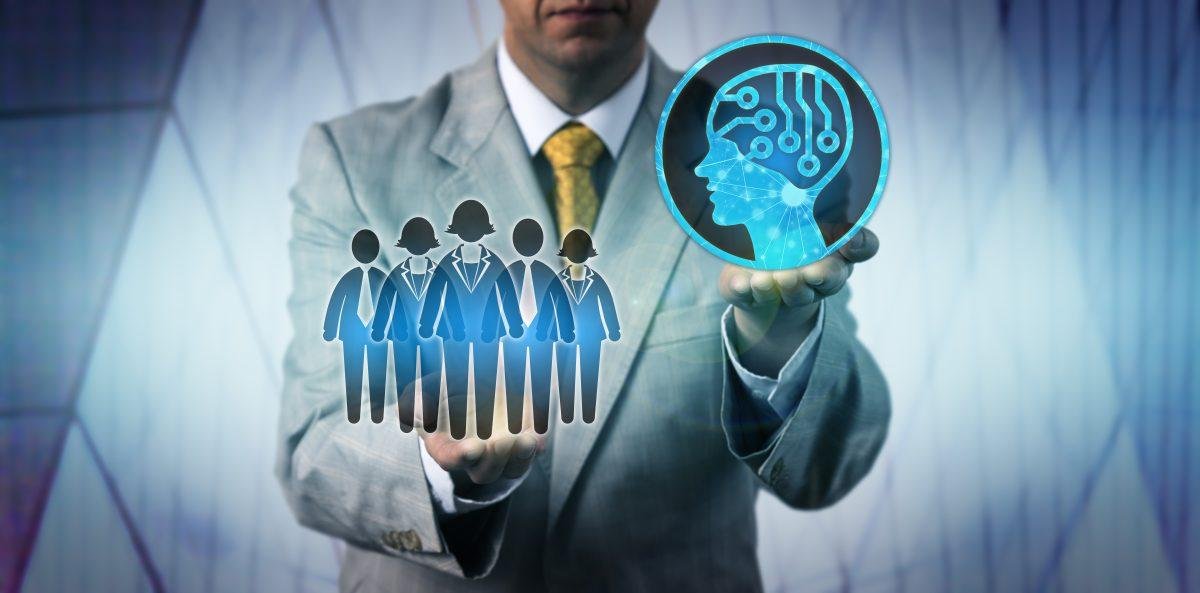
The Great AI Skills Gap, so named because of the growing gap between what AI is capable of and what workers know how to do, is changing hiring, training, performance, and talent strategy worldwide. What precisely is this gap, why is it expanding so rapidly, and how are businesses attempting to bridge it? Let’s dissect it.
What Exactly Is the AI Skills Gap?
In simple terms, to make it easy for the reader, The mismatch between the desperate needs of an AI related skill company and what the current workforce holds actual expertise in, is called AI Skill Gap. But here is the confusing aspect of AI skill gap, It is not only about positions like data scientist or machine learning developers, It covers a whole lot of professions in a workplace organizational ecosystem like:
- AI-assisted decision-making
- Automation tools
- Prompt engineering
- Data literacy
- AI ethics
- Human-AI collaboration
- AI tools for HR, sales, marketing, finance, and operations
Which means that AI is not just about the tech department, It’s related and attaches itself to the transformation of the whole organization. The sad truth here is that most companies or most teams are not ready for this transformation.
Why the AI Skills Gap Is Growing So Fast
AI is changing every week, I mean the rate at which Artificial Intelligence is developing is extraordinary, and that too just in the past century. With the help of earlier technological advancements, Industrial machines, computers and even the internet, Decades of acceptance were made possible.
There are more than few reason why their is such a big skill gap among working professional across industries, main factors are mentioned down below:
1. AI Is Moving Faster Than Learning Systems
Upskilling an employee is a time taking process, learning something new and simultaneously working on something else under deadline is not an easy task, Companies often find it difficult to make the employee learn the new technologies in time, they do get skilled at it but it takes time, through training, courses, traditional L&D strategies. But on the other hand, Artificial Intelligence Technologies are updating overnight, everyday you wake up and learn about some other advancement in the field of AI.
2. Companies Want AI Talent, but Supply Is Scarce
With the emergence of artificial intelligence and its integration in the businesses around the world across industries is a new and latest revolution that took place five years ago. Before that time period, job professions like AI product manager, AI trainer, Prompt engineer and applied AI specialist did not even exist, so it makes it harder for people to learn something brand new, when that brand new thing is getting updated every day. Companies and organizations are noticing a lack of working professionals with experience in this field of AI.



3. Employees Fear AI Instead of Embracing It
You must have heard this line before “ AI is taking Jobs”, You will hear this phrase, on the phone screen, on the internet and everywhere you go. This notion has led to employees and working professionals being scared of the new advancements in the field of artificial intelligence. So what they are doing in return, is being hesitant about learning it and using it to make their job easy and more efficient. Ironically, those who are most in need of upskilling are also the ones who are most terrified of AI.
The Business Impact: Why Companies Are Worried
The AI skills gap isn’t just a talent issue it’s a competitive threat.
Here’s what companies are experiencing:
Productivity Loss
Teams who don’t use AI tools lag behind those that do. Three employees’ worth of labor can now be completed by a single employee with AI skills.
Slow Innovation
Without AI talent, businesses find it difficult to develop new products, streamline operations, or develop data-driven strategy.
Rising Hiring Costs
It can cost three to five times as much to hire AI talent as it does to train internal employees. Salaries rise and competition intensifies due to scarcity.
Employee Anxiety and Resistance
Teams become fearful and resistant if they are not properly trained. Confusion, errors, and a low uptake of AI tools result from this.
Lost Revenue Opportunities
Businesses that don’t include AI lose out on automation benefits, market trends, and operational efficiencies.
The message is clear: AI talent isn’t optional anymore, it’s mission-critical.
How Companies Are Responding to the AI Skills Gap
The good news? Businesses aren’t sitting quietly. They’re restructuring talent strategies, rebuilding training systems, and adopting new tools to prepare the workforce for an AI-first world.
Here’s how top companies are closing the gap.
1. Upskilling and Reskilling at Massive Scale
Companies and organizations have realised that instead of waiting for working professionals who are expert in AI to magically appear out of nowhere, doing internal training and upskilling programmes are a better way to take advantage over each other.
Businesses are focusing on making their current employees aware and skilled in AI tools that can help in enhancing productivity and automation. Job roles are like data analytics, prompt engineering are also being introduced, even a non tech employee also understanding about machine learning basics.
Where upskilling is about training your current employees and making them learn new stuff, which will help them in their current positions, Reskilling focuses on moving into a totally new AI-relevant job role such as, AI operation specialist, Automation manager, data driven marketer and intelligent process analyst.
2. Integrating AI Tools Into Daily Workflows
Only experts and higher job roles are not doing their daily work through AI tools and companies and organizations are making every employee possess some level of knowledge of artificial intelligence tools, so that their job can get easier, leading them to be more productive. Jobs like sales, HR, marketing, finance, customer services, operations and even leadership positions are not technical in nature, but even these job roles are being integrated with AI tools.
As an example, marketing teams use AI for content creation, analytics, segmentation and optimization, whereas HR uses AI for recruiting, assessing candidates, and workforce planning, and sales teams utilize AI tools for pipeline forecasting, lead scoring and proposal.
3. Hiring for “AI-Adjacent” Skills, Not Just Technical Skills
Companies are expanding their definition of AI talent. Instead of looking only for ML engineers, they now hire people with:
- Analytical thinking
- Problem-solving
- Curiosity
- Adaptability
- Design thinking
- Technical literacy
These skills make employees more ready to adopt and collaborate with AI.
Essentially:
Companies are hiring learners, not just experts.
4. Using Talent Assessment Tools to Identify AI-Readiness
Many forward-thinking employers are turning to AI assessment platforms like TestnHire, Bryq, Plum.io, TalentLMS, and others to measure:
- AI aptitude
- Learning agility
- Data literacy
- Problem-solving
- Critical thinking
- Adaptability
- Role-specific AI competency
These tools help companies answer:
- Who can learn AI quickly?
- Who needs upskilling?
- Which roles require immediate training?
- Which employees are ideal for AI-focused promotions?
Assessment combined training has become one of the most powerful combinations in the market.
5. Building Internal AI Academies
The largest companies are setting up AI universities or academies inside their workplaces. These function like learning hubs that:
- Curate AI courses
- Deliver structured learning paths
- Provide certifications
- Encourage hands-on practice
- Track employee skill progression
6. Partnering With Universities and EdTech Platforms
Because AI skills evolve rapidly, companies are forming partnerships with:
- EdTech platforms (Coursera, Udacity, Skillsoft, LinkedIn Learning)
- Universities with AI specializations
- Bootcamps offering hands-on AI experience
This hybrid model ensures employees get training that is both academic and practical.
7. Redesigning Job Roles for Human–AI Collaboration
The future isn’t humans vs. AI. It’s humans working with AI.
Companies are revising job descriptions to include:
- AI tool usage
- Automation responsibilities
- AI monitoring and auditing
- Prompt writing
- Data interpretation
The idea is to make AI skills a standard part of every job not a niche requirement.
The Future: What the Workforce Will Look Like in an AI-Driven World
Below we have mentioned some points, that will tell you what the future of corporate world holds for you:
Artificial Intelligence will take over the repetitive, clerical work from the hand of an employee
Tasks that don’t require much strategy and knowledge, can be done by anyone, will be taken over by AI tools in order to save time, and humans will spend more time in strategizing and decision making roles.
Every employee will need baseline AI literacy.
Just like computer literacy became standard, AI literacy will too.
Continuous learning will become a core expectation.
Employees will be chosen based on adaptability, not just experience.
Final Thoughts: The Gap Is Big, but Not Permanent
The Skill gaps, which companies and organizations around the world, across industries are noticing is real, its urgent and most importantly its growing. Businesses are required to take action today, otherwise they will get behind their competitors, they need to assess, train and upskill their employees using a good skill assessment tool, they are required to hire talented and AI aware working professionals, Then they will not only close the gap but also take a huge leap ahead in productivity and growth.
And lets be honest and blunt here for once, AI won’t replace people who are well aware and skilled enough to know how to use it. The future belongs to working professionals who are Ai-literate, adaptable, empowered and who see technology as an advantage not as a threat.