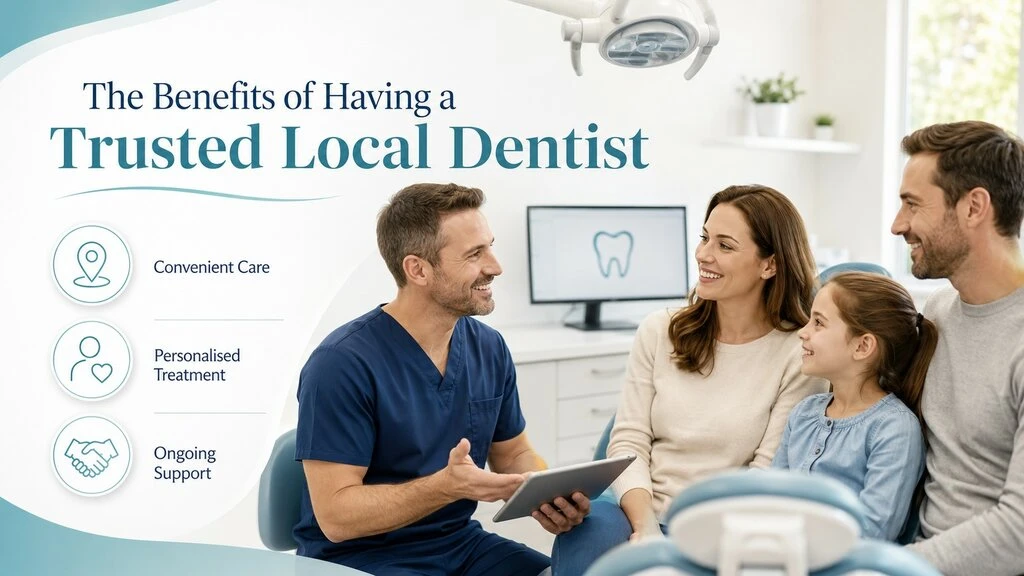
Good oral health depends on more than brushing and flossing at home. Regular professional care helps prevent dental problems, identify changes at an early stage and keep the teeth and gums healthy throughout life. However, the quality of that care can depend greatly on the relationship a patient develops with their dental practice.
- Continuity of Care Supports Better Oral Health
- Preventive Dentistry Can Reduce Future Problems
- A Local Dentist Makes Routine Care More Convenient
- Faster Support During a Dental Emergency
- Access to General and Restorative Dentistry
- Cosmetic Treatments Can Be Planned More Responsibly
- Support for Teeth Straightening with Invisalign
- Long-Term Solutions for Missing Teeth
- Familiar Care Can Help Nervous Patients
- One Practice Can Support the Whole Family
- Trust Encourages Better Communication
- How to Choose a Trusted Local Dentist
- Building a Long-Term Relationship with Your Dentist
Having a trusted local dentist provides convenience, continuity and reassurance. Instead of searching for a new clinic whenever a problem develops, patients have access to a familiar dental team that understands their oral health history, personal concerns and long-term treatment needs.
For individuals and families comparing Dentists in Winchester, choosing an established local practice that provides preventive, general, emergency and cosmetic dental care can make looking after their smiles considerably easier.
Continuity of Care Supports Better Oral Health
One of the greatest benefits of having a regular dentist is continuity of care. When the same dental team sees a patient over time, it becomes easier to monitor changes in their teeth, gums, bite and general oral health.
A dentist who is familiar with previous X-rays, restorations and treatments can compare new findings with earlier records. This may help identify gradual changes that would be more difficult to recognise during a one-off appointment at an unfamiliar clinic.
Continuity is particularly valuable for patients with:
- Existing fillings, crowns or bridges
- A history of gum disease
- Dental implants or dentures
- Sensitive teeth
- Previous root canal treatment
- Ongoing orthodontic or cosmetic treatment
- Medical conditions that may affect oral health
Rather than treating each appointment as an isolated event, a trusted dentist can develop a long-term preventive and restorative care plan based on the patient’s individual circumstances.
Preventive Dentistry Can Reduce Future Problems
A reliable local dental practice does not simply treat toothache. It should also help patients reduce their risk of developing dental problems in the first place.


Routine dental examinations allow the dentist to check for early signs of tooth decay, gum inflammation, damaged restorations, tooth wear and changes in the soft tissues of the mouth. When a concern is identified early, treatment may be simpler and less invasive.
Regular Dental Check-Ups
The recommended frequency of dental check-ups varies from person to person. A dentist will consider factors such as the patient’s age, oral hygiene, gum health, medical history and risk of tooth decay before recommending an appropriate recall interval.
During a routine examination, the dentist may assess:
- The teeth for decay, fractures and wear
- The gums for signs of gingivitis or periodontal disease
- Existing fillings, crowns and bridges
- The jaw joints and bite
- Areas of sensitivity or discomfort
- The tongue, cheeks and other soft tissues
Where clinically appropriate, dental X-rays may also be used to examine areas that cannot be seen directly.
Dental Hygiene and Gum Care
Professional hygiene appointments are another important part of preventive dental care. A dental hygienist can remove plaque and hardened tartar from areas that may be difficult to clean effectively at home.
Hygiene care may also include gum health monitoring, personalised brushing advice and guidance on using interdental brushes or floss. Some practices offer Airflow or air polishing to remove certain surface stains and deposits using a controlled combination of air, water and fine powder.
Regular gum care is particularly important because gum disease can progress gradually and may not always cause obvious discomfort in its earlier stages.
A Local Dentist Makes Routine Care More Convenient
Convenience can have a significant influence on how consistently people attend dental appointments. A practice located close to home, work or school makes it easier to arrange routine check-ups, dental hygiene visits and follow-up treatment.
A nearby dentist may be especially helpful for families who need to coordinate several appointments or support children, elderly relatives and patients with mobility limitations.
Other practical benefits may include:
- Less time spent travelling
- Easier access to follow-up appointments
- Greater familiarity with the practice location
- More convenient family scheduling
- A simpler journey during a dental emergency
- Access to a practice that understands the local community
When dental care is easier to access, patients may be less likely to postpone routine appointments until a problem becomes painful.
Faster Support During a Dental Emergency
Dental emergencies can occur unexpectedly. Severe toothache, facial swelling, a broken tooth, a lost filling or dental trauma may require prompt professional assessment.
Having an established relationship with a local dentist means patients already know whom to contact when an urgent problem develops. The practice may also have access to their dental records, medical history and previous X-rays, allowing the clinical team to understand the situation more quickly.
Emergency dental care may be required for:
- Persistent or severe toothache
- Swelling around a tooth or the face
- A knocked-out or displaced tooth
- A broken or cracked tooth
- Bleeding following dental treatment
- A damaged crown, bridge or filling
- Pain associated with a wisdom tooth
- Trauma affecting the teeth or mouth
Not every dental concern requires the same response, but a trusted practice can provide appropriate advice, assess urgency and explain the next steps.
Access to General and Restorative Dentistry
A well-established family dental practice should provide access to the general treatments needed to maintain oral health and restore damaged teeth.
General and restorative dentistry may include:
- Tooth-coloured fillings
- Crowns and bridges
- Root canal treatment
- Tooth extractions
- Dentures
- Treatment for gum disease
- Care for sensitive teeth
- Repair of broken or worn teeth
Receiving these treatments through a familiar practice can provide valuable continuity. The dentist can consider how each proposed treatment fits with the patient’s wider oral health rather than focusing only on an individual tooth.
Cosmetic Treatments Can Be Planned More Responsibly
Many patients are interested in improving the appearance of their smile. A trusted dentist can help them understand which cosmetic dental treatments may be suitable and whether any oral health concerns need to be addressed first.
Cosmetic options may include professional teeth whitening, veneers, cosmetic crowns and composite bonding.
Composite Bonding
Composite bonding involves applying a tooth-coloured resin material to selected teeth. It may be used to repair small chips, improve tooth shape or reduce the appearance of certain gaps.
Although bonding can provide noticeable aesthetic improvements, it is not suitable for every patient. The dentist should assess the health of the teeth, the patient’s bite and the amount of tooth movement or reshaping required before recommending treatment.
Professional Teeth Whitening
Professional teeth whitening can reduce the appearance of certain types of staining and create a brighter smile. Treatment should be prescribed following an assessment to confirm that the teeth and gums are healthy enough for whitening.
A local dentist can also advise patients about sensitivity, expected results and the maintenance required after treatment.
Support for Teeth Straightening with Invisalign
Patients who want straighter teeth may benefit from choosing a practice that offers orthodontic assessments and Invisalign clear aligners.
Invisalign treatment uses a planned series of removable aligners to move suitable teeth gradually. Before treatment begins, the dentist should examine the teeth, gums and bite and may take digital scans, photographs and X-rays.
Receiving Invisalign through an established dental practice provides the advantage of having the patient’s general oral health monitored alongside their tooth straightening treatment. Any fillings, hygiene treatment or gum care that may be needed can be considered as part of the wider plan.
Long-Term Solutions for Missing Teeth
Missing teeth can affect eating, speech, confidence and the way the remaining teeth function. Depending on the patient’s circumstances, replacement options may include dentures, bridges or dental implants.
Dental implants are designed to support replacement teeth and may provide a secure, natural-looking solution for suitable patients. However, implant treatment requires careful assessment of gum health, bone availability, medical history and oral hygiene.
A trusted dentist can explain the available options objectively and help the patient compare treatment complexity, maintenance requirements, likely longevity and cost.
Familiar Care Can Help Nervous Patients
Dental anxiety is common and can prevent people from attending appointments until they are in significant pain. Building a relationship with a consistent local dental team can gradually make treatment feel more manageable.
A supportive dentist should listen to the patient’s concerns, explain procedures clearly and avoid making them feel embarrassed about their teeth or previous dental attendance.
Helpful approaches may include:
- Discussing concerns before treatment begins
- Agreeing on a signal to pause
- Explaining each stage of the procedure
- Allowing additional appointment time
- Introducing treatment gradually
- Providing clear information about pain management
Familiarity with the dentist, nurses and reception team can also create a more reassuring experience at future visits.
One Practice Can Support the Whole Family
Dental needs change throughout life. Children may require preventive advice and help establishing good brushing habits, while adults may need restorative, cosmetic or orthodontic care. Older patients may require support with gum health, missing teeth, dentures or maintaining existing dental work.
A local family dentist can provide guidance through these different stages and maintain records over many years. This makes it easier to deliver personalised advice rather than applying the same approach to every patient.
For people living in and around southern Winchester, Olivers Battery Dental Surgery represents the kind of community-based practice patients may consider when seeking ongoing family dental care.
Trust Encourages Better Communication
Patients are more likely to discuss concerns openly when they trust their dentist. This may include dental anxiety, sensitivity, dissatisfaction with the appearance of their teeth or worries about treatment costs.
Good communication should involve a clear explanation of:
- The diagnosis
- Available treatment options
- The advantages and limitations of each option
- Relevant risks
- Expected outcomes
- Treatment fees
- Aftercare and maintenance
A trustworthy dentist should support informed decision-making and give patients appropriate time to consider non-urgent treatment.
How to Choose a Trusted Local Dentist
Before registering with a dental practice, it is worth considering both the quality of care and the overall patient experience.
Look for a practice that offers:
- Qualified and experienced dental professionals
- Preventive, general and emergency dentistry
- Dental hygiene and gum care
- Clear treatment plans and transparent fees
- Support for children and nervous patients
- Restorative and cosmetic treatment options
- Modern diagnostic and treatment technology
- Convenient access and appointment arrangements
- Positive, consistent patient feedback
Reviews can provide helpful insights, but they should be considered alongside the practice’s professional credentials, range of services and approach to patient communication.
Building a Long-Term Relationship with Your Dentist
Having a trusted local dentist provides more than convenience. It creates continuity, improves communication and gives patients access to professional support when routine, cosmetic or urgent dental care is required.
A familiar dental team can monitor oral health over time, provide personalised preventive advice and recommend treatment based on a clear understanding of the patient’s history and priorities.
By choosing a local practice that combines general dentistry, dental hygiene, emergency care and modern treatments such as Invisalign, composite bonding, teeth whitening and dental implants, individuals and families can build a lasting relationship that supports healthier, more confident smiles.