Supply chains are becoming increasingly difficult to manage as organizations navigate volatile demand, supplier disruptions, changing customer expectations and pressure to control costs and working capital. Traditional planning and reporting tools can provide valuable information, but organizations increasingly need the ability to anticipate changes and respond faster. Supply Chain Applied Intelligence brings artificial intelligence, advanced analytics and automation directly into operational processes to support this shift.
- What is Supply Chain Applied Intelligence?
- What is supply chain management?
- Why supply chains need Applied Intelligence
- Core technologies enabling intelligent supply chains
- Key applications of Supply Chain Applied Intelligence
- Business benefits for supply chain management
- Better decision-making
- Improved inventory performance
- Greater operational productivity
- Stronger supply chain resilience
- Improved customer service
- How Supply Chain Applied Intelligence improves visibility
- Using intelligence for supply chain risk management
- Best practices for implementing Supply Chain Applied Intelligence
- Common implementation challenges
- Measuring the value of Applied Intelligence
- The future of intelligent supply chain management
- Conclusion
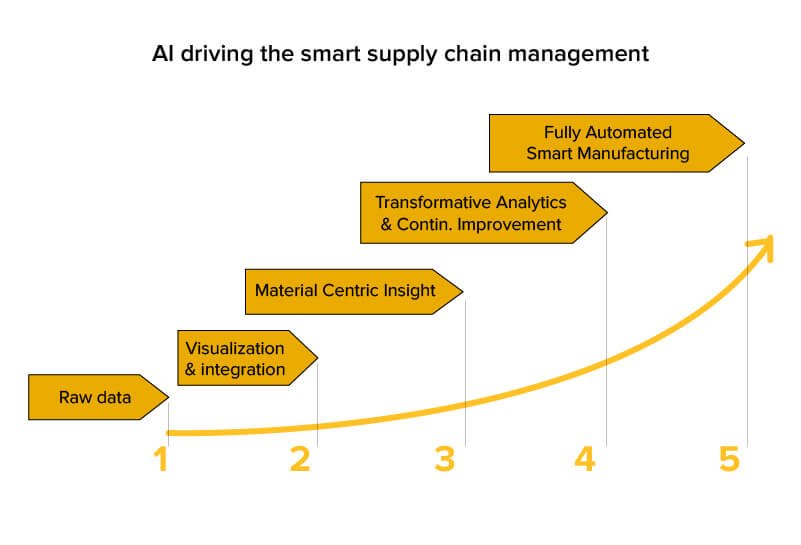
For supply chain management, the opportunity extends beyond automating individual activities. Intelligent capabilities can connect information across planning, sourcing, manufacturing, inventory and logistics to provide better visibility and decision support across the end-to-end supply chain.
This article explores Supply Chain Applied Intelligence, its role in supply chain management, key applications, business benefits and priorities for building more intelligent and resilient operations.
What is Supply Chain Applied Intelligence?
Supply Chain Applied Intelligence is the practical application of artificial intelligence, machine learning, predictive analytics, generative AI and automation to supply chain processes and decisions.
The emphasis is on applying intelligence to specific operational challenges rather than deploying AI as a standalone technology. These capabilities can analyze internal and external data, identify patterns, anticipate potential outcomes and recommend actions.
For example, organizations can use intelligence to identify changes in demand, anticipate supplier risks, optimize inventory positions or evaluate transportation alternatives.
This helps supply chain teams move from primarily reacting to events toward more predictive and proactive operations.
What is supply chain management?
Supply chain management coordinates the processes required to plan, source, produce and deliver goods and services. It connects suppliers, manufacturing operations, inventory, logistics and customers across the end-to-end value chain.


Effective supply chain management requires organizations to balance several competing priorities. Leaders need to maintain customer service while controlling inventory, transportation and operating costs. They must also manage supplier dependencies and respond to disruptions.
As networks become more complex, making these trade-offs manually becomes increasingly difficult. Supply Chain Applied Intelligence can help organizations analyze more variables and provide decision support at greater speed and scale.
Why supply chains need Applied Intelligence
Many supply chain processes still depend on historical reports, spreadsheets and manually coordinated decisions. These approaches can become less effective when market conditions change rapidly.
Applied Intelligence enables organizations to combine historical information with current operational signals. Machine learning can identify patterns, predictive analytics can anticipate potential outcomes and generative AI can make complex information easier for employees to interpret.
Automation can then connect these insights with operational workflows.
For supply chain management, this creates an opportunity to improve not only individual processes but also coordination across traditionally separate planning and execution activities.
Core technologies enabling intelligent supply chains
Several technologies work together to support Supply Chain Applied Intelligence.
Machine learning
Machine learning analyzes historical and real-time information to identify patterns across demand, suppliers, inventory, manufacturing and logistics.
Predictive analytics
Predictive models can help organizations anticipate demand changes, supply constraints, inventory requirements and potential operational disruptions.
Generative AI
Generative AI can summarize planning information, explain exceptions, synthesize supplier information and provide conversational access to supply chain knowledge.
Intelligent automation
Automation executes repetitive tasks and workflows, helping organizations translate intelligence into operational actions.
AI agents
AI agents can potentially coordinate multistep activities across planning, procurement, manufacturing and logistics while escalating strategic or higher-risk decisions for human review.
Together, these technologies expand the role of intelligence across supply chain management.
Key applications of Supply Chain Applied Intelligence
Organizations can apply intelligent capabilities across multiple areas of the supply chain.
Demand planning
AI can analyze historical sales, market signals, seasonality and other demand drivers to support more responsive forecasting and planning.
Inventory optimization
Intelligent analytics can evaluate demand variability, lead times and service requirements to help organizations determine appropriate inventory positions.
Supply planning
AI can help planners evaluate material availability, production capacity and supply constraints while considering alternative scenarios.
Supplier management
Supply Chain Applied Intelligence can analyze supplier performance and external risk indicators to identify potential issues requiring attention.
Manufacturing
AI can support production planning, quality analysis and predictive maintenance using manufacturing and equipment information.
Logistics
Intelligent capabilities can support transportation planning, route optimization and analysis of potential logistics disruptions.
These applications demonstrate how intelligence can strengthen decisions across plan, source, make and deliver activities.
Business benefits for supply chain management
Applied Intelligence can improve several dimensions of supply chain performance when connected to clearly defined business priorities.
Better decision-making
Predictive insights can help supply chain leaders understand changing conditions and evaluate potential responses faster.
Improved inventory performance
Better forecasting and inventory analysis can help organizations balance product availability with working capital requirements.
Greater operational productivity
Automation reduces repetitive planning and administrative work, enabling employees to focus on exceptions and more strategic decisions.
Stronger supply chain resilience
Earlier identification of supplier and operational risks can give organizations more time to evaluate alternative actions.
Improved customer service
Better planning and execution can support product availability and more reliable order fulfillment.
How Supply Chain Applied Intelligence improves visibility
Visibility is a persistent challenge in supply chain management because relevant information often resides across ERP, planning, procurement, manufacturing and logistics systems.
Supply Chain Applied Intelligence can bring together information from these sources and identify relationships that may be difficult to detect through individual reports.
For example, an emerging supplier issue can be connected with affected materials, inventory positions, production schedules and customer commitments. Leaders can then better understand the potential business impact.
Generative AI can further simplify this analysis by presenting complex operational information through natural-language summaries and queries.
Using intelligence for supply chain risk management
Supply chain risk management is shifting from periodic assessments toward more continuous monitoring.
AI can analyze supplier performance, operational conditions and external signals to identify emerging risks. Predictive analytics can help teams understand potential downstream consequences.
For example, if a supplier disruption is identified, intelligent systems can help determine which products, facilities and customer orders could be affected.
Supply chain management teams can then evaluate alternatives such as different suppliers, inventory reallocation or production changes before the disruption becomes more significant.
Best practices for implementing Supply Chain Applied Intelligence
Successful implementation requires organizations to address processes, data, technology and people together.
- Begin with clearly defined supply chain problems and expected business outcomes.
- Establish current performance baselines before implementing intelligent capabilities.
- Improve demand, supplier, inventory and logistics data quality.
- Connect information across planning and execution systems.
- Prioritize use cases according to value, feasibility and time to value.
- Integrate AI capabilities into existing supply chain management workflows.
- Establish governance for security, model performance and decision accountability.
- Maintain human oversight for strategic and high-risk decisions.
- Measure results through inventory, cost, service, productivity and resilience metrics.
This approach helps organizations avoid implementing AI without a clear connection to operational performance.
Common implementation challenges
Data fragmentation is one of the biggest barriers to intelligent supply chain management. Information may be distributed across multiple systems, business units and external partners.
Legacy technology can create additional integration challenges and limit access to real-time information.
Another issue is trust. Supply chain professionals need to understand why an intelligent system recommends a particular action, especially when decisions affect inventory, suppliers or customer commitments.
Organizations therefore need appropriate transparency, governance and escalation processes alongside technical implementation.
Measuring the value of Applied Intelligence
Organizations should evaluate Supply Chain Applied Intelligence through improvements in business performance rather than AI adoption alone.
Relevant measures can include forecast quality, inventory levels, working capital, supplier performance, logistics costs, production efficiency, service levels and employee productivity.
Different use cases require different metrics. A demand-planning application should be measured differently from a supplier-risk or logistics solution.
Establishing baselines before implementation allows leaders to determine whether intelligent capabilities are producing meaningful improvements and where further optimization is required.
The future of intelligent supply chain management
The next phase of Supply Chain Applied Intelligence will increasingly involve AI agents capable of coordinating decisions across traditionally separate processes.
An agent could identify a change in demand, determine its impact on inventory and material requirements, evaluate available supply and initiate approved planning actions. Other agents could coordinate with procurement, manufacturing or logistics.
Generative AI may also make supply chain information more accessible by allowing leaders to explore risks, scenarios and operational performance conversationally.
As these capabilities mature, supply chain management will increasingly shift toward intelligent orchestration, with employees focusing on strategic trade-offs, exceptions and business decisions.
Conclusion
Supply Chain Applied Intelligence is creating opportunities to improve how organizations plan, manage risk and coordinate decisions across increasingly complex supply networks. By combining AI, predictive analytics, generative AI and automation, businesses can move toward more proactive and data-driven operations.
For supply chain management, the greatest value comes from connecting intelligence across the end-to-end value chain rather than optimizing isolated activities. Organizations that strengthen their data foundations, integrate processes and establish effective governance will be better positioned to build agile, resilient and intelligent supply chains that support long-term business performance.