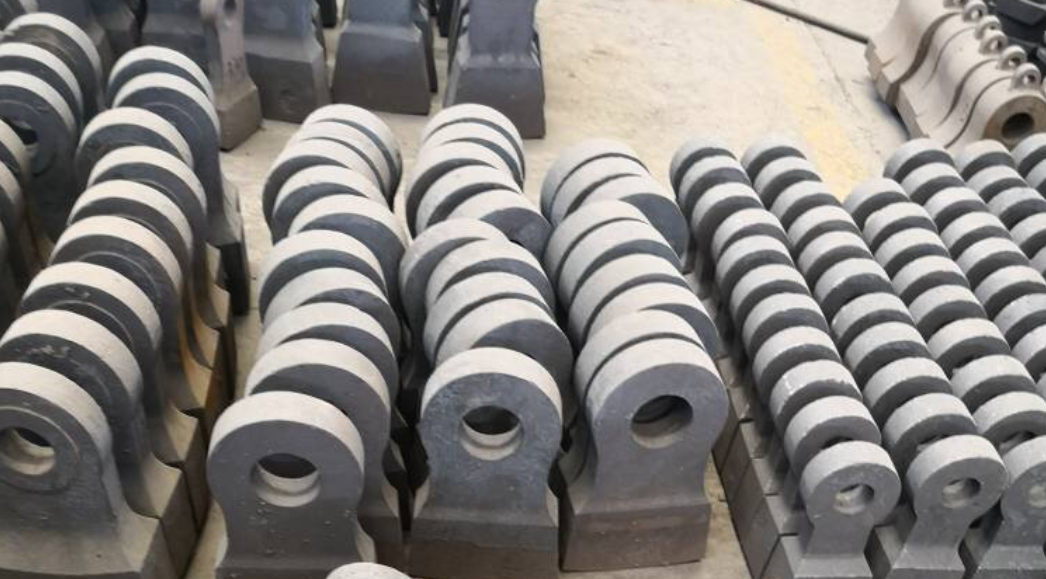
Selecting the right crusher hammer is one of the most critical decisions in improving the efficiency, durability, and cost-effectiveness of any crushing operation. Whether you run a quarry, cement plant, mining site, or recycling facility, choosing the correct hammer design and material significantly affects your production output. With so many hammer types and alloy options in the market, making the right choice is not always straightforward. This comprehensive guide explains the key factors that determine crusher hammer performance and helps you choose the best hammer for your specific crusher model and working conditions.
- 1. Why Crusher Hammer Selection Matters
- 2. Understanding the Function of a Crusher Hammer
- 3. Key Factors That Affect Crusher Hammer Selection
- 3.1. Type of Crusher Machine
- 3.2. Material Hardness and Abrasiveness
- 3.3. Rotor Speed and Impact Energy
- 3.4. Required Finished Particle Size
- 3.5. Cost vs. Wear Life (Total Cost Per Ton)
- 4. Common Crusher Hammer Materials: Advantages & Applications
- 4.1. High Manganese Steel (Mn13Cr2, Mn18Cr2, Mn22Cr2)
- 4.2. High Chrome Alloy (Cr20–Cr26)
- 4.3. Bimetal Composite Hammers (High Chrome + Tough Base)
- 4.4. Tungsten Carbide Insert (TCI) Hammers
- 5. Hammer Shape, Weight, and Structural Design
- 6. Operating Conditions That Influence Hammer Life
- 7. How to Match Crusher Hammers to Your Actual Working Conditions
- 7.1 Feed Size and Input Control
- 7.2 Moisture Content of the Material
- 7.3 Abrasion Index (AI Value)
- 7.4 Crushing Capacity (Tons Per Hour)
- 8. Signs That You Are Using the Wrong Crusher Hammer
- 9. How to Extend the Service Life of Your Crusher Hammer
- 9.1 Maintain Correct Feed Size
- 9.2 Keep the Rotor Balanced
- 9.3 Reverse the Hammers When Necessary
- 9.4 Maintain Proper Gap Settings
- 9.5 Ensure Proper Hammer Hardness
- 10. How to Choose a Reliable Crusher Hammer Supplier
- 10.1 Professional Material Recommendations
- 10.2 In-House Heat Treatment Capability
- 10.3 CNC Machining for Accuracy
- 10.4 Dynamic Rotor Balancing
- 10.5 Ability to Produce Customized Hammers
- 10.6 Verifiable Customer Cases
- 11. Why Many Buyers Choose Econe Wear Parts for Crusher Hammers
- 12. Final Checklist for Selecting the Right Crusher Hammer
- ✔ What type of material are you crushing?
- ✔ What is your crusher model and rotor speed?
- ✔ Is your working condition high impact or high abrasion?
- ✔ Do you require high hardness or high toughness?
- ✔ What is your desired output size?
- ✔ Are your feed materials oversized?
- ✔ What is your plant capacity (TPH)?
- ✔ Do you need standard or customized hammers?
- ✔ Are you choosing a reliable supplier?
- 13. Conclusion
1. Why Crusher Hammer Selection Matters
The crusher hammer is not just a consumable part—it directly determines crushing efficiency, cost per ton, machine downtime, and overall plant productivity. The wrong hammer can result in:
- Shorter wear life
- Increased maintenance costs
- Higher downtime
- Reduced crushing throughput
- Unstable particle size distribution
- Damage to the rotor or crusher housing
On the other hand, the right hammer ensures:
- Longer service life
- Lower operating cost
- Stable production capacity
- Higher crushing efficiency
- Better product size control
For these reasons, crusher hammer selection should always be based on scientific analysis, application environment, material hardness, and hammer structural design.
2. Understanding the Function of a Crusher Hammer
Crusher hammers are installed on the rotor and rotate at high speed to impact raw material. The key functions include:
- Impacting the material with high kinetic energy
- Breaking the material against the crusher’s impact plates or liners
- Maintaining balance and stability of the rotor
- Resisting wear, deformation, and repeated impact cycles
Therefore, the hammer must combine strength + toughness + wear resistance to achieve optimal performance.
3. Key Factors That Affect Crusher Hammer Selection
Choosing the right hammer requires analyzing the following five aspects:
3.1. Type of Crusher Machine
Different crushers require different hammer designs and materials.



| Crusher Type | Suitable Hammer Type |
| Hammer Crusher | High manganese or high chrome hammers |
| Impact Crusher | High chrome blow bars or composite hammers |
| Reversible Hammer Crusher | High manganese hammers |
| Single-Stage Hammer Crusher | High manganese or alloy steel hammers |
| Limestone Crusher | Mn13Cr2 or Mn18Cr2 high manganese steel |
Each crusher model has different rotor speeds, impact forces, feed sizes, and working environments. Choosing a hammer material compatible with the crusher’s striking speed is essential.
3.2. Material Hardness and Abrasiveness
Raw material properties directly influence hammer wear.
| Material Hardness | Recommended Hammer |
| Low hardness (limestone, coal, gypsum) | High manganese steel |
| Medium hardness (granite, basalt, river stone) | High chrome alloy |
| High abrasiveness | Tungsten carbide composite hammers |
High-speed impact + abrasive material is the main cause of premature hammer wear.
3.3. Rotor Speed and Impact Energy
Rotor speed determines the impact force on the hammer.
- High speed (>800 rpm):
High chrome alloy is preferred due to excellent wear resistance. - Medium speed (400–800 rpm):
Mn18Cr2 or Mn22Cr2 manganese steel to withstand high impact toughness. - Low speed (<400 rpm):
Alloy steel or manganese alloy depending on material hardness.
Matching hammer material to rotor speed prevents breakage and deformation.
3.4. Required Finished Particle Size
If your plant needs fine, uniform particle size, a hammer with higher hardness is better.
If your plant crushes softer material with large output, manganese steel hammers may be sufficient.
3.5. Cost vs. Wear Life (Total Cost Per Ton)
Do not choose hammer material based solely on price.
A slightly more expensive hammer that lasts 2–3× longer actually reduces:
- Maintenance labor
- Replacement frequency
- Downtime loss
- Cost per ton
Professional suppliers like Econe Wear Parts can help calculate your real cost per ton based on working conditions, ensuring you always choose the most economical option.
4. Common Crusher Hammer Materials: Advantages & Applications
This section provides a deeper understanding of the most common hammer materials to help you decide which is best for your crusher.
4.1. High Manganese Steel (Mn13Cr2, Mn18Cr2, Mn22Cr2)
High manganese steel is the most widely used hammer material because of its excellent work-hardening ability.
Advantages
- Extremely high impact toughness
- Self-hardening during service
- Ideal for high-impact applications
- Resistant to hammer breakage
Limitations
- Lower initial hardness
- Wears faster in abrasive conditions
- Not suitable for hard stone crushing at high speed
Best For
- Limestone
- Cement plants
- Reversible hammer crushers
- Low-to-medium hardness materials
4.2. High Chrome Alloy (Cr20–Cr26)
High chrome hammers provide superior wear resistance and are ideal for abrasive materials.
Advantages
- Very high hardness (HRC 58–65)
- Excellent wear resistance
- Ideal for impact crushers
- Long service life in abrasive conditions
Limitations
- Lower impact toughness
- Can crack under extremely strong impact
- Not suitable for oversized feed
Best For
- Granite, basalt, quartz
- AGG crushing plants
- High-speed impact crushers
4.3. Bimetal Composite Hammers (High Chrome + Tough Base)
Also known as composite hammers, these combine a hard wear surface with a tough steel backing.
Advantages
- High wear resistance
- Strong impact toughness
- Ideal for heavy-duty crushing
- Balanced performance
Best For
- High abrasiveness materials
- Frequent hammer changes
- Mines and cement plants
4.4. Tungsten Carbide Insert (TCI) Hammers
This is the highest-end hammer material used in extreme applications.
Advantages
- Extremely long wear life
- Perfect for ultra-abrasive conditions
- Minimal downtime
Limitations
- Higher cost
- Not needed for low-hardness materials
Best For
- Mining operations
- High-production quarries
- Very hard stone
5. Hammer Shape, Weight, and Structural Design
Material alone does not determine hammer performance—hammer geometry matters equally.
5.1. Hammer Weight
- Heavy hammers = stronger impact, suitable for hard rock
- Light hammers = higher speed, suitable for soft rock
5.2. Hammer Thickness
- Thicker hammers = longer wear life
- Thinner hammers = faster rotation
5.3. Hammer Pin Hole Design
A correct pin hole tolerance prevents hammer vibration, wear, or breakage.
5.4. Balance and Symmetry
Unbalanced hammers damage the rotor and cause vibration.
Top manufacturers like Econe Wear Parts use CNC machining and dynamic balancing to ensure precision.
6. Operating Conditions That Influence Hammer Life
Even the best hammer will underperform if your crushing environment is not optimized.
Key factors include:
- Feed size too large
- Excessive moisture content
- Unbalanced rotor
- Wrong hammer material
- Poor maintenance schedule
- Incorrect hammer installation
A professional supplier will help you audit these conditions to extend hammer life significantly.
7. How to Match Crusher Hammers to Your Actual Working Conditions
Choosing a hammer only by material grade is not enough. You must match the hammer to your real production environment. Below are the most important working-condition parameters you should evaluate.
7.1 Feed Size and Input Control
Oversized feed is the No.1 cause of hammer breakage.
- If your raw material size is larger than the crusher inlet, choose:
- Mn18Cr2 high manganese hammers
- Bimetal composite hammers
- If your feed control is stable and uniform:
- High chrome hammers can offer longer wear life
A consistent feed size allows your hammer to deliver predictable performance and reduces violent, destructive impact.
7.2 Moisture Content of the Material
Water content changes crushing efficiency and hammer life.
| Moisture Level | Recommended Hammer |
| < 5% | High chrome alloy |
| 5–10% | Mn18Cr2 |
| > 10% | High manganese or alloy steel |
| Clay-type sticky materials | Manganese steel only |
High chrome performs poorly in wet and sticky working conditions due to rapid wear and material buildup on the hammer surface.
7.3 Abrasion Index (AI Value)
If your raw materials contain high quartz or silica content, choose:
- High chrome alloy
- Composite hammers
- Tungsten carbide insert hammers
Silica-based stones destroy manganese hammers rapidly.
7.4 Crushing Capacity (Tons Per Hour)
High-capacity plants (> 500 TPH) require hammers that can withstand continuous, heavy-duty impact.
Suitable hammer types:
- High chrome hammers
- Composite alloy hammers
- Carbide-insert hammers
For lower-capacity cement plants or limestone crushers, Mn13Cr2 or Mn18Cr2 may be more cost-effective.
8. Signs That You Are Using the Wrong Crusher Hammer
If you see these conditions in your plant, it’s time to change hammer type or supplier:
- Hammer wear is uneven
- Hammers break before scheduled replacement
- Rotor vibrates during operation
- Feed size becomes unstable
- Finished product size is inconsistent
- Wear life differs dramatically between sides
- You replace hammers too frequently
- You experience repeated downtime
Most of these issues result directly from using an unsuitable hammer type.
9. How to Extend the Service Life of Your Crusher Hammer
Even if you select a premium hammer, poor operation will reduce its lifespan. Follow these practices to maximize hammer service life.
9.1 Maintain Correct Feed Size
Do not feed oversized boulders into the crusher.
Install a grizzly or pre-screen if necessary.
9.2 Keep the Rotor Balanced
A balanced rotor significantly reduces:
- Hammer deformation
- Bearing failure
- Vibration-related damage
High-quality suppliers like Econe Wear Parts use dynamic balancing machines to ensure precision.
9.3 Reverse the Hammers When Necessary
For reversible crusher hammers:
- Rotate the hammer 180° when one side wears out
- Rotate both ends in sequence for maximum lifespan
9.4 Maintain Proper Gap Settings
The gap between the impact plate and hammer tip should remain consistent.
Incorrect gap settings may cause:
- Excessive fines
- Excessive hammer wear
- Reduced productivity
9.5 Ensure Proper Hammer Hardness
Reject any hammers with hardness variations greater than ±3 HRC.
Uneven hardness leads to uneven wear and premature failure.
10. How to Choose a Reliable Crusher Hammer Supplier
A high-quality crusher hammer supplier is just as important as the hammer itself.
A reliable supplier ensures:
- Correct material selection
- Stable metallurgical quality
- Accurate machining
- Reliable heat treatment
- Strict quality inspection
- Consistent hardness
- Competitive pricing
Here are key standards to look for.
10.1 Professional Material Recommendations
Good suppliers will ask for:
- Crusher model
- Rotor speed
- Feed material type
- Feed size
- Output size requirement
- Hourly capacity
- Abrasiveness index
This ensures the hammer matches your real needs—avoiding expensive mistakes.
10.2 In-House Heat Treatment Capability
Heat treatment determines hardness, toughness, and wear resistance.
Suppliers without professional heat treatment usually deliver low-quality hammers.
10.3 CNC Machining for Accuracy
CNC machining ensures:
- Proper pin-hole drilling
- Matching tolerances
- Stable installation
- Reduced vibration
This extends both hammer and rotor life.
10.4 Dynamic Rotor Balancing
This is critical for impact crushers and hammer crushers.
Any imbalance increases wear and decreases performance.
10.5 Ability to Produce Customized Hammers
Some crushers require:
- Increased hammer thickness
- Adjusted hammer length
- Reinforced impact surfaces
- Tungsten carbide inserts
- Bimetal composites
A strong supplier can customize designs to fit your working environment.
10.6 Verifiable Customer Cases
Suppliers should provide:
- Test reports
- Material certificates
- Customer feedback
- Real service-life comparisons
This proves the reliability of their hammers.
11. Why Many Buyers Choose Econe Wear Parts for Crusher Hammers
When searching for a reliable crusher hammer supplier, Econe Wear Parts stands out as a trusted partner in the crushing and mining industry.
Reasons Why Customers Prefer Econe Wear Parts:
✔ Superior Material Quality
Using high manganese, high chrome alloy, and composite alloys with stable metallurgical structure.
✔ Advanced Heat Treatment Process
Ensuring consistent hardness and toughness for all hammer batches.
✔ Precision Machining
Every hammer is CNC-machined for perfect balance and fit.
✔ Custom Hammer Solutions
Econe Wear Parts designs hammers for special working conditions such as high silica, wet environments, and high-speed impact crushers.
✔ Global Export Experience
Serving clients in mining, cement, power, metallurgical, and aggregate industries worldwide.
✔ Lower Cost Per Ton
Longer wear life = fewer changes = lower downtime cost.
By choosing a trusted supplier like Econe Wear Parts, you ensure maximum hammer life and reliable machine performance.
12. Final Checklist for Selecting the Right Crusher Hammer
Before purchasing your next batch of crusher hammers, review this checklist:
✔ What type of material are you crushing?
✔ What is your crusher model and rotor speed?
✔ Is your working condition high impact or high abrasion?
✔ Do you require high hardness or high toughness?
✔ What is your desired output size?
✔ Are your feed materials oversized?
✔ What is your plant capacity (TPH)?
✔ Do you need standard or customized hammers?
✔ Are you choosing a reliable supplier?
Answering these questions ensures you choose the best hammer for your needs—maximizing productivity and minimizing operating cost.
13. Conclusion
Choosing the right crusher hammer is a key step toward achieving higher productivity, lower cost per ton, and longer equipment lifespan. The decision should be based on a scientific understanding of:
- Hammer materials
- Crusher type
- Working conditions
- Feed characteristics
- Rotor speed
- Abrasiveness
- Required output size
Whether you operate a mining facility, cement plant, quarry, or aggregate production line, selecting the right hammer influences your daily output and overall profitability more than any other wear part.
If you are searching for a reliable supplier that offers high-performance hammers, competitive factory pricing, and customized solutions, Econe Wear Parts is a trustworthy partner with extensive manufacturing and export experience.