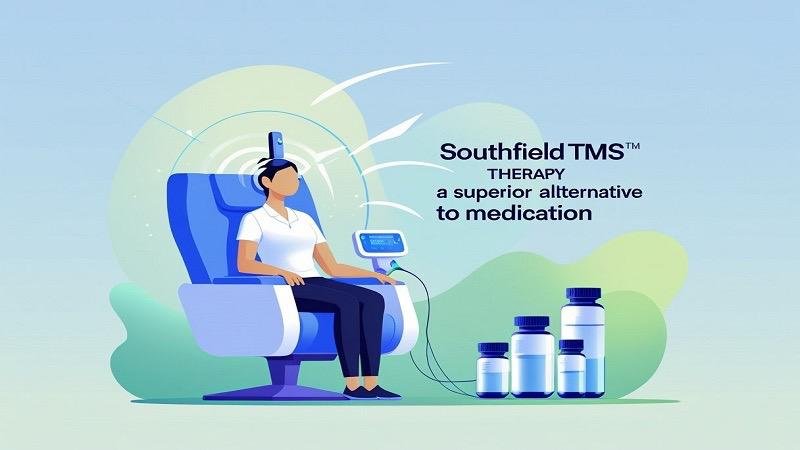
Depression treatment has traditionally relied on medication, but many patients in Southfield are discovering that antidepressants don’t work for everyone or come with unwanted side effects. Transcranial Magnetic Stimulation (TMS) therapy offers a fundamentally different approach to treating depression and related conditions.
TMS therapy uses targeted magnetic pulses to directly stimulate underactive brain regions, while medications work by altering brain chemistry throughout the entire body. This distinction creates meaningful differences in how patients experience treatment, what side effects they might encounter, and how effective the therapy proves to be for those who haven’t found relief through traditional approaches.
Understanding the specific ways TMS differs from medication helps patients make informed decisions about their mental health care. This article examines how the treatment mechanisms compare, what makes TMS particularly effective for certain individuals, and why Southfield providers are increasingly offering this FDA-approved alternative for treatment-resistant depression.
How Southfield TMS Therapy Differs from Medication-Based Treatments
TMS therapy operates through direct brain stimulation using magnetic pulses rather than chemical alterations from psychiatric medications, creating fundamental differences in how treatment is administered, tolerated, and experienced. The treatment approaches diverge significantly in their mechanisms, effectiveness for treatment-resistant cases, side effect profiles, and practical implementation.
Overview of TMS Therapy Compared to Antidepressants
Transcranial magnetic stimulation uses an electromagnetic coil positioned against the scalp to deliver targeted magnetic pulses to specific brain regions involved in mood regulation. This stands in direct contrast to antidepressants, which work systemically throughout the body by altering neurotransmitter levels in the bloodstream and brain.
Antidepressants like SSRIs and SNRIs require daily oral administration and typically take four to six weeks to show therapeutic effects. TMS treatment involves sessions where patients sit in a chair while the magnetic coil delivers pulses to underactive brain areas. The magnetic stimulation directly activates neurons in the prefrontal cortex without requiring medication to cross the blood-brain barrier.


What is TMS therapy’s primary advantage over medications? It provides localized treatment that affects only the targeted brain region rather than the entire body’s chemistry. This precision allows for mood improvement without the systemic exposure that psychiatric medications create.
Efficacy in Treatment-Resistant Depression and Other Mental Health Conditions
TMS therapy shows particular strength in treating individuals with treatment-resistant depression, defined as major depressive disorder that has not responded adequately to at least two different antidepressant trials. Research indicates that approximately 50-60% of patients with TRD experience significant symptom improvement with transcranial magnetic stimulation.
For patients who have cycled through multiple psychiatric medications without relief, TMS offers a proven alternative treatment for depression. The therapy demonstrates effectiveness even when combined with ongoing antidepressants or psychotherapy approaches like CBT. Studies show response rates remain consistent across different patient populations with treatment-resistant depression.
Beyond major depressive disorder, TMS sessions have shown promise for anxiety disorders and OCD. Traditional antidepressants often require dose adjustments and medication switches that extend the timeline for finding effective mental health treatment, while TMS treatment protocols follow more standardized approaches.
Side Effects and Tolerability Differences
The side effect profiles between TMS and antidepressants differ dramatically in both type and severity. Common antidepressant side effects include weight gain, sexual dysfunction, gastrointestinal issues, drowsiness, and emotional blunting that can persist throughout treatment duration.
TMS side effects are typically limited to mild scalp discomfort or headache at the treatment site during or immediately after sessions. These effects usually diminish as patients progress through their treatment course. Unlike psychiatric medications, TMS therapy does not cause cognitive impairment, weight changes, or sexual side effects.
Aspect | TMS Therapy | Antidepressants |
Common Side Effects | Scalp discomfort, mild headache | Weight gain, sexual dysfunction, GI issues |
Systemic Effects | None | Throughout entire body |
Cognitive Impact | No impairment | Possible drowsiness or fog |
Duration of Side Effects | During/shortly after sessions | Continuous while taking medication |
Patients do not require general anesthesia or sedation for TMS sessions, allowing them to drive themselves to appointments and resume normal activities immediately.
Session Structure and Recovery Time
TMS treatment follows a structured protocol of daily sessions for four to six weeks, with each TMS session lasting approximately 20-40 minutes. Patients remain awake and alert throughout the procedure, sitting comfortably while the electromagnetic coil delivers magnetic pulses.
There is no recovery time needed after TMS sessions. Patients can immediately return to work, drive, and engage in all normal activities without restriction. This contrasts sharply with the adjustment periods often required when starting or changing antidepressants.
The treatment protocols require commitment to daily appointments during the initial phase, typically five sessions per week. After the initial course, some patients receive maintenance sessions on a less frequent schedule. Antidepressants require daily oral administration indefinitely, with withdrawal symptoms possible if discontinued abruptly.
Depression treatment through TMS is finite rather than indefinite. Once the initial treatment course is complete and symptoms improve, many patients maintain their response without ongoing intervention. Psychiatric medications typically require continued use to sustain benefits, creating long-term dependency on chemical management.
The Unique Benefits and Mechanisms of TMS Therapy in Southfield
TMS therapy operates through targeted magnetic pulses that activate specific brain regions, particularly the dorsolateral prefrontal cortex, creating measurable changes in neural activity without the systemic effects of medications. This treatment approach promotes neuroplasticity and addresses multiple psychiatric conditions while maintaining a favorable safety profile compared to electroconvulsive therapy.
How TMS Works to Stimulate the Brain
The treatment uses an electromagnetic coil positioned against the patient’s scalp to deliver magnetic pulses directly to underactive brain regions. These pulses pass through the skull without causing pain or requiring sedation. The electromagnetic coil generates a magnetic field that induces small electrical currents in the targeted brain tissue.
During a TMS session, the magnetic pulses specifically target the dorsolateral prefrontal cortex, a region associated with mood regulation and executive function. The stimulation occurs at specific frequencies and intensities determined during treatment planning. Each session typically lasts 20-40 minutes, and patients remain fully awake and alert throughout the procedure.
The magnetic field strength used in TMS is similar to that of an MRI machine but applied in brief, repetitive pulses. This neurostimulation creates immediate neural firing patterns that accumulate over multiple sessions to produce therapeutic effects.
Neuroplasticity and Lasting Outcomes
TMS therapy promotes neuroplasticity by strengthening neural pathways and improving connectivity between brain regions. The repeated magnetic stimulation encourages the formation of new synaptic connections and reinforces existing ones. This biological process differs fundamentally from medication effects that diminish when drugs leave the system.
Research indicates that 50 to 60% of patients with treatment-resistant depression experience meaningful improvement with TMS. Many patients maintain these improvements for months or years after completing their treatment course. The therapy’s success rate stands at approximately 40% for positive treatment response, with 36% achieving clinical remission.
The lasting nature of TMS outcomes relates directly to the brain’s capacity to reorganize itself. Unlike medications that require continuous use, TMS creates structural changes in neural networks that persist beyond the active treatment period.
Suitability for Diverse Psychiatric Conditions
TMS therapy has FDA approval for treating major depressive disorder in adults and adolescents aged 15-21. The NeuroStar Advanced Therapy System also has clearance for obsessive-compulsive disorder treatment. Research continues to explore applications for post-traumatic stress disorder and anxiety disorders.
The therapy proves particularly valuable for patients who have not responded to multiple medication trials. It serves as an effective option for those who cannot tolerate medication side effects or prefer non-pharmaceutical interventions. Adolescent patients benefit from an alternative to potentially impactful medications during critical developmental periods.
TMS does not cause memory loss or cognitive impairment, distinguishing it from electroconvulsive therapy. Patients can drive themselves to appointments and return immediately to normal activities after each session.
Comparing TMS to Other Advanced Therapies
TMS differs significantly from electroconvulsive therapy (ECT) in several ways. ECT requires general anesthesia and induces controlled seizures, while TMS involves no sedation and targets specific brain regions without affecting the entire brain. ECT carries risks of memory loss and cognitive impairment that TMS does not produce.
The non-invasive nature of TMS eliminates surgical risks and recovery time associated with implanted neurostimulation devices. Patients experience minimal side effects, typically limited to mild scalp discomfort or headache that resolves quickly. The outpatient format allows patients to maintain their daily schedules throughout treatment.
Treatment planning for TMS involves individualized mapping of brain regions and customized stimulation parameters. This precision targeting allows clinicians to adjust protocols based on patient response. The approach integrates well with ongoing stress management strategies and psychotherapy without interfering with these complementary treatments.