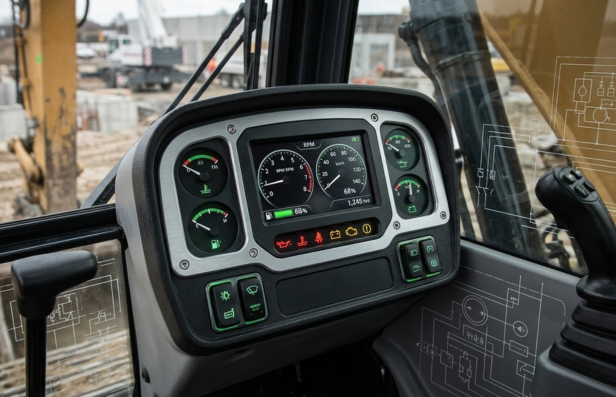
Instrument clusters serve as the primary information hub between the equipment and the operator. In industrial machinery, agricultural vehicles, construction equipment, transportation systems, and specialized machinery, the clarity and reliability of instrument clusters directly affect safety, efficiency, and operational accuracy.
- What Is an Instrument Cluster?
- Why Standard Instrument Panels May Fall Short
- Improved Visual Clarity and Information Prioritization
- Ergonomic Optimization for Operator Performance
- Environmental Durability and Reliability
- Enhanced Equipment Performance Through Data Visibility
- Safety Through Early Warning Systems
- Customization in Industrial Applications
- 1. Define Operational Environment
- 2. Identify Critical Data Requirements
- 3. Optimize Layout and Materials
- The Relationship Between Interface Design and Risk Reduction
- Long-Term Performance and Maintenance Benefits
- Engineering Perspective on Custom Instrument Clusters
- Frequently Asked Questions
Standardized display panels often fail to address unique environmental, ergonomic, and performance requirements. Custom instrument clusters are engineered to meet specific operational demands, improving both operator safety and overall equipment performance.
When designed correctly, a custom instrument cluster becomes more than a display panel. It becomes a critical decision-support system.
What Is an Instrument Cluster?
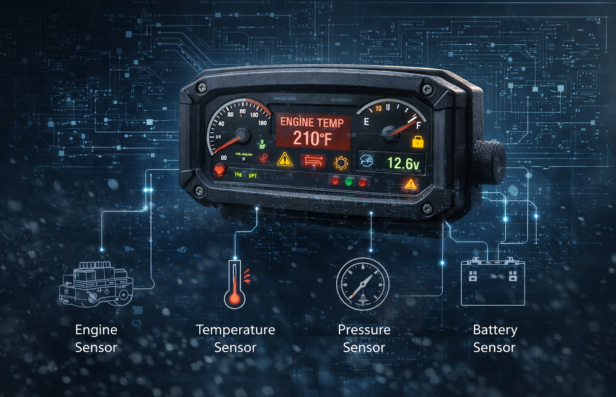
An instrument cluster is a centralized display interface that presents critical system data to an operator.
It may include:
- Analog or digital gauges
- Warning indicators
- Backlit icons
- Display windows
- Status alerts
- User input controls
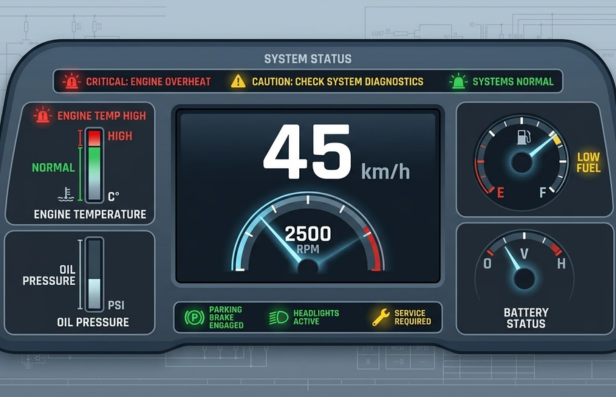
In industrial equipment, instrument clusters communicate real-time information such as temperature, pressure, fuel level, battery status, and system diagnostics.
Why Standard Instrument Panels May Fall Short
Off-the-shelf instrument panels are typically designed for broad compatibility. While they may function adequately, they often lack:
- Environmental customization
- Optimized layout for specific operator workflows
- Enhanced durability for harsh conditions
- Integrated warning prioritization
- Application-specific data grouping
In high-risk or high-precision environments, generalized interfaces can increase cognitive load and delay reaction times.

Custom instrument clusters address these limitations.
Improved Visual Clarity and Information Prioritization
Clear communication reduces operator error.
Custom instrument clusters improve visibility through:
- Strategic grouping of related data
- High-contrast labeling
- Color-coded alerts
- Backlighting optimized for low-light environments
- Anti-glare surface treatments
Information prioritization is critical. Critical alerts must stand out immediately, while secondary data should not distract from essential indicators.
An optimized visual hierarchy ensures that operators respond quickly to abnormal conditions.
Understanding how different gauges communicate critical machine data is essential for effective dashboard design.
For a closer look at the most common gauges used in instrument clusters and how they display operational information, read this guide on understanding the most common gauges in an instrument cluster.
Ergonomic Optimization for Operator Performance
Operator fatigue and reaction time are influenced by interface design.
Custom instrument clusters support ergonomic optimization by:
- Positioning key data within natural sightlines
- Reducing unnecessary head movement
- Minimizing information overload
- Designing control interfaces for gloved operation
- Improving tactile feedback in integrated switch areas
Ergonomic alignment improves reaction time and reduces errors during long operating shifts.
Environmental Durability and Reliability
Industrial and transportation equipment operate in challenging environments.
Custom instrument clusters can be engineered to withstand:
- Vibration and mechanical shock
- Dust and moisture exposure
- Temperature extremes
- UV radiation
- Chemical exposure
Sealed constructions and rugged materials reduce the risk of contamination and failure.
In equipment that operates continuously, long-term reliability reduces downtime and maintenance costs.
Integration with Advanced Monitoring Systems
Modern equipment relies on complex monitoring systems.
Custom clusters allow integration of:
- Real-time sensor data
- Diagnostic warning systems
- Embedded display modules
- CAN bus communication systems
- Hybrid analog and digital display combinations
This integration enables centralized monitoring rather than fragmented displays.
Centralization improves situational awareness and reduces missed warnings.
Enhanced Equipment Performance Through Data Visibility
Equipment performance improves when operators can monitor systems accurately.
Custom instrument clusters provide:
- Precise measurement displays
- Real-time system health monitoring
- Performance trend visibility
- Clear feedback on operational adjustments
Better data visibility supports proactive decision-making.
Operators can identify inefficiencies, overheating risks, or pressure imbalances before failures occur.
Clear, well-designed gauges and dial interfaces also help operators interpret machine data faster on the factory floor. For additional insight into how custom dials and gauges improve industrial safety.
Safety Through Early Warning Systems
Operator safety depends on timely alerts.
Custom instrument clusters improve safety by enabling:
- Tiered warning systems
- Visual and audible alerts
- Dedicated fault indicators
- Immediate feedback on system malfunctions
When warning signals are clear and prioritized, response time improves.
In high-risk environments, seconds matter.
Customization in Industrial Applications
Different industries require different interface solutions.
Custom instrument clusters are commonly engineered for:
- Agricultural machinery
- Construction vehicles
- Heavy industrial equipment
- Marine systems
- Laboratory instrumentation
- Specialty transportation systems
Each environment demands tailored durability, readability, and data presentation strategies.
For a deeper perspective on how personalization improves usability and operator interaction, read our detailed guide on how custom instrument clusters enhance user experience.
Engineering Considerations for Custom Instrument Clusters
Developing a high-performance instrument cluster requires systematic evaluation.
1. Define Operational Environment
Assess:
- Temperature range
- Moisture exposure
- Vibration levels
- UV exposure
- Chemical exposure
2. Identify Critical Data Requirements
Determine:
- Essential real-time metrics
- Required alert thresholds
- Data refresh rate
- Redundancy needs
3. Optimize Layout and Materials
Evaluate:
- Display technology
- Overlay materials
- Backlighting design
- Environmental sealing methods
- Mounting structure stability
Each design decision influences long-term safety and performance.
The Relationship Between Interface Design and Risk Reduction
Human error is often linked to poor interface design.
Custom instrument clusters reduce risk by:
- Minimizing ambiguous labeling
- Reducing clutter
- Improving alert clarity
- Enhancing legibility under stress
Clear communication improves operator confidence and situational awareness.
Well-designed clusters support safer equipment operation.
Long-Term Performance and Maintenance Benefits
Custom solutions often outperform generic alternatives over time.
Benefits include:
- Reduced component replacement
- Improved system durability
- Simplified maintenance diagnostics
- Lower long-term operational costs
Reliable instrumentation reduces unexpected failures and service interruptions.
Engineering Perspective on Custom Instrument Clusters
Custom instrument clusters are closely related to other interface technologies, such as dials, gauges, and human-machine interface components, which together form the visual communication layer between operators and complex machinery.
They enhance:
- Situational awareness
- Equipment efficiency
- System reliability
- Operator confidence
In modern industrial design, interface clarity is directly tied to safety and performance.
Custom instrument clusters provide structured, application-specific solutions that improve both.
Frequently Asked Questions
Q 1. What is an instrument cluster?
An instrument cluster is a centralized display system that communicates operational data and alerts to an equipment operator.
Q 2. Why are custom instrument clusters important?
Custom designs optimize visibility, durability, and data prioritization for specific operational environments.
Q 3. How do instrument clusters improve safety?
They provide clear warning systems and real-time performance data, reducing reaction time and operator error.
Q 4. Can instrument clusters withstand harsh environments?
Yes, when engineered with appropriate materials and sealing techniques.
Q 5. Do custom instrument clusters improve equipment performance?
Yes. Clear data presentation allows operators to make timely adjustments and prevent performance degradation.