HVAC systems work hard year-round in Halifax, facing humid summers and freezing winters that put constant strain on equipment. When maintenance gets neglected, minor issues turn into major failures at the worst possible times. Regular HVAC maintenance prevents costly breakdowns by identifying and correcting problems before they escalate into expensive emergency repairs.
Most unexpected system failures happen during peak seasons when homeowners need their heating or cooling the most. A well-maintained HVAC system operates more efficiently, uses less energy, and lasts significantly longer than one that only receives attention when something goes wrong. The difference between a minor tune-up and a complete system replacement often comes down to consistent preventative care.
Understanding what comprehensive maintenance involves and how it protects both comfort and budgets helps Halifax homeowners make informed decisions about their HVAC systems. The right maintenance strategy addresses immediate performance while building long-term reliability and cost savings.
Comprehensive HVAC Maintenance Strategies to Prevent Costly Breakdowns in Halifax
Halifax’s demanding climate requires strategic HVAC maintenance approaches that address both heating and cooling systems throughout the year. Property owners who implement structured maintenance plans can significantly reduce emergency repair costs while maintaining consistent comfort levels.
Why Preventative Maintenance Is Essential in Halifax’s Climate
Halifax experiences temperature extremes that place considerable stress on HVAC systems. Winter temperatures frequently drop below freezing, while humid summers demand reliable air conditioning.
The coastal climate introduces additional challenges. Salt air accelerates corrosion on outdoor units and components. Moisture from fog and precipitation can compromise system efficiency if left unaddressed.



Systems that operate year-round without proper maintenance consume more energy and fail prematurely. Heat pumps, which many Halifax residents rely on for both heating and cooling, require particular attention due to their continuous operation. Regular servicing prevents the gradual decline in performance that increases utility bills by 15-30% over time.
Annual HVAC maintenance addresses wear patterns specific to maritime conditions. Technicians inspect for salt corrosion, check refrigerant levels affected by temperature swings, and verify that drainage systems handle condensation properly.
Critical HVAC Maintenance Tasks for Reliability
Filter replacement stands as the most fundamental task, required monthly during peak usage seasons. Clean filters maintain indoor air quality and prevent system strain.
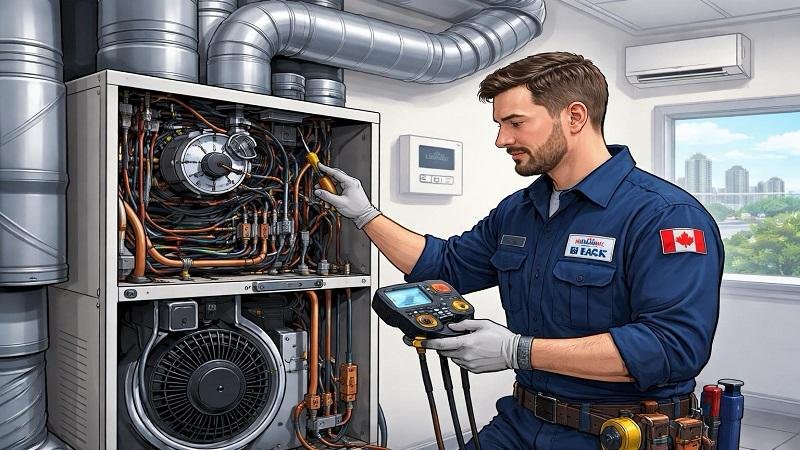
Coil cleaning removes accumulated dirt and debris that restricts airflow. Evaporator coils inside the unit and condenser coils outside require annual cleaning to maintain heat transfer efficiency. Dirty coils force compressors to work harder, leading to premature failure.
Heat pump cleaning involves clearing the outdoor unit of leaves, ice buildup, and salt residue. The defrost cycle components need verification to ensure proper winter operation.
Electrical connections require tightening and inspection for signs of overheating. Refrigerant levels must meet manufacturer specifications—both overcharging and undercharging reduce efficiency and damage compressors. Thermostat calibration ensures accurate temperature control and prevents unnecessary cycling.
Duct cleaning every 3-5 years removes allergens and improves system performance. Sealed ductwork prevents energy waste and maintains consistent temperatures throughout the building.
Benefits of Scheduled and Routine HVAC Maintenance
Maintenance plans provide cost predictability through scheduled service intervals. Property owners avoid emergency service rates that typically run 50-100% higher than routine appointments.
Energy efficiency improvements typically range from 15-25% after professional maintenance. A well-maintained system operates at its designed capacity rather than working harder to achieve temperature goals.
Extended equipment lifespan represents substantial financial value. Systems receiving annual professional service last 15-20 years compared to 10-12 years for neglected units. Component failures decrease dramatically—routine inspections catch minor issues before they cascade into major hvac repairs.
Indoor air quality improves through regular filter changes and duct maintenance. This proves particularly valuable for occupants with allergies or respiratory conditions.
Warranty protection often requires documented routine hvac maintenance. Manufacturers may deny claims if owners cannot demonstrate regular service intervals.
Warning Signs That Your System Needs Professional Attention
Unusual noises indicate mechanical problems requiring immediate assessment. Grinding, squealing, or banging sounds suggest bearing failures, belt issues, or loose components that will worsen without intervention.
Inconsistent temperatures between rooms or floors signal ductwork problems, failing thermostats, or refrigerant issues. Weak airflow from vents suggests blower motor problems or severe blockages.
Unexpected increases in utility bills often precede complete system failures. A sudden 20% rise in heating or cooling costs warrants professional inspection.
Frequent cycling—when the system turns on and off repeatedly—indicates sizing problems, thermostat malfunctions, or airflow restrictions. Ice formation on outdoor units during heating mode or indoor coils during cooling requires immediate attention.
Strange odors suggest mold growth in ductwork, electrical issues, or gas leaks that pose safety hazards. Any burning smell demands immediate system shutdown and professional evaluation.
Maximizing Comfort, Efficiency, and Long-Term Savings with HVAC Maintenance Plans
HVAC maintenance plans deliver measurable benefits through scheduled inspections that catch minor issues before they escalate, while optimizing system performance to reduce energy consumption and extend equipment lifespan. These structured service agreements provide homeowners with priority access to technicians and maintain consistent indoor air quality throughout the year.
How Maintenance Plans Reduce Emergency Repairs
Annual maintenance plans identify potential problems during routine inspections before they cause system failures. Technicians check refrigerant levels, test electrical connections, and examine worn components that typically lead to unexpected breakdowns.
Homeowners with maintenance plans receive priority service when issues arise, often avoiding the extended wait times and premium rates associated with emergency calls. Regular tune-ups keep components operating within manufacturer specifications, which reduces stress on the system.
The financial impact is significant. Preventive care through scheduled visits costs substantially less than emergency repairs, which often require after-hours service charges and expedited parts ordering. Most breakdowns occur during peak heating or cooling seasons when the system works hardest, making preventive maintenance particularly valuable for maintaining home comfort when it matters most.
Extending the Life of Your Home Comfort System
Scheduled maintenance directly impacts how long heating and cooling equipment remains operational. Systems receiving annual professional care typically operate 5-10 years longer than neglected units.
Regular filter changes, coil cleaning, and lubrication prevent the accelerated wear that shortens equipment life. During maintenance visits, technicians adjust components to reduce friction and strain on motors, compressors, and fans. These adjustments keep parts working efficiently rather than forcing them to compensate for inefficiencies elsewhere in the system.
Manufacturers often require documented maintenance as a condition of warranty coverage. Missing scheduled service can void equipment warranties, leaving homeowners responsible for full replacement costs if major components fail prematurely.
Improving Energy Efficiency and Indoor Air Quality
Well-maintained HVAC systems consume less energy by operating at designed performance levels. Clean filters and coils allow proper airflow, reducing the energy needed to circulate conditioned air throughout the home.
Key efficiency improvements from maintenance:
- Cleaned coils improve heat transfer by 10-15%
- Calibrated thermostats prevent unnecessary system cycling
- Sealed ductwork eliminates energy loss during air distribution
- Proper refrigerant levels maintain optimal cooling capacity
Maintenance plans also improve indoor air quality through regular filter replacements and system cleaning. Technicians inspect and clean components where dust, mold, and allergens accumulate. This reduces airborne contaminants circulating through living spaces, which benefits respiratory health and overall home comfort system performance.