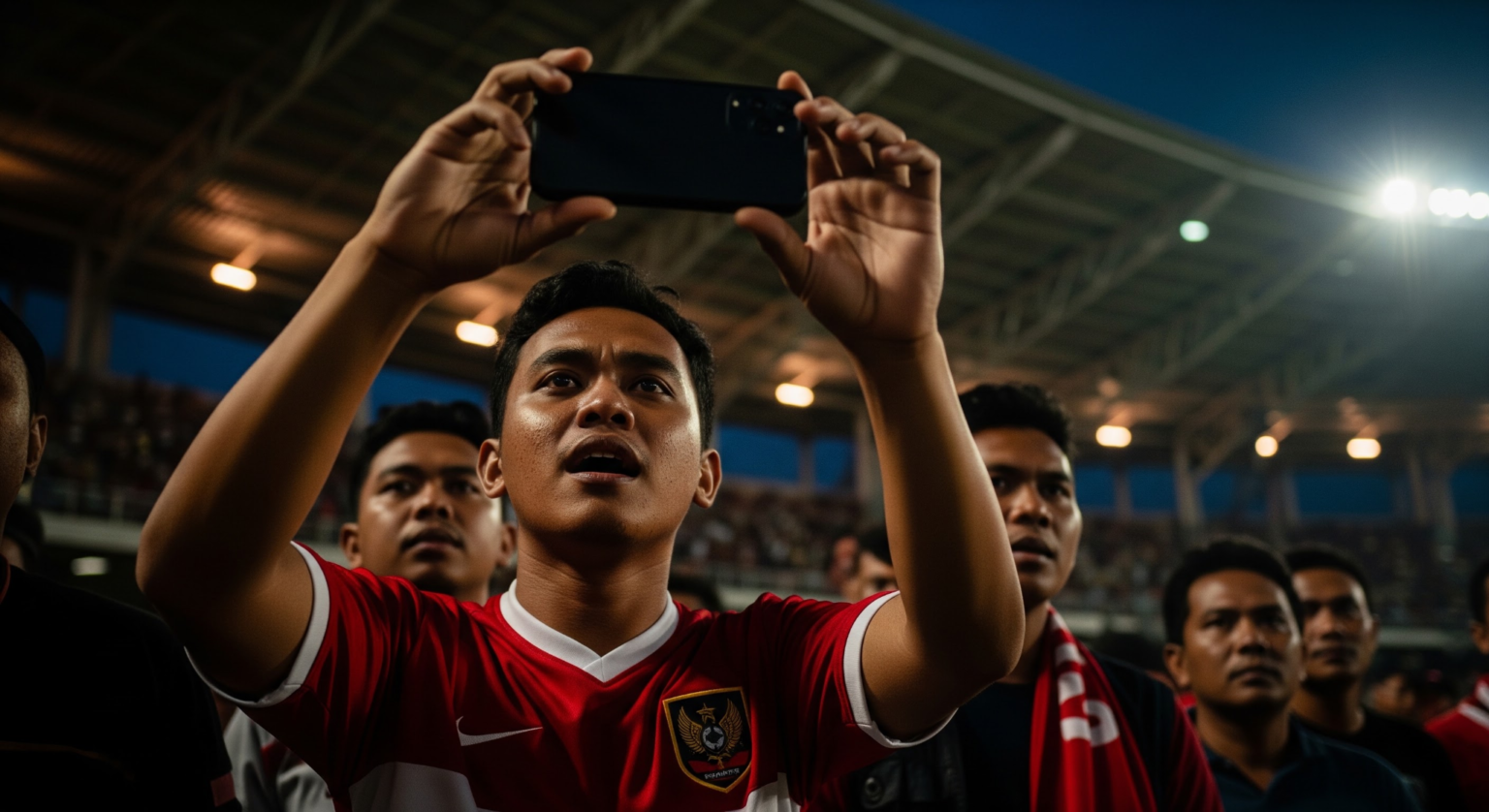
Indonesia football fans no longer exist only in the stand. They organize travel, challenge club decisions, produce match analysis, trade shirts, run community accounts, and turn ninety minutes into a week-long digital conversation. The names remain local—Jakmania, Bobotoh, Bonek, Aremania—but the operating system is now mobile. That shift gives Indonesian football a commercial engine and a governance problem: the audience is easier to reach, yet harder to manage with one-way communication.
The title race shows this second-screen behavior clearly. During a major Liga 1 Indonesia weekend, supporters move between group chats, injury reports, live scores, and outright prices rather than consuming one broadcast in isolation. The 1xBet apk fits that routine by placing futures and live markets on the same device, but useful comparison still depends on verified team news and price movement. A shortening title price may reflect public money rather than new sporting information. Fans who track line changes beside confirmed absences understand the market better than those reacting to a viral prediction.
The terrace became a publishing network
Supporter culture once depended on physical proximity: the bus, neighborhood base, ticket queue, and stand. Social platforms broke that boundary. A fan in another province can follow training images, supporter statements, press conferences, and post-match debates in real time. This is distributed editorial power. Clubs no longer control the first interpretation of a defeat, transfer, or ticketing failure. Their media teams compete with supporter podcasts, short videos, tactical threads, and citizen journalism. Silence creates a vacuum, and rumor usually fills it.
Kanjuruhan changed the meaning of governance
Any profile of football culture Indonesia must confront 1 October 2022. The Kanjuruhan disaster killed 135 people, according to FIFA, and made stadium governance a matter of life rather than branding. Renovated gates and command rooms matter, but safe football also requires trained stewards, clear capacity limits, usable exits, transport planning, and communication supporters trust under pressure.
FIFA and PSSI’s 2025 safety workshop brought together 130 participants from government, clubs, league administration, stadium management, and design. Its agenda covered certification, matchday operations, maintenance, commercial use, and multi-event strategy. Supporter representatives also need a defined channel into ticket allocation, arrival routes, prohibited items, choreography, and emergency messaging.
Community-led governance does not mean organized groups set every rule. It means treating them as operational stakeholders with knowledge of travel patterns, rivalries, and entry friction. A trained supporter liaison officer can translate between terrace behavior and venue management before conflict reaches the gate. Consultation must still sit beneath enforceable safety standards.
Digital identity turns access into data
The Indonesia national football team has moved toward a centralized fan platform with Kita Garuda ID, combining news, ticket information, supporter activity, and an official store. Persija’s platform also places tickets, content, and merchandise inside one club-controlled system, with subscriptions offering priority access and exclusive releases. These products convert anonymous reach into first-party data.
That data can show who buys early, which fixtures attract occasional visitors, where merchandise demand originates, and how often a supporter returns. Used well, it improves seating offers, stock planning, and service messages. Used carelessly, it creates privacy concerns. Clubs need clear retention policies, secure payments, and a reason for every field they request.



Match night spills into a wider entertainment economy
A title chase creates hours of attention around a two-hour match. Supporters arrive early, monitor rival results, and continue discussing scenarios after the final whistle. Some adults move from outright tables to a live casino lobby, where streamed dealer games operate in real time and table limits, pace, and house edge replace team form as the relevant mechanics. Blackjack decisions can affect the path of a hand, but they do not remove the mathematical house advantage. Roulette outcomes remain independent even when a football result has produced a strong emotion. A fixed entertainment budget keeps the match-night mood from dictating stake size.
This wider attention economy explains why clubs want supporters inside their own channels. Every minute on an official app or store page can sell tickets, shirts, hospitality, or sponsor inventory.
The shirt is now media
A football shirt signals city, generation, terrace affiliation, player memory, and sometimes a specific season of joy or failure. Limited releases, anniversary designs, training wear, scarves, and collaborations let clubs sell identity at several price points. Supporters extend the product’s reach with unboxings, collection photographs, and resale listings.
The commercial leak is counterfeit supply. When official stock is scarce, slow to ship, or poorly sized, demand moves elsewhere. Clubs can respond with better availability, visible authenticity markers, predictable releases, and entry-level products rather than relying only on replica shirts. Merchandise works when loyalty meets reliable retail operations.
Relegation anxiety changes digital behavior
The bottom of the table creates a different online rhythm from a title race. Supporters calculate points per game, goal difference, head-to-head rules, and remaining fixtures, then compare those numbers with coaching changes and home form. During those weekends, an online casino section offers short RNG-based sessions, but RTP and volatility – not relegation form – govern the underlying game profile. High-volatility slots can create long dry sequences followed by larger swings, so the previous spin supplies no predictive edge. Bonus value depends on wagering requirements and eligible-game rules rather than the emotional weight of the match. Separating those mechanics matters most when a club result has already raised the temperature.
The rise of the Indonesian supporter is not a simple story of bigger crowds or louder accounts. Fans now produce information, police authenticity, pressure directors, distribute merchandise culture, and supply clubs with behavioral data. Clubs that understand the relationship will communicate before rumors harden, involve supporters before matchday plans fail, and build retail systems worthy of the loyalty they already possess.