Remote work has transformed from a temporary arrangement into a permanent reality for millions of businesses worldwide. Yet as teams spread across cities, time zones, and home offices, one persistent challenge remains: how do you accurately track when employees are working? Spreadsheets, honor systems, and manual time logs create gaps that lead to payroll errors, compliance risks, and lost productivity. A remote employee time clock solves these problems by providing digital tools purpose-built for distributed teams to clock in, verify attendance, and maintain accountability without micromanagement.
- Understanding Remote Employee Time Clocks and Their Importance
- Key Features to Look for in Remote Time Clock Solutions
- Biometric Time Clocks for Enhanced Security
- Facial Recognition Technology in Modern Systems
- Customizable Shift Scheduling Capabilities
- Top Remote Employee Time Clock Solutions for Small Businesses
- Solution A: Focus on Accurate Employee Tracking
- Solution B: Emphasis on Customizable Shift Management
- Solution C: Comprehensive Attendance Management Suite
- Step-by-Step Guide to Implementing a Remote Time Clock System
- Step 1: Assess Your Business Needs and Goals
- Step 2: Choose the Right Solution Based on Features
- Step 3: Train Employees and Integrate with Existing Tools
- Step 4: Monitor and Optimize Attendance Management
- Choosing the Right Time Clock to Empower Your Remote Team
For small business owners, the stakes are especially high. Every hour miscounted affects tight budgets and lean operations. The right solution needs to deliver accurate employee tracking while offering customizable shift scheduling that adapts to flexible work arrangements. This article explores the best remote employee time clock solutions available today, breaking down essential features, comparing top platforms, and providing a clear implementation roadmap so you can choose a system that fits your team’s unique needs.
Understanding Remote Employee Time Clocks and Their Importance
A remote employee time clock is a digital system that allows distributed workers to record their work hours from any location using computers, smartphones, or tablets. Unlike traditional punch clocks mounted on office walls, these solutions operate through cloud-based platforms accessible anywhere with an internet connection. They capture clock-in and clock-out times, track breaks, and generate attendance records automatically without requiring physical presence at a specific location.
The evolution from paper timesheets to digital time tracking reflects how dramatically work environments have changed. Manual logs relied on employee honesty and manager oversight, both of which become nearly impossible when teams work from different locations. Digital time clocks eliminate guesswork by recording exact timestamps, often verified through GPS location data or biometric confirmation, creating an auditable trail that protects both employers and employees.
Accurate attendance management directly impacts two critical business functions: payroll accuracy and labor law compliance. Overpaying due to inflated hours or underpaying because of missed entries creates financial strain and potential legal exposure. For small business owners operating without dedicated HR departments, these risks multiply quickly. A reliable remote time clock automates calculations, flags discrepancies, and ensures every worked hour is properly documented. This means fewer payroll disputes, reduced administrative burden, and confidence that your business meets wage and hour regulations regardless of where your team members are located.
Key Features to Look for in Remote Time Clock Solutions
Not all time tracking tools are created equal, and the features you prioritize will determine whether your investment pays off or creates new headaches. When evaluating remote employee time clock options, focus on capabilities that directly address security, verification, and scheduling flexibility.
Biometric Time Clocks for Enhanced Security
Biometric time clocks use unique physical identifiers like fingerprints or voice patterns to verify employee identity at clock-in. This eliminates buddy punching, where one worker clocks in for another, a problem that costs businesses thousands annually. For small businesses, modern biometric solutions work through smartphone sensors, removing the need for expensive dedicated hardware. The tradeoff involves privacy considerations and ensuring your team understands how their biometric data is stored and protected.
Facial Recognition Technology in Modern Systems
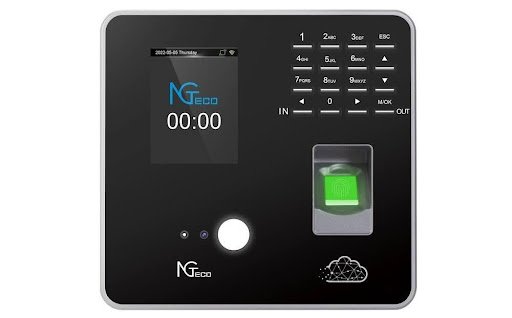
Facial recognition takes biometric verification a step further by using a device’s camera to confirm identity in seconds. Employees simply look at their phone or laptop screen when clocking in, and the system matches their face against stored profiles. Hardware manufacturers like NGteco have developed facial recognition time clock devices that bring enterprise-grade verification to small business environments, combining reliable hardware with cloud-based management. This approach strengthens attendance management by creating photographic proof of who clocked in, making time theft virtually impossible while keeping the process frictionless for honest employees.



Customizable Shift Scheduling Capabilities
Remote teams rarely follow rigid nine-to-five patterns, which makes customizable shift scheduling essential. Look for platforms that let you build rotating schedules, assign flexible windows for clock-in times, and accommodate part-time or variable hours. The best systems allow managers to create templates, swap shifts with drag-and-drop simplicity, and send automatic notifications when schedules change. For small business owners juggling multiple roles, this automation saves hours of manual coordination each week while giving employees clear expectations about their working hours.
Top Remote Employee Time Clock Solutions for Small Businesses
Choosing the right platform depends on which pain points matter most to your operation. The following solutions each excel in different areas, giving you a clear picture of what’s available for distributed teams operating on small business budgets.
Solution A: Focus on Accurate Employee Tracking
Some platforms distinguish themselves through precision-focused time logging that leaves no room for discrepancies. These solutions capture exact timestamps down to the second, automatically calculate overtime, and sync directly with popular payroll systems to eliminate manual data entry. GPS verification confirms employees are working from approved locations when they clock in, while real-time dashboards show managers exactly who is active at any moment. The interface stays deliberately simple, requiring minimal training for small teams. Automated alerts notify managers of missed punches or unusual patterns, allowing quick corrections before payroll processing begins.
Solution B: Emphasis on Customizable Shift Management
For businesses where scheduling complexity is the primary challenge, certain platforms prioritize flexible shift creation above all else. These tools offer drag-and-drop schedule builders, recurring shift templates, and open shift posting where employees can claim available hours. Automatic notifications push schedule updates to team members instantly, reducing confusion and no-shows. Built-in reporting reveals labor cost projections based on scheduled hours, helping small business owners budget accurately. Shift swap requests flow through approval workflows that keep managers informed without creating bottlenecks, and time-off management integrates directly into the scheduling view for complete visibility.
Solution C: Comprehensive Attendance Management Suite
All-in-one platforms combine biometric verification, facial recognition, and advanced scheduling into a single ecosystem. These solutions appeal to growing businesses that need every attendance management function under one roof without juggling multiple subscriptions. They offer tiered plans that scale as your team expands, starting with core time tracking and unlocking advanced features like geofencing and project-based tracking as needed. Integration libraries connect with accounting software, HR platforms, and communication tools your team already uses, creating a seamless workflow from clock-in through paycheck.
Step-by-Step Guide to Implementing a Remote Time Clock System
Selecting a platform is only half the equation. Successful implementation requires a structured approach that accounts for your team’s workflow, existing tools, and long-term growth plans.
Step 1: Assess Your Business Needs and Goals
Start by documenting your specific pain points. Do you struggle more with tracking accuracy or scheduling chaos? Count your remote employees, note their time zones, and determine whether they work fixed or variable hours. Identify compliance requirements in your jurisdiction, particularly overtime rules and break mandates. This assessment creates a clear checklist you can match against platform capabilities rather than being swayed by features you’ll never use.
Step 2: Choose the Right Solution Based on Features
With your requirements documented, compare platforms against your priority list. If time theft concerns you most, prioritize solutions offering facial recognition or biometric time clocks. If scheduling flexibility drives your decision, focus on platforms with robust shift management tools. Request demos from your top two or three candidates and test them with a small group before committing. Pay attention to how intuitive the interface feels since complicated systems lead to low adoption rates among remote teams.
Step 3: Train Employees and Integrate with Existing Tools
Roll out the new system with clear communication about why it’s being implemented and how it benefits everyone. Create short video tutorials showing exactly how to clock in, request time off, and view schedules. Connect the platform to your payroll software and communication channels before launch day. Set up customizable shift schedules in advance so employees see a fully functioning system from their first interaction rather than an empty framework.
Step 4: Monitor and Optimize Attendance Management
After launch, review attendance reports weekly to spot missed punches or patterns suggesting confusion. Gather employee feedback within the first month and adjust notification settings or scheduling rules based on what you learn. Continuous refinement ensures your remote employee time clock delivers lasting value.
Choosing the Right Time Clock to Empower Your Remote Team
Managing a distributed workforce demands tools that match the flexibility of remote work itself. A remote employee time clock eliminates the guesswork of manual tracking, replacing spreadsheets and honor systems with verified, automated attendance records that protect your bottom line and keep your business compliant. The key features that matter most—biometric time clocks, facial recognition verification, and customizable shift scheduling—work together to create accountability without burdening your team with cumbersome processes.
Whether you prioritize accurate employee tracking, need sophisticated scheduling tools, or want a comprehensive attendance management platform that grows with you, solutions exist today that fit small business budgets and operational realities. The path forward starts with honestly assessing your pain points, testing platforms against your specific requirements, and committing to a structured rollout that brings your team along. Don’t let another pay period pass with inaccurate records or scheduling confusion—evaluate the solutions discussed here and implement a system that gives you clarity, saves administrative hours, and ensures every remote team member is supported and accountable.