Whether you are planning a new driveway or giving your front garden a fresh look, block paving is one of the most popular choices for homeowners across the UK. It looks smart, lasts for decades, and adds real value to a property. But before you hire a contractor or start budgeting, it helps to understand what block paving actually involves and what you are getting for your money.
What Is Block Paving?
Block paving is a type of hard surface made from individual bricks or blocks laid in a pattern. The blocks are usually made from concrete or clay and pressed tightly together on a prepared base. Because the blocks interlock, the surface can flex slightly without cracking, which makes it more durable than a solid concrete slab in areas where the ground moves over time.
It is used most commonly for driveways, patios, and pathways, but it also appears in car parks and pedestrianised town centres across the country.
Why Do People Choose Block Paving?
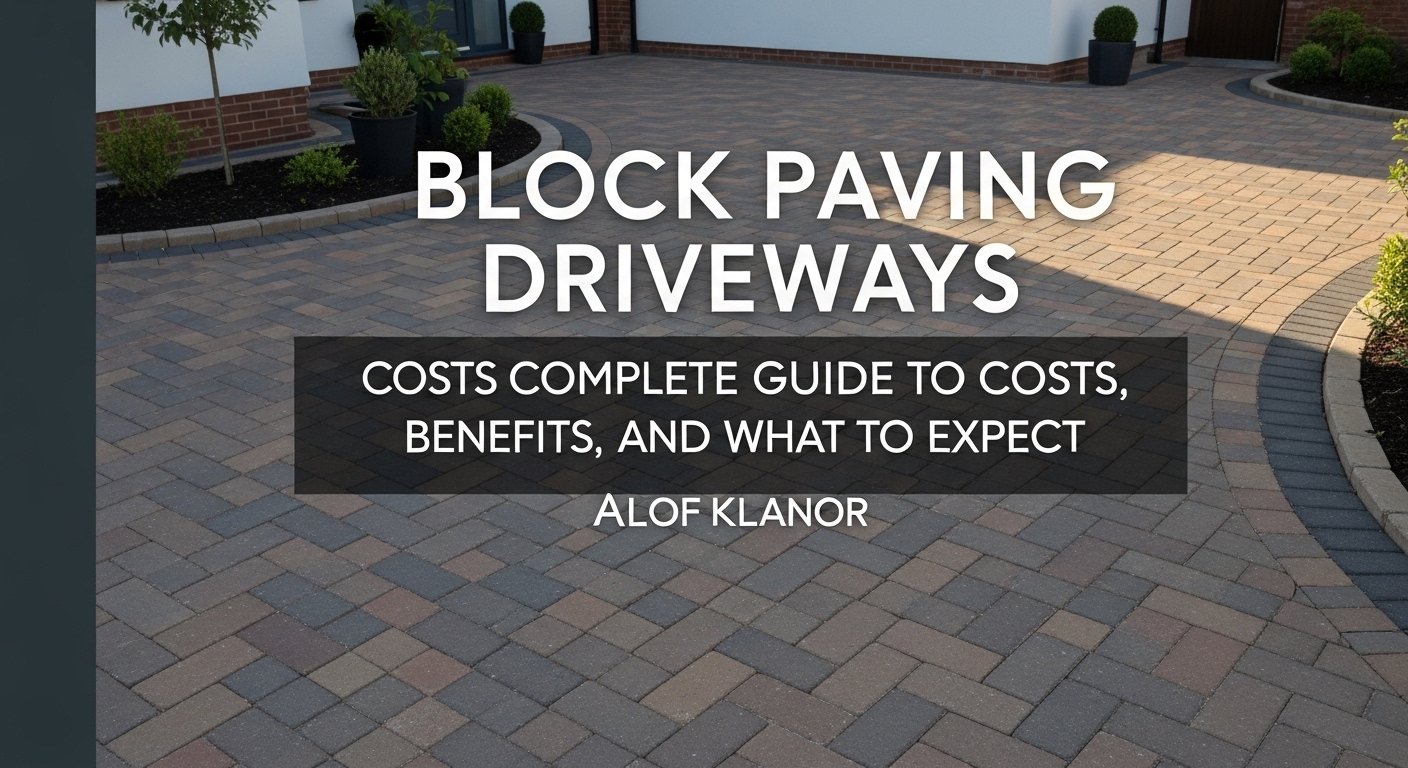
The most obvious reason is appearance. Block paving comes in a wide range of colours, shapes, and laying patterns, such as herringbone, basketweave, and stretcher bond. This means you can match it to the style of your home and create a finish that looks custom-built rather than off the shelf.
There are practical advantages too. Block paving drains reasonably well, particularly if it is laid with permeable joints or on a permeable sub-base, which helps with surface water run-off. Individual blocks can also be lifted and replaced if a pipe beneath the driveway needs accessing, making future repairs much simpler than with asphalt or solid concrete.
Studies consistently show that a well-laid block paving driveway can increase a property’s kerb appeal and, in turn, its market value. If you are thinking about selling your home in the next few years, this is worth considering alongside the initial cost.
How Much Does Block Paving Cost in the UK?
Prices vary depending on the size of the area, the type of blocks used, and the complexity of the groundwork involved. As a rough guide, a standard residential driveway of around 40 to 50 square metres typically costs between £3,000 and £6,000 in the UK, including labour and materials. More premium block types or intricate patterns will push the price higher.


A key part of the cost that many homeowners overlook is the groundwork. Before any blocks are laid, the ground has to be properly excavated and a compacted sub-base installed. Skipping this step, or doing it poorly, is the main reason block paving driveways fail early. A good sub-base protects the surface from sinking, cracking, or lifting over time.
Just as the condition of your foundations determines how long a building will stand, the quality of the sub-base determines how long your driveway will last. It is not glamorous, but it matters more than the blocks themselves.
Planning Permission: Do You Need It?
If you are laying a driveway that covers more than five square metres, you may need planning permission, depending on the drainage arrangement. Under rules introduced in 2008, driveways that use impermeable materials and allow water to drain onto the road or into the main drainage system do require permission. However, if the surface drains naturally into a garden or soakaway, or if permeable blocks are used, you are usually exempt. It is always worth checking with your local council before work begins.
What About Interior Flooring?
It is worth noting that the same careful approach to preparation applies indoors. Just as groundwork quality determines the life of a driveway, subfloor preparation affects how long interior finishes last. If you are renovating both inside and outside your home, specialists offering wood flooring will often tell you the same thing: the finish is only as good as what is beneath it.
How Long Does Block Paving Last?
With proper installation and occasional maintenance, a block paving driveway should last 20 to 25 years or more. Maintenance mostly involves re-sanding the joints every few years and occasionally power washing to remove moss and weeds. If individual blocks become damaged, they can be swapped out without disturbing the rest of the surface.
Choosing a Contractor
Always ask a contractor to show you previous work and provide a written quote that breaks down labour and materials separately. A reputable groundwork contractor will carry out a proper site survey before quoting, check drainage requirements, and advise on the right block type for your use case. Be cautious of very low quotes, as these often reflect shortcuts in the sub-base preparation, which is where the real work happens.
Block paving is a long-term investment. Done properly, it is one of the most satisfying home improvements you can make.