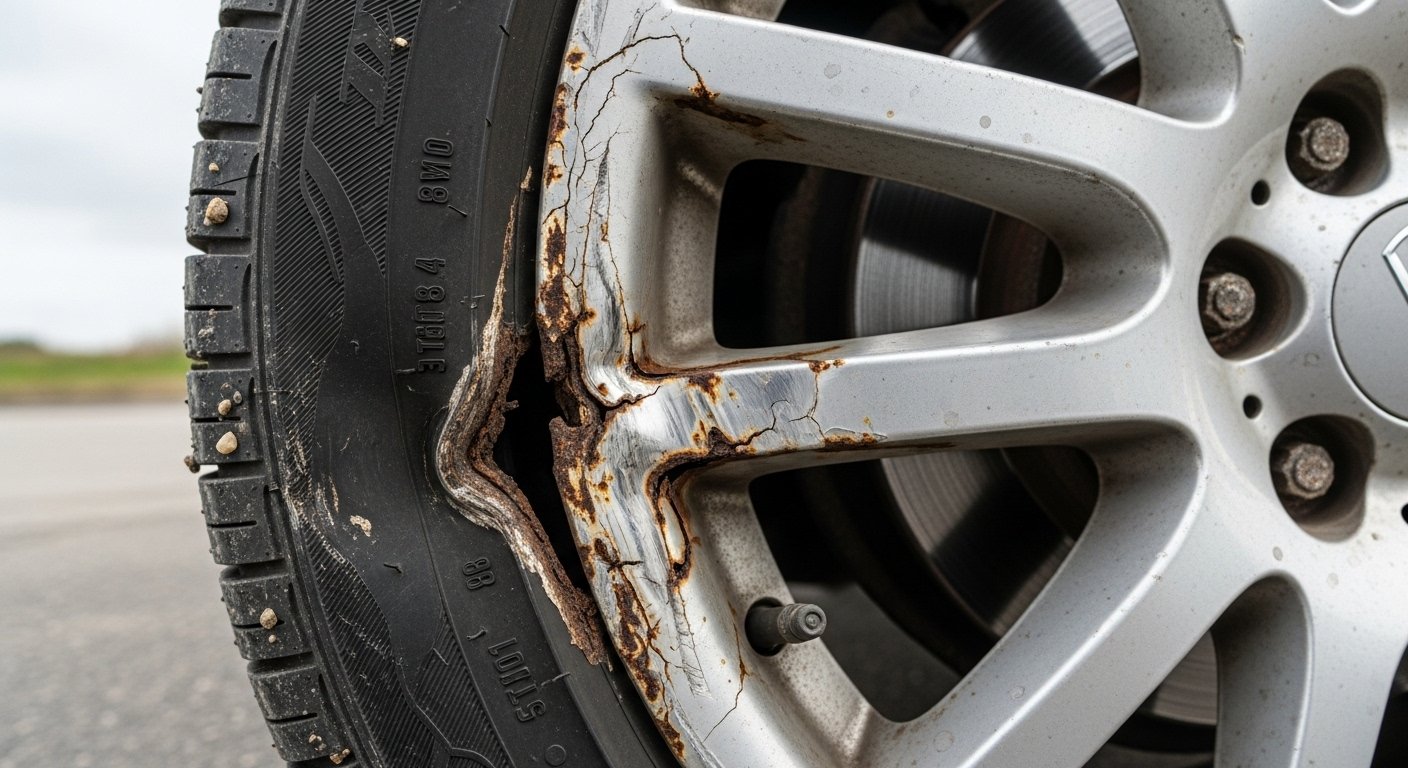
Most drivers have been there. You clip a kerb, bounce through a pothole, or scrape a car park barrier, and suddenly one of your alloy wheels has a dent. It looks minor. The car still drives. So you leave it.
That decision can cost you far more than the original repair would have.
What Does a Dented Alloy Actually Mean?
A dented or buckled alloy wheel is one that has been knocked out of its original shape. The metal has bent under impact, even if it is not visible at a glance. Some dents are obvious. Others are subtle, showing up only as a wobble at higher speeds or a slow puncture that keeps coming back.
Alloy wheels are precision-engineered components. They are designed to a specific shape so that the tyre sits on the rim correctly and the wheel spins true. When that shape is compromised, everything downstream is affected.
The Knock-On Effects
The most immediate problem is tyre pressure. A dented rim often breaks the seal between the tyre and the wheel, causing slow or sudden air loss. On a motorway, that is not a small inconvenience. It is a safety risk.
Beyond that, a buckled wheel puts uneven stress on the tyre itself. You will start to see uneven tread wear, meaning a tyre that should last 30,000 miles might only give you 15,000. That is money leaving your pocket quietly, without you noticing until it is too late.
The vibration from a bent wheel also travels up through the steering column. Over time, this puts strain on wheel bearings, suspension components, and steering joints. Repairs to those parts cost significantly more than sorting the wheel at the source.
Can It Actually Be Fixed?
In most cases, yes. Professional dented alloy wheel repair can restore a buckled rim to its correct shape using specialist equipment. A trained technician uses hydraulic tools to carefully push the metal back into alignment, then checks the wheel against precise tolerances before it goes back on the car.



Not every buckle is repairable. If the metal has cracked, or the deformation is severe enough to compromise the structure, replacement may be the only safe option. But the majority of everyday kerbing and pothole damage falls well within what a professional can fix.
What About DIY Fixes?
There is no shortage of YouTube videos claiming you can hammer out a buckled rim at home. This is not advisable. Alloy wheels are manufactured under controlled conditions to specific specifications. Applying force without the right tools and knowledge can introduce stress fractures that are invisible to the naked eye but dangerous under load. A wheel that looks straight might fail at speed.
The same logic applies to inflating a tyre and hoping the seal reseats itself. It might hold for a day. It might not hold at all.
How Much Does It Cost?
Repair costs vary depending on the severity of the damage and the size of the wheel. As a rough guide, straightforward dented alloy wheel repair typically costs less than the price of a single new alloy, and far less than replacing a tyre prematurely or fixing suspension damage caused by putting the job off.
Getting a quote from a specialist is usually free. There is no real reason to delay.
The Bottom Line
A dented alloy is easy to ignore because the car usually keeps moving. But the damage it causes compounds over time, affecting your tyres, suspension, and safety. Getting it looked at early is almost always the cheaper and smarter option.