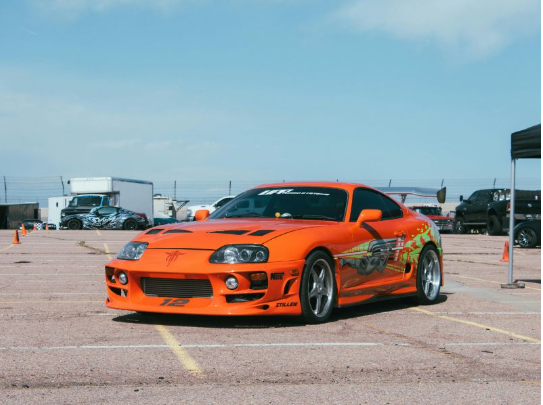
Tracking shots that feel smooth on a closed highway tend to fall apart the moment terrain gets interesting. A slight dip in asphalt, a gravel driveway, a rutted dirt road on a remote location—and footage that should look cinematic starts looking like it was recorded on a pogo stick. The instinct is to blame the gimbal, tweak electronic settings, or add counterweight. Usually, none of that fixes it. The real problem starts at the point where the rig connects to the vehicle.
The camera isn’t where this gets solved
Most rig builders spend a disproportionate amount of time on camera specs, follow-focus motors, and wireless monitoring. Those decisions matter, but they’re all downstream of a more fundamental question: how well is the camera package mechanically isolated from the vehicle beneath it?
A gimbal can absorb small, predictable movements. It can’t compensate for chaotic oscillations traveling up through an improperly designed mounting structure. When the rig itself is generating vibration, no amount of electronic stabilization will clean up the output.
The mechanical foundation—the rods, joints, and structural connections holding everything together—determines how much of the road actually reaches the camera. Frame geometry, joint selection, bracing angles: these aren’t secondary decisions to sort out after the camera package is chosen. They’re the first ones.
Suspension geometry: the part most builds get wrong
A tracking rig attached to a moving vehicle is, functionally, a suspension system. It has to allow controlled movement along intended axes while resisting vibration and unwanted lateral or fore-aft shift. The principles that govern automotive suspension—correct geometry, quality joints, controlled articulation—apply directly here.
Radius rods are the component that handles this. In vehicle suspension, they prevent axle movement fore and aft under acceleration and braking loads. In a camera rig, the function is the same: define movement direction, eliminate unintended play in the mounting structure. Film riggers familiar with Speed Rail systems will recognize this as the triangulation or bracing role—the physics is identical, even if the terminology differs. Several operators working in automotive commercial production have moved toward custom-built radius rods spec’d to their exact rig geometry and camera load, rather than adapting off-the-shelf hardware designed for a different application.
When the geometry is correct, the camera moves predictably with the vehicle’s intended direction and resists the lateral oscillation that causes the most footage problems. When it isn’t, those lateral forces keep arriving at the camera as visible shake that post-processing won’t reliably remove.
Every joint is a liability until proven otherwise
Geometry gets you most of the way. After that, what determines whether the system holds calibration under real production conditions is the quality of each individual connection.


Rod ends—the spherical joints that allow controlled articulation while maintaining structural rigidity—are where many rigs quietly degrade. A joint that feels solid at the start of a shoot can develop play within a few months of regular outdoor use. Coastal shoots, humid locations, any production with significant rain exposure: standard carbon steel rod ends oxidize faster than most people account for. A small amount of play at one joint compounds through the rig structure. You won’t feel it in your hand during a static check. You’ll see it in the footage when the vehicle hits a road seam at 40 mph.
For any production where rigs will see sustained outdoor use, corrosion-resistant rod ends are worth the cost difference. Stainless steel resists the oxidation that causes standard joints to loosen progressively over time. The upfront premium is real, but it’s considerably smaller than the cost of reshooting because a connection developed half a millimeter of play between setups.
One practical note on thread direction: when opposite ends of a rod use right-hand and left-hand threads, rotating the rod body adjusts overall length without disassembly—the same turnbuckle principle used in rigging and stage work. This makes on-set geometry adjustments significantly faster. The common oversight is sourcing rod ends with mismatched thread directions and losing that advantage entirely.
What actually stabilizes a tracking rig:
- Triangulated structure controlling fore-aft and lateral forces
- Radius rods specced to rig geometry and camera package weight
- Quality rod ends at every articulation point—replace any joint that develops play before the next production
- Load-test custom rigs before use on public roads; confirm each mount is rated above the full camera package weight including accessories
- Low, centered weight distribution over the mounting surface
- Redundant safety tethers independent of the primary load path
Build for the actual job
Spec to conditions, not to the best-case scenario. A rig for smooth closed-road commercial work is a different design than one following vehicles across rough terrain for a documentary or automotive shoot. On predictable surfaces, a well-engineered static mount often outperforms active systems: less moving mass, fewer failure points, easier to calibrate at the start of a day and find unchanged at the end.
Before building or commissioning a rig, map the actual conditions: surface types, vehicle speeds, outdoor duration, whether the rig will stay mounted overnight between shooting days. These variables should drive material selection, joint spec, and structural design. Rigs built to mechanical precision standards—rather than adapted from hardware designed for something else—tend to hold calibration across a full production schedule. The difference rarely shows on the first shot. It shows on day three, when the conditions are the same but the footage still looks right.