Most contracts slow deals down. They pile up in inboxes, bounce between legal teams, and drag negotiations into weeks of back-and-forth. But the problem rarely lies with the deal itself. It lies with the contract.
- Why Most Contracts Work Against the Deal They Are Supposed to Close
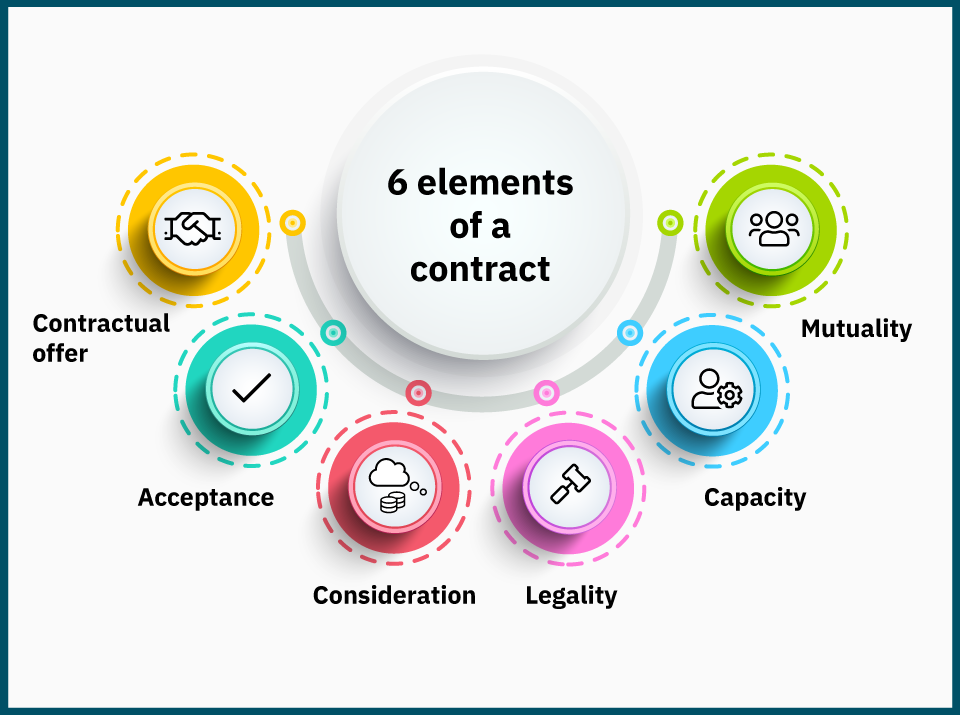
- 6 Contract Elements That Speed Up Signing and Strengthen the Deal
- 1. A Clear Offer and Acceptance That Leaves No Room for Interpretation
- 2. Consideration That Makes the Value Exchange Obvious to Both Sides
- 3. Mutual Assent in Language Both Parties Can Actually Read
- 4. Capacity and Authority Checks That Pre-Empt Last-Minute Blockers
- 5. Legality of Purpose Covering Compliance, Not Just Obvious Prohibitions
- 6. Dispute Resolution Provisions That Give Both Parties Confidence to Sign
- What to Do Before the Next Contract Goes Out
- How These Six Contract Elements Work Together for Deal Acceleration
When the elements of a contract are structured thoughtfully, the document stops being a roadblock and starts functioning as a tool that builds trust, reduces friction, and moves things forward. The right contract elements do not just protect parties from worst-case scenarios. They create the conditions for a deal to close faster, cleaner, and with fewer surprises on either side.
Why Most Contracts Work Against the Deal They Are Supposed to Close
Before getting into the six elements, it is worth asking why contracts become friction points in the first place. In most cases, it comes down to a few recurring patterns.
Contracts are often drafted in isolation from the commercial conversation. The sales team closes on one set of expectations, and the legal team produces a document that reflects a different set of priorities entirely. By the time the contract reaches the counterparty, there is already a gap between what was agreed verbally and what the document says. That gap becomes negotiation, and negotiation becomes delay.
There is also the tendency to treat contracts as defensive instruments. Every clause written primarily to protect against worst-case scenarios adds weight to the document and signals distrust to the other side. A counterparty reading a contract full of aggressive liability caps, unilateral termination rights, and vague indemnities does not feel like they are being welcomed into a partnership. They feel like they are being set up to lose.
Deal acceleration starts with a mindset shift: a contract should be as committed to making the relationship work as it is to protecting against the possibility that it does not.
6 Contract Elements That Speed Up Signing and Strengthen the Deal
1. A Clear Offer and Acceptance That Leaves No Room for Interpretation
The offer and acceptance clause is the heartbeat of any agreement. It defines what one party is promising and what the other is agreeing to. When this section is vague, the rest of the contract inherits that vagueness, and suddenly every clause is open to debate.
Deals stall when the scope is fuzzy. The offer needs to spell out what is being delivered, when, under what conditions, and what falls outside the agreement. The acceptance should mirror that specificity so both parties can point to a single clause and confirm exactly what was agreed, without relying on email threads or verbal conversations to fill in the blanks.



Tip: Before sending a draft, have someone outside the negotiation read the offer and acceptance section cold. If they come back with questions, those are the exact ambiguities a counterparty’s legal team will flag during review.
This is one of the foundational contract elements for a reason. Get it right, and every subsequent negotiation point has a solid anchor.
2. Consideration That Makes the Value Exchange Obvious to Both Sides
Consideration is the exchange at the core of a contract: money for services, access for a subscription fee, licensing rights for royalties. Without it, there is no enforceable agreement.
But consideration is not just a legal checkbox. When it is framed clearly and fairly, it also signals alignment. Deals where both parties feel the exchange reflects genuine value tend to close faster because there is less second-guessing near the finish line. When the consideration feels one-sided or poorly defined, doubt creeps in, and the contract starts getting picked apart.
For deal acceleration, consideration should be explicit and proportionate. Avoid burying payment terms or deliverable value in dense paragraphs. Give it its own section. Both parties should be able to glance at this element and confirm the trade makes sense without cross-referencing three other clauses.
What well-drafted consideration looks like in practice:
| Element | Weak Version | Strong Version |
| Payment terms | “Payment due upon delivery” | “Net 30 from date of written acceptance, via bank transfer” |
| Deliverable value | “Consulting services as discussed” | “40 hours of strategy consulting across four weekly sessions” |
| Reciprocal obligations | Buried in the appendix | Clearly listed in the main body |
3. Mutual Assent in Language Both Parties Can Actually Read
Mutual assent means both parties genuinely agree to the terms, not just that they signed something they did not fully read. In practice, assent breaks down when contract language is so dense or technical that non-legal stakeholders disengage and rubber-stamp documents without proper review.
This creates liability on both sides and causes delays when someone downstream raises questions that should have been addressed before signing.
When decision-makers can read and confirm the contract elements themselves, approvals happen faster, legal review cycles shorten, and signature delays drop. Many organizations now require contracts to pass readability checks before final approval, especially in cross-border deals where language barriers add another layer of complexity.
Note: Plain language does not mean less precise. “The licensee shall remit payment no later than the thirtieth calendar day following invoice date,” and “payment is due within 30 days of invoice” say the same thing. One gets read; the other gets skimmed and flagged. A certified contract that meets both legal standards and plain language criteria gives counterparties more confidence and reduces back-and-forth before signing.
4. Capacity and Authority Checks That Pre-Empt Last-Minute Blockers
One of the most frustrating deal killers happens near the finish line: someone realizes the person who negotiated the deal does not have the authority to sign it. Or the counterparty is not legally authorized to enter the contract at all.
Capacity and authority clauses address this by requiring each party to confirm they are legally able to enter the agreement and that the signatory is properly authorized. This is not bureaucratic formality. It is a practical protection that prevents late-stage disruption.
Common problems that surface too late include:
- The deal was negotiated by a VP whose signing authority actually sits with the board
- A subsidiary is signing without independent contracting rights
- An individual lacks legal capacity due to age or court-imposed restrictions
- The counterparty’s legal entity does not match the trading name used throughout negotiations
For B2B deals especially, verify capacity early. Request board resolutions, corporate authorization documents, or written signatory confirmation before negotiations run deep. The last thing deal acceleration needs is an organizational hierarchy problem surfacing after everyone has already agreed on commercial terms.
5. Legality of Purpose Covering Compliance, Not Just Obvious Prohibitions
A contract built around something illegal is void. This much is obvious. But the legality of purpose as a contract element extends well beyond outright illegality, and this is where deals quietly run into trouble.
Regulatory compliance, sector-specific restrictions, data privacy laws, export controls, and jurisdictional requirements all affect whether an agreement is enforceable. Less obvious issues include:
- Sector-specific regulations — financial services, healthcare, and education contracts often carry mandatory disclosure or licensing requirements
- Data privacy obligations — agreements involving personal data must comply with applicable laws or risk being unenforceable in whole or in part
- Anti-competitive provisions — non-compete or exclusivity terms that go too far can void the entire agreement in some jurisdictions
Tip: Compliance review works best as a proactive step, not a final checkpoint. Many companies integrate compliance pre-checks into their contract templates so that regulated activities and jurisdiction-specific issues are flagged before the first draft goes out. Working from a certified contract template that has already been reviewed for regulatory compliance reduces this risk significantly.
6. Dispute Resolution Provisions That Give Both Parties Confidence to Sign
Deals drag on when counterparties are nervous about what happens if things go wrong. Dispute resolution provisions address that directly by establishing a clear, fair process for handling disagreements without defaulting straight to litigation.
This element of a contract tends to get rushed or buried, but it deserves careful attention. A well-drafted dispute clause should cover the resolution process, venue and jurisdiction, governing law, timelines for each escalation stage, and cost allocation if a dispute reaches formal proceedings.
When counterparties know there is a structured, predictable path for resolving conflicts, they are more willing to commit. Contracts with tiered dispute resolution, where parties agree to attempt negotiation first and escalate only if that fails, consistently see faster sign-off. Both sides feel protected without feeling trapped.
The goal of a dispute resolution clause is not to plan for failure. It is to make both parties comfortable enough with the “what if” questions that those questions stop holding up the signature.
What to Do Before the Next Contract Goes Out
Getting the elements of a contract right is one side of the equation. The other side is having a consistent process for producing contracts that meet that standard every time.
A few practical steps worth building into any contracting workflow:
- Audit existing templates against these six elements. Most organizations have contract templates that have been patched and modified over the years without a full structural review. Running them against this framework often surfaces gaps that have been quietly creating friction for a long time.
- Involve commercial and legal teams earlier. The disconnect between what a deal team agrees to and what legal drafts is one of the most common sources of delay. Bringing both parties to the same table before the first draft removes a full revision cycle.
- Set a readability standard. Whether that means requiring plain language review, using a certified contract format, or simply having a non-lawyer read every draft before it goes out, having a standard makes the output more consistent.
The companies that close deals fastest are not necessarily the ones with the most sophisticated legal teams. They are the ones that have turned contract elements into a repeatable system, one where clarity, compliance, and trust are built into the document from the first draft rather than negotiated into it at the last minute.
How These Six Contract Elements Work Together for Deal Acceleration
Each of these elements does important work independently. But their real power comes from how they interact.
A clear offer paired with mutual assent written in plain language creates the foundation for fast agreement. Solid capacity checks combined with early legality verification eliminate surprise blockers. Transparent consideration paired with a calm dispute resolution path creates the psychological safety that lets both parties say yes without hesitation.
Contracts do not have to be a part of a deal that slows everything down. When the core elements of a contract are treated as strategic tools rather than legal formalities, they build confidence, remove uncertainty, and bring both parties to the table with clarity about what they are committing to. Less friction at the contract stage means faster closes, stronger relationships, and fewer of those painful last-minute surprises that derail deals right before the finish line.