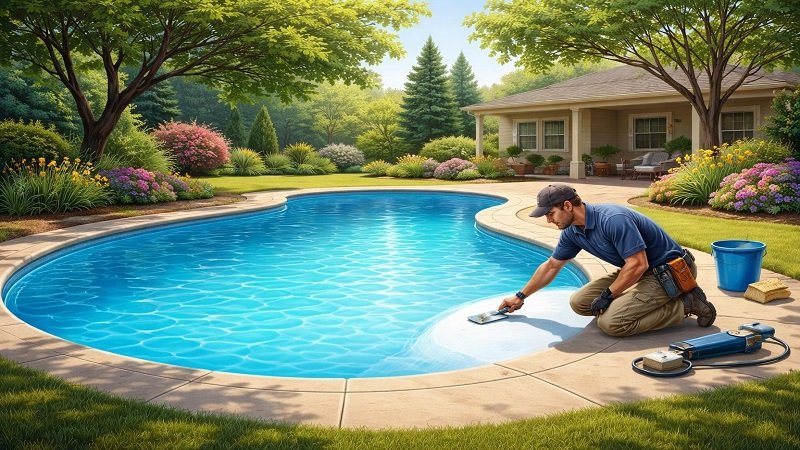
Pool surfaces deteriorate over time, developing rough textures, persistent stains, and visible cracks that diminish both appearance and safety. Homeowners in Raleigh typically need to address these issues every 10-15 years as standard plaster finishes reach the end of their functional lifespan.
Professional pool resurfacing services in Raleigh restore worn surfaces using specialized materials and techniques that extend pool life while improving aesthetics and water quality. The process involves removing damaged layers and applying new finishes that protect the pool shell from further degradation.
Selecting qualified resurfacing contractors ensures proper surface preparation, appropriate material selection, and long-lasting results. Raleigh pool owners have access to various finishing options and complete renovation services that address both functional repairs and aesthetic upgrades.
Expert Pool Resurfacing Services in Raleigh
Pool resurfacing addresses deteriorating pool surfaces through specialized repair and restoration techniques that extend the pool’s lifespan. Raleigh homeowners face unique climate challenges that impact pool surfaces, making professional assessment and quality workmanship essential for long-term results.
What Is Pool Resurfacing?
Pool resurfacing involves removing and replacing the interior surface layer of a swimming pool. This process repairs structural damage, restores the waterproof barrier, and updates the pool’s appearance.
The resurfacing process typically includes draining the pool, removing the old surface material, repairing underlying structural issues, and applying new finish materials. Common resurfacing materials include plaster, aggregate finishes, fiberglass coatings, and tile. Each material offers different durability levels, textures, and aesthetic options.



The timeline for swimming pool resurfacing projects ranges from several days to two weeks, depending on the pool size and chosen materials. Professional contractors prepare the surface properly before applying new finishes to ensure proper adhesion and longevity.
Signs You Need Swimming Pool Resurfacing
Visible cracks in the pool surface indicate structural compromise that requires immediate attention. Even small cracks allow water to seep behind the surface, causing further damage and increasing repair costs over time.
Rough or abrasive surfaces develop as plaster deteriorates, creating uncomfortable conditions for swimmers. This roughness can cause scrapes and cuts, particularly for children who play along pool floors and walls.
Additional warning signs include:
- Persistent staining that doesn’t respond to cleaning
- Visible plaster delamination or peeling
- Increased water loss beyond normal evaporation rates
- Discoloration or fading that affects appearance
- Surface irregularities or bumpy textures
Pools older than 10-15 years typically require resurfacing regardless of visible damage, as surface materials naturally degrade from chemical exposure and weather conditions.
Benefits of Professional Pool Resurfacing
Professional swimming pool resurfacing extends pool lifespan by 10-20 years when properly executed. This investment protects the underlying structure from water damage and reduces long-term maintenance costs.
Quality resurfacing improves water retention and reduces chemical consumption. A properly sealed surface prevents water seepage and maintains chemical balance more effectively, lowering ongoing operational expenses.
Professional contractors use specialized equipment and materials that ensure proper surface preparation and application. They address underlying structural issues before applying new finishes, preventing recurring problems that result from inadequate repairs.
The resurfacing process also updates pool aesthetics, increasing property value and enhancing outdoor living spaces. Modern finish options provide improved durability compared to older materials while offering contemporary color and texture choices.
Choosing the Right Swimming Pool Contractor
Licensed and insured swimming pool contractors provide protection against liability and guarantee workmanship quality. Raleigh homeowners should verify contractor credentials through the North Carolina Licensing Board and confirm active insurance coverage.
Experience with specific resurfacing materials matters significantly for project outcomes. Contractors specializing in particular finish types—such as plaster, aggregate, or fiberglass coatings—deliver better results than generalists attempting unfamiliar techniques.
Key evaluation criteria include:
- Portfolio of completed projects in the Raleigh area
- Customer reviews and references from recent clients
- Detailed written estimates with material specifications
- Warranty terms for both labor and materials
- Timeline commitments and scheduling flexibility
Local contractors understand North Carolina’s climate conditions and their impact on pool surfaces. They recommend appropriate materials and application techniques suited to regional temperature fluctuations and humidity levels. Request multiple quotes and compare material options, warranty coverage, and project timelines before making final decisions.
Comprehensive Pool Renovation Solutions
Pool renovation extends beyond simple resurfacing to include a full spectrum of upgrades that enhance both functionality and aesthetics. Homeowners can select from multiple improvement options ranging from finish replacements to structural enhancements that modernize aging pools.
Overview of Pool Renovation Options
Pool renovation encompasses various levels of transformation depending on the pool’s condition and owner preferences. Basic renovations address surface-level concerns like worn plaster or outdated tile, while comprehensive remodels can alter the pool’s shape, depth, and features.
Homeowners with pools over 15 years old often benefit from equipment upgrades including modern filtration systems, energy-efficient pumps, and LED lighting installations. Salt system conversions represent a popular upgrade that reduces chemical maintenance requirements. Structural modifications may involve adding bench seating, beach entries, or attached spas.
Vinyl liner pools require different renovation approaches than concrete pools. Liner replacements typically occur every 7-10 years, while concrete pool resurfacing happens at 10-15 year intervals depending on wear patterns and maintenance history.
Upgrading Pool Finishes and Materials
Pool resurfacing involves applying new interior finishes to restore smooth, watertight surfaces. Plaster finishes remain the traditional choice, available in white or colored formulations that provide classic appeal at moderate cost. Standard plaster typically lasts 7-12 years under normal conditions.
Aggregate finishes combine plaster with materials like quartz, pebbles, or glass beads for enhanced durability and visual interest. These finishes resist staining and etching better than standard plaster while offering varied textures and colors. Pebble finishes typically last 15-20 years.
Fiberglass coatings provide another resurfacing option that creates a non-porous, algae-resistant surface. This method works particularly well for commercial installations and pools requiring minimal ongoing maintenance. The application process requires proper surface preparation to ensure adhesion and longevity.
Deck and Coping Improvements
Pool coping forms the cap between the pool shell and surrounding deck, serving both functional and aesthetic purposes. Damaged or outdated coping allows water infiltration that can compromise the pool structure. Replacement options include natural stone, precast concrete, brick, and travertine materials.
Deck resurfacing addresses cracking, settling, or surface deterioration around the pool perimeter. Concrete overlays offer cost-effective solutions that can be stamped or stained to mimic higher-end materials. Pavers provide durable, slip-resistant surfaces available in numerous colors and patterns.
Pool deck expansions increase usable space for furniture, entertainment areas, and landscaping features. Proper drainage design prevents water accumulation that leads to surface damage and safety hazards.