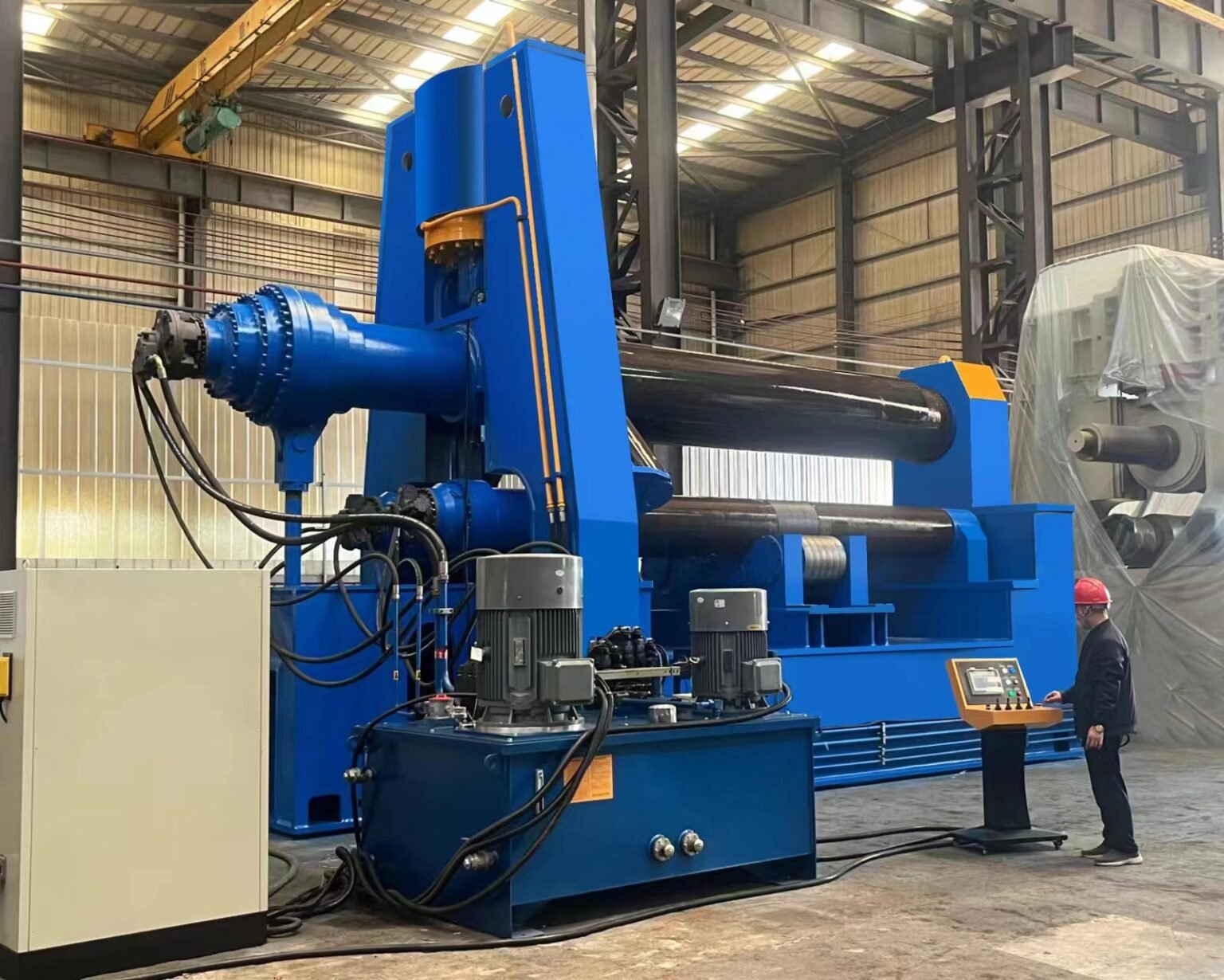
Plate rolling machines bend flat metal sheets into curves, cylinders, or cones. Shops use them for tanks, pipes, pressure vessels, and more. The two main types are 3-roll and 4-roll machines. Both do the job, but they work differently and suit different needs. This article explains the key differences, how each one operates, their good and bad points, and when to pick one. By the end, you will know which might fit your shop best.
- What is a 3-Roll Plate Rolling Machine?
- What is a 4-Roll Plate Rolling Machine?
- Key Differences Between 3-Roll and 4-Roll Plate Rolling Machines
- Advantages of 3-Roll Plate Rolling Machines
- Disadvantages of 3-Roll Plate Rolling Machines
- Advantages of 4-Roll Plate Rolling Machines
- Disadvantages of 4-Roll Plate Rolling Machines
- When to Choose a 3-Roll Plate Rolling Machine
- When to Choose a 4-Roll Plate Rolling Machine
- Conclusion
What is a 3-Roll Plate Rolling Machine?
A 3-roll plate rolling machine has three rollers. Usually, two bottom rollers stay fixed, and one top roller moves up and down. Some models have the top roller fixed and side rollers that move. You feed the metal sheet between the rollers. The machine bends it by adjusting the position of the moving roller(s).
There are types like pyramid (symmetrical), initial pinch, and double pinch. In a basic 3-roll, you often need to pre-bend the ends separately. This means inserting the sheet, bending one end, removing it, flipping it, and doing the other end. Then you roll the full cylinder. These machines handle a wide range of thicknesses and lengths. They work well for many standard jobs.
What is a 4-Roll Plate Rolling Machine?
A 4-roll plate rolling machine has four rollers. It has one top roller, one bottom roller (often fixed), and two side rollers that move in and out. The sheet gets pinched between the top and bottom rollers first. This pinch holds the sheet tight. Then the side rollers push up to form the curve.
The big plus is it can pre-bend both ends in one setup without flipping the sheet. You feed the plate, pinch it, pre-bend one end, roll through, and pre-bend the other end—all in the same pass for many cases. This makes the process faster. 4-roll machines often come with CNC controls for precise bends.
Key Differences Between 3-Roll and 4-Roll Plate Rolling Machines
Here are the main ways they differ.
First, number of rollers: 3-roll has three, 4-roll has four. The extra roller in 4-roll gives better grip and control.
Second, bending process: In 3-roll, you usually need multiple steps and manual handling to pre-bend ends. In 4-roll, pre-bending happens automatically with the pinch, often in one pass.


Third, pre-bending quality: 4-roll gives better pre-bends with smaller flat ends (less straight section left). 3-roll can leave bigger flat spots unless it’s a double-pinch model.
Fourth, speed and efficiency: 4-roll is faster for most jobs because of fewer steps and less operator work. 3-roll takes longer, especially for high volume.
Fifth, precision and control: 4-roll offers more consistent pressure and easier CNC setup. 3-roll needs more skill from the operator to get good results.
Sixth, material handling: 4-roll grips the sheet better, reducing slip on thick or hard materials. 3-roll might need more care to avoid slipping.
Seventh, cost: 3-roll machines cost less to buy. 4-roll costs more due to extra parts and features.
Eighth, size and space: 3-roll is often more compact. 4-roll can take up more floor space.
These differences affect how easy and fast the work goes. Check out this plate rolling machine for sale for options that match your needs.
Advantages of 3-Roll Plate Rolling Machines
3-roll machines have solid benefits.
They cost less upfront, good for small shops or low budgets.
They take up less space in the workshop.
They give good control over the bend shape, especially with adjustable rolls.
They handle thick materials well in many cases.
They are simpler, so easier to maintain and fix.
They work for a variety of shapes like cylinders and cones.
For basic or occasional use, they get the job done without extra expense.
Disadvantages of 3-Roll Plate Rolling Machines
There are some downsides.
Pre-bending takes more time and steps, often manual.
It can leave larger flat ends on the finished part.
It needs more operator skill and effort.
Cycle times are longer for repeat work.
Safety can be lower because of more handling of the sheet.
Not as easy to automate fully.
In busy shops, these issues slow things down.
Advantages of 4-Roll Plate Rolling Machines
4-roll machines shine in several ways.
They pre-bend both ends quickly and accurately in one setup.
They produce parts with better roundness and smaller flat spots.
They run faster, cutting production time.
They need less operator handling, so safer.
They grip the sheet firmly, good for thick plates or tricky materials.
They work well with CNC for complex or repeat jobs.
They give higher precision and consistency.
For high-volume or quality-focused work, they save time and money long-term.
Disadvantages of 4-Roll Plate Rolling Machines
The main drawbacks are clear.
They cost more to buy.
They often need more floor space.
Maintenance might be a bit higher with extra parts.
For very simple or low-volume jobs, they can be overkill.
The higher price might not pay off if you don’t use the speed often.
These points make them better for bigger operations.
When to Choose a 3-Roll Plate Rolling Machine
Pick a 3-roll when budget is tight.
Use it for small shops, occasional bending, or prototype work.
It’s good if you bend thicker plates where control matters more than speed.
For jobs where flat ends are okay or you can fix them later.
If space is limited in your workshop.
When you want a simple machine that’s easy to learn and maintain.
It’s a solid choice for many standard tasks.
When to Choose a 4-Roll Plate Rolling Machine
Go for 4-roll in busy production settings.
Choose it for high-volume work where speed saves labor costs.
It’s best when you need tight roundness and minimal flat edges, like tanks or pipes.
For thicker materials or jobs that need precision every time.
When safety and less manual handling are priorities.
If you plan to use CNC or automate more.
It pays off fast in demanding environments.
Conclusion
3-roll and 4-roll plate rolling machines both bend metal well, but they fit different shops. 3-roll is cheaper, simpler, and compact, great for basic needs. 4-roll is faster, more precise, and efficient, ideal for production and quality work. Think about your volume, budget, material thickness, and required accuracy when deciding. The right one boosts your output and cuts waste.
For more details on machines, head to https://miharmle-cnc.com/.
This guide helps you compare them clearly. Reach out to suppliers to discuss your specific projects.