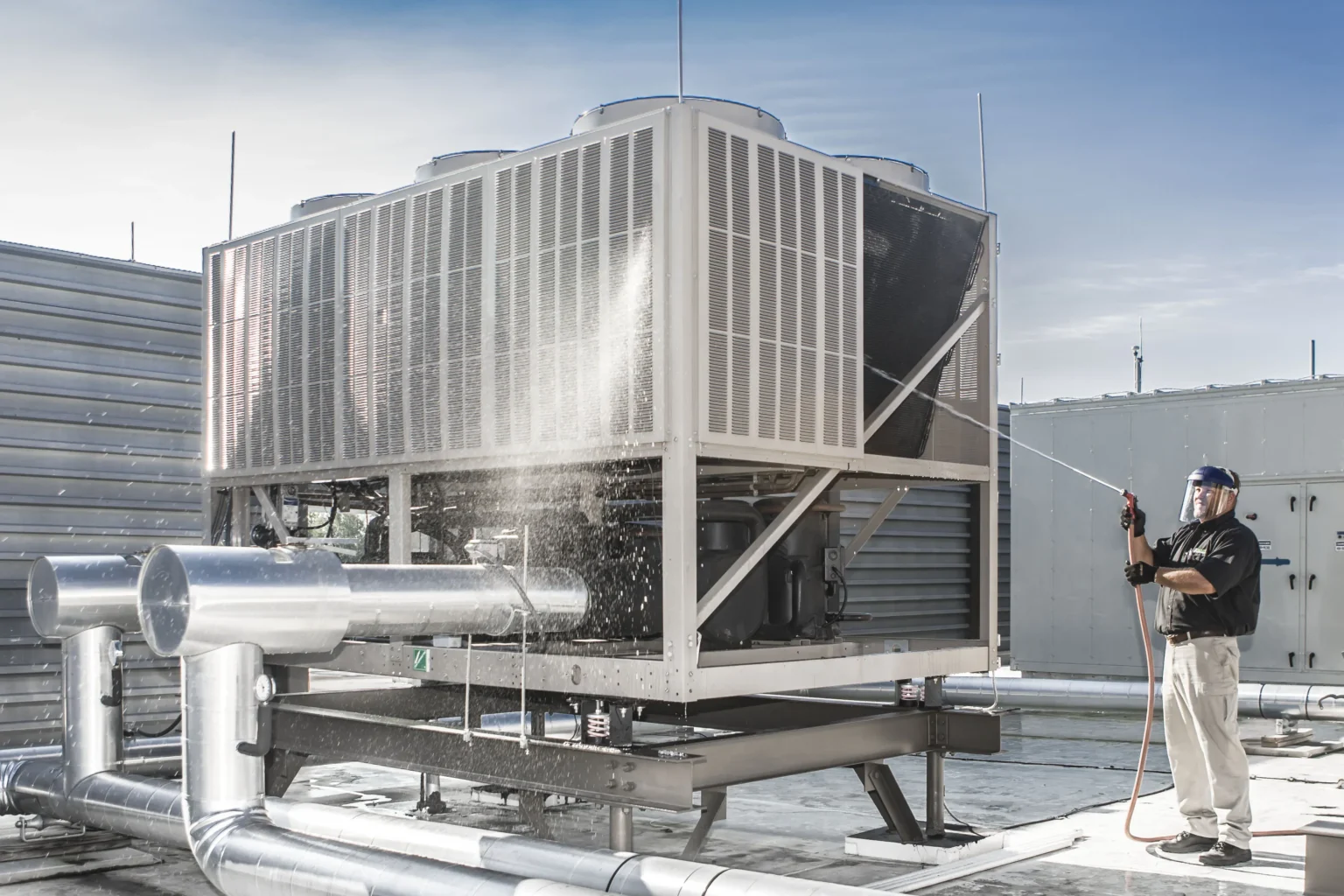
Cooling towers are significant energy consumers in industrial and commercial facilities across the United States. When they operate inefficiently, they force chillers to work much harder, driving up electricity usage. This neglect transforms a manageable asset into a major financial drain.
- The Thermal Efficiency Gap: Scaling and Fouling
- Mechanical Optimization for Power Reduction
- Water Quality and Pumping Power
- Maintenance Frequency and Energy Impact
- Case Study: Preventive Maintenance in Practice
- Conclusion: Engineering a Greener Bottom Line
- Frequently Asked Questions (FAQs)
- What is cooling tower maintenance, and why is it critical for energy savings in the USA?
- How does regular cooling tower maintenance boost energy efficiency?
- What are the essential tasks in preventive cooling tower maintenance?
- How often should cooling tower maintenance be scheduled in the USA?
- What are the cost-saving benefits of optimizing cooling tower performance?
However, viewing cooling tower maintenance as a financial strategy, not just a janitorial task, unlocks substantial savings. A simple one-degree Fahrenheit drop in water temperature can improve chiller efficiency by 2–3%. With electricity rates rising, this level of energy efficiency is no longer optional; it is essential for managing operating costs.
This post will explore how a structured approach to cooling tower maintenance directly reduces energy consumption and improves your bottom line. We will cover the impact of scale, the benefits of mechanical upgrades, and the critical role of water quality.
Table of Contents
- Introduction: The Financial Strategy of Thermal Care
- The Thermal Efficiency Gap: Scaling and Fouling
- Mechanical Optimization for Power Reduction
3.1. Fan Performance: Amperage Draw and Blade Pitch Calibration
3.2. Variable Frequency Drives (VFDs): Matching Speed to Real-Time Demand
3.3. The Direct-Drive Advantage: Eliminating Gearbox Friction
- Water Quality and Pumping Power
4.1. Hydraulic Efficiency: Clearing Clogged Nozzles to Reduce Head Pressure
4.2. Cycles of Concentration: Balancing Blowdown and Mineral Buildup


4.3. Integrated Care: The Synergy of Mechanical and Chemical Health
- Maintenance Frequency and Energy Impact
- Case Study: Preventive Maintenance in Practice
- Conclusion: Engineering a Greener Bottom Line
- Frequently Asked Questions (FAQs)

The Thermal Efficiency Gap: Scaling and Fouling
The primary function of a cooling tower is to transfer heat out of your system. When mineral scale and organic biofilm accumulate, they create a barrier that insulates the tower’s fill media. Implementing a strategy for Preventive Cooling Tower Maintenance is essential to combat this, as insulation prevents efficient heat transfer and forces the entire system to compensate by using more energy.
Even a thin layer of scale has a dramatic effect. Just 1/16th of an inch can increase energy consumption by nearly 20%. This “dirty tower” penalty directly inflates operating costs as mineral deposits and biofilm make your equipment work harder to achieve the same cooling effect.
The solution is to implement an energy-efficient cooling tower maintenance program. A proper preventive maintenance plan restores the system to its original design specifications, closing the thermal efficiency gap and cutting energy waste.
Mechanical Optimization for Power Reduction
Beyond cleanliness, the mechanical components of a cooling tower offer significant opportunities for energy savings. Proper cooling tower maintenance addresses these systems to reduce power draw and improve performance.
Fan Performance
The large fans on a cooling tower are major power consumers. Misaligned motors or incorrect fan blade pitch can cause the fan motor to draw more amperage than necessary.
Regular inspections and adjustments ensure the fan operates as intended, minimizing wasted electricity. This simple step in a preventive maintenance routine can yield immediate energy reductions.
Advanced Technology
Modern engineering provides powerful tools for cooling tower optimization. Transitioning to Variable Frequency Drives (VFDs) allows you to adjust fan speed based on real-time cooling demand and ambient wet-bulb temperatures.
Instead of running at full power constantly, the fan modulates its output, drastically reducing energy use during periods of lower demand. This technology is a cornerstone of modern energy efficiency strategies.
Direct Drive vs. Gearbox
Traditional cooling towers often use gearboxes, which are a known source of mechanical friction and energy loss. Newer designs featuring direct-drive motors eliminate the gearbox. This change reduces friction, lowers energy consumption, and decreases maintenance requirements, making it a key part of long-term cooling tower optimization.
Water Quality and Pumping Power
Water is the lifeblood of a cooling tower, and its management is critical for both energy efficiency and system longevity. Poor water quality and clogged components force pumps to work harder, consuming more power.
Effective cooling tower maintenance addresses several key aspects of water management:
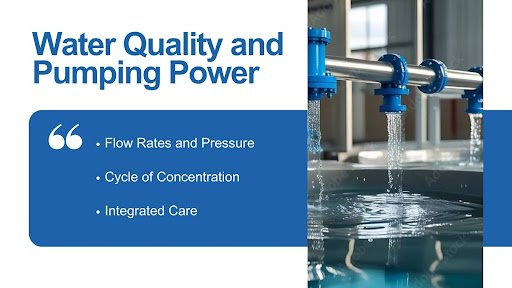
- Flow Rates and Pressure: Clogged spray nozzles and fouled strainers restrict water flow. This obstruction increases the system’s head pressure, forcing pumps to run at a higher load to circulate water. Clearing these blockages ensures uniform water distribution and lowers pumping energy.
- Cycle of Concentration: Managing blowdown, the process of draining a portion of highly concentrated water and replacing it with fresh water,r is a delicate balance. A specialized technician can optimize the cycles of concentration to conserve water while preventing the buildup of corrosive minerals and scale.
- Integrated Care: The greatest cooling tower maintenance cost savings come from an integrated approach. Mechanical health and water chemistry are deeply connected. A program that addresses both simultaneously prevents problems before they start, ensuring sustained energy efficiency.
Maintenance Frequency and Energy Impact
A scheduled preventive maintenance program allows facility managers to connect specific tasks with direct cost-saving outcomes. This table provides a quick-reference guide.
| Maintenance Task | Frequency | Primary Energy Benefit | Estimated Cost Savings |
| Fill Cleaning | Semi-Annually | Improves heat transfer, lowering chiller head pressure. | 10%–15% on Chiller Power |
| VFD Calibration | Quarterly | Matches fan speed to real-time cooling demand. | 30%–50% on Fan Energy |
| Spray Nozzle Clearing | Monthly | Ensures uniform water distribution, avoiding “hot spots.” | 2%–5% Overall Efficiency |
| Lubrication/Alignment | Quarterly | Reduces mechanical friction on motors and fans. | 2%–3% on Motor Energy |
Case Study: Preventive Maintenance in Practice
Organizations that implement a structured cooling tower maintenance program consistently achieve measurable results. For instance, a manufacturing facility in the Midwest faced high electricity bills and frequent chiller alarms. By adopting a comprehensive preventive maintenance strategy, the plant reduced its cooling system’s energy consumption by 12% within the first year.
In addition to immediate cost savings, preventive maintenance extends the operational lifespan of equipment. A well-maintained cooling tower can function efficiently for 20 years or more, whereas a neglected system may require full replacement in half that time. By prioritizing proactive maintenance, companies defer substantial capital expenditures while benefiting from lower energy costs and more reliable system performance over the long term.
Conclusion: Engineering a Greener Bottom Line
There is a direct and undeniable link between a clean, efficient cooling tower and a healthy balance sheet. Proper cooling tower maintenance is not an expense; it is an investment in energy efficiency that delivers measurable returns.
An engineering-led approach to cooling tower optimization provides far more value than surface-level cleaning. It involves a deep analysis of thermal performance, mechanical function, and water chemistry to unlock hidden savings. By focusing on preventive maintenance, you can transform your cooling tower from an energy drain into a highly efficient asset.
Are you ready to identify your system’s hidden savings potential? Request an energy audit from a qualified cooling tower specialist to see how much you could save.
Frequently Asked Questions (FAQs)
What is cooling tower maintenance, and why is it critical for energy savings in the USA?
Cooling tower maintenance involves inspecting, cleaning, and servicing components, preventing scale and corrosion, ensuring efficient heat transfer, lowering energy use, extending equipment life, and reducing operational costs for businesses across the USA.
How does regular cooling tower maintenance boost energy efficiency?
Regular maintenance removes scale, biofilm, and debris that impair thermal performance. Optimizing fans, pumps, and motors reduces energy consumption, improves system efficiency, and directly lowers electricity costs for industrial and commercial facilities in the USA.
What are the essential tasks in preventive cooling tower maintenance?
Preventive cooling tower maintenance includes cleaning tower fill, calibrating VFDs, clearing spray nozzles, and aligning motors. These tasks maintain efficient heat transfer, reduce energy waste, and ensure long-term, cost-effective system performance.
How often should cooling tower maintenance be scheduled in the USA?
Maintenance depends on the task: filters and basin cleaned semi-annually, spray nozzles and fans inspected monthly, and comprehensive mechanical checks yearly. Regular scheduling prevents inefficiencies, lowers energy costs, and avoids costly equipment downtime.
What are the cost-saving benefits of optimizing cooling tower performance?
Proper maintenance can reduce chiller energy use by 10–15% and fan energy by 30–50%. Optimized cooling towers improve system efficiency, lower electricity bills, extend equipment life, and generate significant operational cost savings.