You’ve got a patch of earth the size of a tea towel, and your neighbour’s fence looms so close you could practically shake hands through the slats. Welcome to urban gardening.
But fortunately, small doesn’t have to mean cramped. With clever thinking and strategic design, your tiny garden can become the envy of the street, says Blue Stem team.
In this guide, we’ll explore how to transform even the most compact outdoor space into something genuinely special. Let’s prove that square footage isn’t everything.
Start with a Proper Plan
Before you buy a single plant or paving slab, you need a plan. Planning sounds dreadfully boring when you’d rather be digging about in the soil, but trust us, it’s really worth it.
Without one, you’ll end up with three fruit trees, a water feature, and a patio all crammed into a space that can barely fit a deckchair.
Measure your garden properly. Sketch it out on paper or use a garden planning app. Mark where the sun hits throughout the day and note any problem areas.
Think about what you actually want from this space. Do you want a dining area or somewhere for the kids to play? Be realistic about what will fit.
This planning phase saves you money and the effort of having to relocate an entire rockery. If you’re feeling overwhelmed, professional landscapers in London and across the UK can help you create a workable design that maximises every inch.



Choose Multi-Functional Features
Small gardens don’t have room for single-purpose features. Pieces that do more than one job work far better.
A raised bed doubles as seating if you add a wide timber edge, while a storage bench hides gardening tools and provides a space to sit with your morning coffee.
Look for furniture that folds away or stacks neatly. Bistro sets are brilliant for tiny patios because they take up minimal space but still let you enjoy breakfast outside.
Consider built-in features rather than freestanding ones. A permanent bench along one wall uses less floor space than chairs dotted about.
Garden boundaries don’t have to be purely functional. Trellis provides privacy while supporting climbing plants. A living wall combines visual interest with valuable growing space.
The key is thinking creatively about how each element can serve multiple purposes without making the space feel cluttered.
Create Zones to Add Depth
Creating distinct zones can make a small garden feel larger. It sounds counterintuitive, but dividing up your space actually makes it seem more expansive.
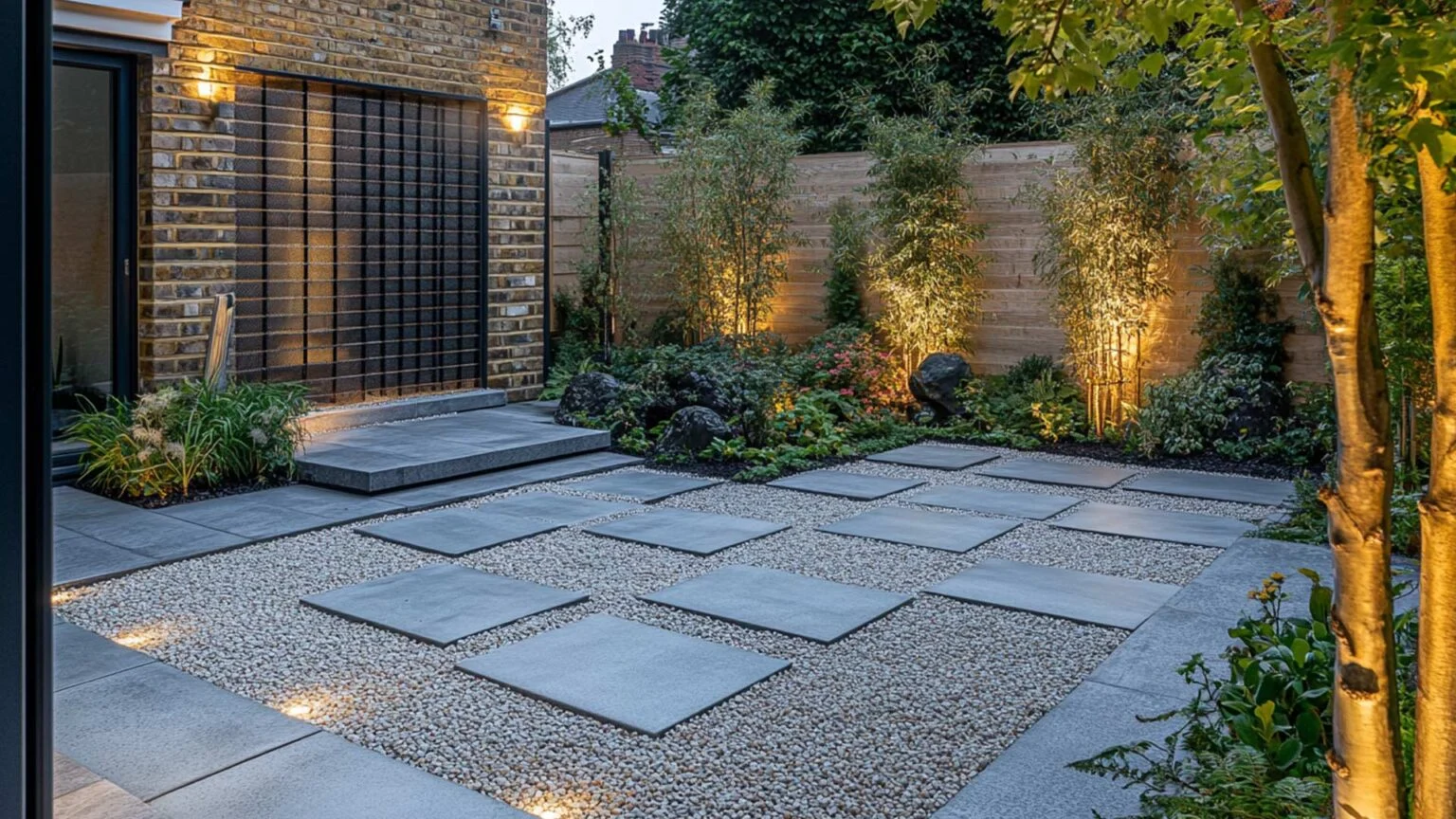
Use different materials to mark these areas. Perhaps paving for a seating zone, gravel for a pathway, and decking for a different section.
Low planters or changes in level can separate zones without blocking sightlines. You want definition, not division.
Think about creating a space in your garden. A winding path makes the space feel longer than a straight shot from door to fence.
Partial screens work beautifully, too. A trellis or strategically placed shrub hints at something beyond. That sense of mystery adds depth.
Different zones allow the space to serve multiple purposes, from sunny seating areas to quieter, shaded corners.
Go Vertical with Your Planting
When ground space is limited, vertical planting becomes essential. Walls and fences can be turned into productive growing areas rather than dead space.
Wall-mounted planters, hanging baskets, and simple climbing frames allow you to grow far more than the footprint of the garden would normally permit.
Climbing plants are particularly effective in small gardens. Clematis, jasmine, and honeysuckle take up minimal ground space while delivering colour, height, and scent.
For those wanting maximum impact, living walls are becoming increasingly popular across the UK. These systems can accommodate dozens of plants within a single square metre.
Fruit can also be grown vertically. Training trees as espaliers against walls provides homegrown apples without sacrificing valuable space to a full-sized canopy.
Even simple bamboo canes in pots can support beans or sweet peas, turning a boring corner into productive vertical space.
Select Plants Strategically
Plant selection can make or break a small garden. Choose wrong, and you’ll spend every weekend hacking back overgrown shrubs.
Go for plants that offer multiple seasons of interest. For example, Japanese maples provide spring foliage, summer shade, and spectacular autumn colour. Evergreens give year-round structure, particularly valuable during UK winters.
Avoid anything with ‘vigorous’ or ‘spreading’ in the description unless you fancy doing battle with invasive roots.
Dwarf varieties are your friends here. Dwarf fruit trees, compact shrubs, and miniature roses give you everything in a fraction of the space.
Think about layering plants. Tall structural plants at the back, mid-height perennials in the middle, and low groundcover at the front create depth.
Scented plants near seating areas make your small garden feel luxurious. Lavender and rosemary pack a powerful aromatic punch without taking up much room.
Use Clever Visual Tricks
Landscape designers have been using optical illusions for centuries, and you can pinch their ideas. Mirrors make spaces feel instantly larger by reflecting light and surrounding greenery when positioned on a fence.
Because pale colours visually recede, a light-coloured back fence appears further away than a dark one.
Diagonal lines are surprisingly effective at creating width. Lay your paving or decking at an angle rather than straight on, and suddenly the garden feels broader even though you haven’t actually gained a single inch.
Remember that clutter is the enemy of small spaces. One gorgeous statement pot will make your garden feel more spacious than five mediocre ones scattered about, even though technically you’ve got fewer plants.
And don’t underestimate the power of lighting. Pop a few uplighters under your trees or along pathways, and suddenly your garden gains depth and drama once the sun goes down. This extends your usable hours well into the evening.
Conclusion
Congratulations! You’ve just discovered that your too-small garden is actually brimming with potential.
Once you’ve implemented even a few of these ideas, you’ll see your outdoor space transform from a cluttered mess to a genuine garden.
Remember, some of the world’s most celebrated gardens started as modest plots with big ideas. Your tiny garden deserves the same creative thinking. And now, it’s time to get outside and start planning. Your pocket paradise awaits!