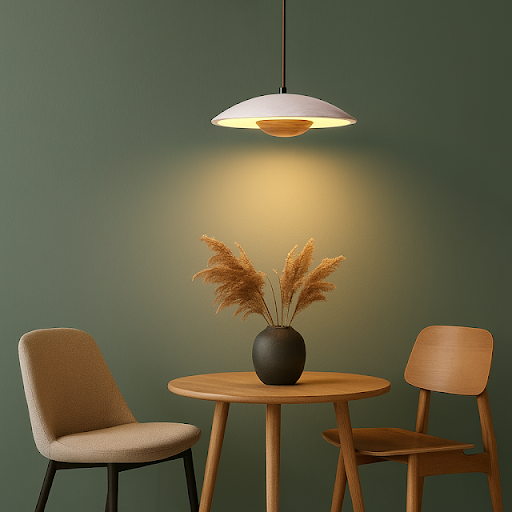
What recently changed in designing a home. Homeowners and designers are turning away repetitive of AI-influenced concepts. They want interiors that feel Natural, Tactile, and personal. In this context, organic-shaped lights with soft curves, irregular forms, and natural materials have become a preferred choice. They bring life, texture, and subtle character into homes, creating rooms that feel natural rather than uncomfortable and uneasy to use.
Organic lighting is not just about illumination. It is about how a space feels, how materials interact with light, and how it changes from cold place to a warm place. This guide explores the use of natural material like Wood ceramic, glass, and stone in lighting and provides practical advice for homeowners and designers looking for timeless, organic designs for creating real homes not artificial and cold as natural material and shapes like Raw Wood & Stone Pendant light adds warmth and life to any space.
Why People Are Returning to natural warm material
For years, interiors were dominated by rigid geometric shapes, minimalist fixtures, and trendy designs often generated by algorithms or mass production. While visually clean, these designs often feel cold, impersonal, and repetitive.
Organic material and shapes are buyers first choice in coming years as per top interior designers and online search report. People are looking for the materials that feels warmth and authenticity. Their soft curves, scallops, and flowing silhouettes create a sense of movement and life., Homeowners appreciate how these shapes bring personality and comfort to their homes, while designers value their versatility and sculptural appeal.
In addition, natural materials like wood, stone, ceramic, and glass allow the eye to notice subtle textures and imperfections that make each piece unique. In a world dominated by mass production, this authenticity becomes a central element of design.
Exploring Materials in Organic Lights
The choice of material is as important as the shape. Different materials contribute different qualities to a room.


Ceramic with Scalloped Edges
Ceramic lights are versatile, and highly customizable. For example, The Scalloped handmade hanging porcelain light is made with natural material like Ceramic and wood and scalloped design is naturally flowy and scalloped edges spreading the shadow softly creating a warm dining area so beautifully. Its material and design are unique for any space like kitchen island and living room.
Ceramic lights are ideal when you want:
- A sense of craftsmanship
- Subtle interaction of light and shadow
- Compatibility with natural furniture or wall art
They fit in both modern and farmhouse-style interiors, making them a timeless choice.
Glass with Organic Forms
Glass is another material that works beautifully in organic shapes. Lights shaped like natural objects, such as pumpkins is one kind of unique people are wanting in their homes. As it is completely organic shape with color like Mustard orange like pumpkin and it mostly works as a ceiling light whether its Entryway Hall way or Kitchen ceiling light. White color is always First choice in organic shapes white ceiling light adding dimension and interest without overwhelming the room.
Glass lights are particularly effective when paired with:
- Timber or Brass accents
- Neutral wall colors
- Natural textiles and furniture
For example, pumpkin-colored or muted white glass ceiling lights offer soft light shadows while emphasizing organic forms.
Color Choices for Organic Lights
Color is essential in making organic lights feel natural and integrated:
- White: Timeless and versatile, ideal for brightening rooms while complementing natural materials
- Muted pumpkin or soft yellow: Adds warmth and subtle energy
- Stone tones and natural neutrals: Highlight texture and material without drawing attention away from the room
Choosing colors that harmonize with furniture, walls, and flooring ensures that the light becomes part of the space rather than a separate decorative object.
Stone and wood materials are perfect for:
- Highlighting texture and natural variations
- Adding a tactile, hand-crafted feel to interiors
- Blending seamlessly with neutral or earthy palettes
These lights offer durability and a sense of authenticity that mass-produced items can never achieve.
Placement and Scale
Correct placement is essential for both the function and aesthetics of organic lights:
- Hallways: Ceiling lights with flowing curves guide movement while keeping the space welcoming
- Kitchens: Pendants above islands create focus and illuminate work areas while maintaining a soft, natural appearance
- Dining and living areas: A sculptural pendant becomes a subtle centerpiece, drawing attention without dominating the room
Scale is important. Organic-shaped lights work best when proportional to furniture, ceiling height, and room size, creating harmony and balance.
Mixing Materials and Shapes
Layering different materials adds richness to interiors. For example:
- Pair a ceramic scalloped pendant with a wooden core or Raw stone with wood to add depth
- Soft curves always give natural feel and natural material always goes with other décor items like furniture and sculpture art.
These techniques create spaces that feel intentional, tactile, and human, providing a counterpoint to mass-produced, AI-driven designs.
Why Organic Lights Feel Timeless
The enduring appeal of organic-shaped lights lies in their human touch and adaptability. Unlike trend-driven pieces, they:
- Age gracefully with the home
- Work across modern, rustic, or traditional interiors
- Maintain personality and functionality over time
Homeowners and designers looking for longevity and authenticity will find that organic-shaped ceramic, glass, and stone-and-wood lights provide a balance of style, function, and craft.
Examples to Inspire
Above examples show how shape, material, and placement combine to create interiors that feel natural, personal, and permanent. Organic shapes and material can give life to your dull cold homes.
Conclusion
Organic-shaped lights are more than decoration. They connect homes to nature, craftsmanship, and human design. By choosing materials such as ceramic, stone, wood, and glass, and focusing on curves, scallops, and natural forms, homeowners and designers can create spaces that are timeless, functional, and full of personality.
Whether for a hallway, kitchen, or living area, organic lights provide a subtle but powerful way to make interiors feel authentic, approachable, and enduring.