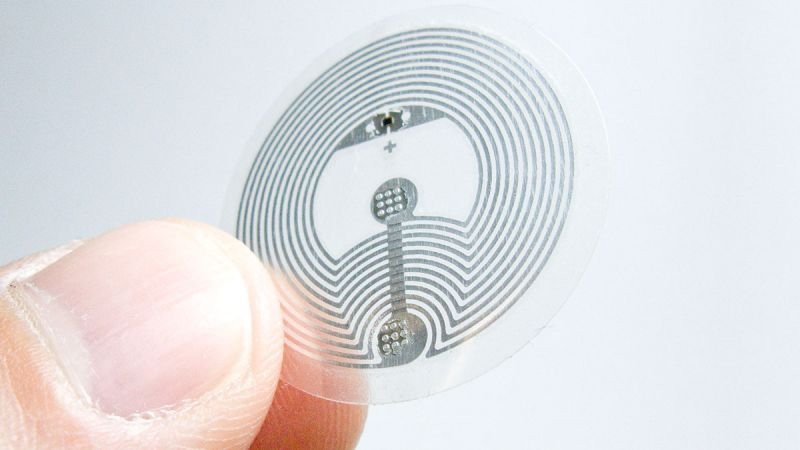
In today’s fast-evolving digital landscape, convenience and connectivity are at the forefront of innovation. One technology that has quietly revolutionized how devices interact is Near Field Communication, commonly known as NFC. At the center of this technology are NFC tags—small, powerful tools that enable seamless communication between devices with just a tap.
- Understanding NFC Technology
- What is an NFC Tag?
- How NFC Tags Work
- Types of NFC Tags
- Common Uses of NFC Tags
- 1. Contactless Payments
- 2. Smart Home Automation
- 3. Marketing and Advertising
- 4. Access Control
- 5. Inventory and Asset Tracking
- 6. Healthcare
- Advantages of NFC Tags
- Ease of Use
- Speed
- Security
- Cost-Effective
- Versatility
- Short Range
- Limited Storage
- Device Compatibility
- Data Overwrite Risk
- How to Use NFC Tags
- NFC Tags vs QR Codes
- Future of NFC Tags
- Conclusion
This article explores what NFC tags are, how they work, their types, applications, benefits, limitations, and why they are becoming an essential part of modern digital ecosystems.
Understanding NFC Technology
Near Field Communication (NFC) is a short-range wireless communication technology that allows devices to exchange data when they are brought within a few centimeters of each other. It is widely used in smartphones, payment systems, access control, and more.
Unlike Bluetooth or Wi-Fi, NFC does not require pairing or complex setup. The communication happens instantly, making it ideal for quick and secure interactions.
What is an NFC Tag?
An NFC tag is a small electronic device that contains a microchip and an antenna. It can store data such as URLs, contact information, commands, or authentication credentials. When an NFC-enabled device, like a smartphone, comes close to the tag, it reads the stored data and performs a predefined action.
The beauty of NFC tags lies in their simplicity. They are passive devices, meaning they do not require a power source. Instead, they draw power from the electromagnetic field generated by the NFC reader (usually a smartphone).
How NFC Tags Work
The working mechanism of NFC tags is straightforward yet highly effective:
- An NFC-enabled device generates a radio frequency field.
- When the device is brought near an NFC tag, the tag is powered by this field.
- The tag transmits its stored data to the device.
- The device interprets the data and performs the corresponding action.
For example, tapping a phone on an NFC tag could open a website, connect to Wi-Fi, launch an app, or even automate a task like turning on Bluetooth.


Types of NFC Tags
NFC tags come in various types, each designed for specific use cases. These types differ in memory capacity, speed, and security features.
Type 1 NFC Tags
- Basic and cost-effective
- Small memory capacity
- Ideal for simple tasks like storing URLs
Type 2 NFC Tags
- More advanced than Type 1
- Widely used in marketing and automation
- Compatible with most smartphones
Type 3 NFC Tags
- Faster data transfer speeds
- Often used in transit systems and ticketing
Type 4 NFC Tags
- High security and larger storage
- Used in payments and sensitive applications
Type 5 NFC Tags
- Long-range capabilities compared to others
- Suitable for industrial and IoT applications
Common Uses of NFC Tags
The versatility of NFC tags makes them useful across various industries and everyday scenarios.
1. Contactless Payments
NFC tags are widely used in mobile payment systems. By tapping a smartphone or card, users can make secure transactions instantly.
2. Smart Home Automation
NFC tags can automate daily routines. For example:
- Tap a tag to turn on lights
- Activate Wi-Fi or Bluetooth
- Set alarms or reminders
3. Marketing and Advertising
Businesses use NFC tags in posters, product packaging, and business cards. A simple tap can:
- Open a website
- Download an app
- Access promotional content
4. Access Control
NFC tags are used in key cards and ID badges for secure entry into buildings, offices, or restricted areas.
5. Inventory and Asset Tracking
Companies use NFC tags to manage inventory, track assets, and streamline logistics operations.
6. Healthcare
In hospitals, NFC tags help track patient information, manage equipment, and improve workflow efficiency.
Advantages of NFC Tags
NFC tags offer several benefits that make them highly attractive for both personal and business use.
Ease of Use
No pairing or setup is required. Just tap and go.
Speed
Data transfer happens instantly, making interactions quick and efficient.
Security
Short communication range reduces the risk of unauthorized access.
Cost-Effective
NFC tags are inexpensive and easy to deploy.
Versatility
They can be used for a wide range of applications, from automation to payments.
Limitations of NFC Tags
Despite their advantages, NFC tags also have some limitations.
Short Range
They work only within a few centimeters, which may not be suitable for all use cases.
Limited Storage
Most NFC tags have small memory capacities.
Device Compatibility
Not all devices support NFC, although most modern smartphones do.
Data Overwrite Risk
If not properly secured, some NFC tags can be rewritten by unauthorized users.
How to Use NFC Tags
Using NFC tags is simple and does not require technical expertise.
- Ensure your smartphone has NFC enabled.
- Use an NFC writing app to program the tag.
- Choose the action (e.g., open a website, send a message).
- Tap your phone to the tag to test it.
Once programmed, the tag can be used repeatedly for the same function.
NFC Tags vs QR Codes
Both NFC tags and QR codes are used for quick access to information, but they differ in several ways:
- NFC tags require a tap, while QR codes require scanning with a camera.
- NFC offers faster interaction.
- QR codes are more accessible since they don’t require special hardware.
- NFC provides better security and automation capabilities.
Future of NFC Tags
The future of NFC tags looks promising as more industries adopt contactless technology. With the rise of smart cities, IoT devices, and digital payments, NFC tags are expected to play a significant role in:
- Smart transportation systems
- Enhanced retail experiences
- Secure identity verification
- Advanced home automation
As technology evolves, NFC tags will likely become more powerful, secure, and widely integrated into daily life.
Conclusion
NFC tags are small yet incredibly powerful tools that enable seamless, contactless communication between devices. Their simplicity, affordability, and versatility make them ideal for a wide range of applications—from payments and marketing to automation and security.
As the world continues to move toward smarter and more connected systems, NFC tags are set to become an essential part of our everyday interactions. Whether you are a business looking to enhance customer engagement or an individual seeking convenience, NFC technology offers endless possibilities with just a simple tap.