There’s a moment that happens almost every winter in Vancouver. Someone checks the weather forecast, notices the word “snow,” and suddenly everyone has an opinion. Some people shrug and say it will probably turn into rain. Others start planning their commute differently.
- The Snow Here Is Heavier Than People Expect
- Why the City Doesn’t Maintain Huge Snow Fleets
- Snow Plowing vs Snow Removal
- Vancouver Winters Are Mild — But Complicated
- Clearing Sidewalks Is Part of the Responsibility
- Hills Make Everything More Challenging
- Winter Here Is Mostly About Timing
- A Different Kind of Winter
Most of the time the snowfall is small. Just a few centimeters. Nothing dramatic.
Yet when it actually sticks, the mood of the city shifts almost immediately. Traffic moves slower, sidewalks get quieter, and people start paying a little more attention to where they step. For visitors from colder parts of Canada it can look strange. In many places that same snowfall would barely interrupt the day.
But Snow Removal Vancouver happens in a climate that behaves differently from the rest of the country. What matters here isn’t always how much snow falls. It’s what happens to that snow afterward.
The Snow Here Is Heavier Than People Expect
Anyone who has lived through their first Vancouver snowfall usually discovers the same thing when they grab a shovel.
The snow feels heavy.
That happens because coastal air carries a lot of moisture from the Pacific Ocean. When snow forms in that environment, the flakes absorb more water before reaching the ground. Instead of light powder, the snow that lands here is often wet and dense.
That difference matters.



Wet snow packs down quickly when cars drive over it or when people walk across sidewalks. Within a short time it often turns into slush. And slush has a habit of freezing once temperatures drop again overnight.
Snow removal teams in the region often talk about this exact cycle — snow becoming slush, slush freezing into ice, and then partially melting again the next day when temperatures rise slightly. It’s one of the main reasons winter maintenance along the coast focuses as much on surface treatment as it does on clearing snow itself. You can see how local services approach these conditions in more detail here:
https://www.snowlimitless.com/snow-removal-vancouver
Why the City Doesn’t Maintain Huge Snow Fleets
Every winter someone inevitably asks why Vancouver doesn’t just buy more snowplows.
It sounds logical at first, but the answer is tied to how rarely heavy snow actually happens here. Vancouver typically receives around 30 to 40 centimeters of snowfall in an entire year. In many Canadian cities that amount could fall during a single storm.
Because snow events are relatively uncommon along the coast, maintaining hundreds of plows year-round would mean storing and servicing equipment that might barely be used most winters.
Instead, the city focuses on keeping essential transportation routes open. Major roads, bridges, and bus corridors are usually cleared first so emergency vehicles and public transit can continue operating.
Residential streets often get attention later once the busiest routes are under control.
Snow Plowing vs Snow Removal
People often use the terms snow plowing and snow removal as if they mean the same thing, but they describe different parts of winter maintenance.
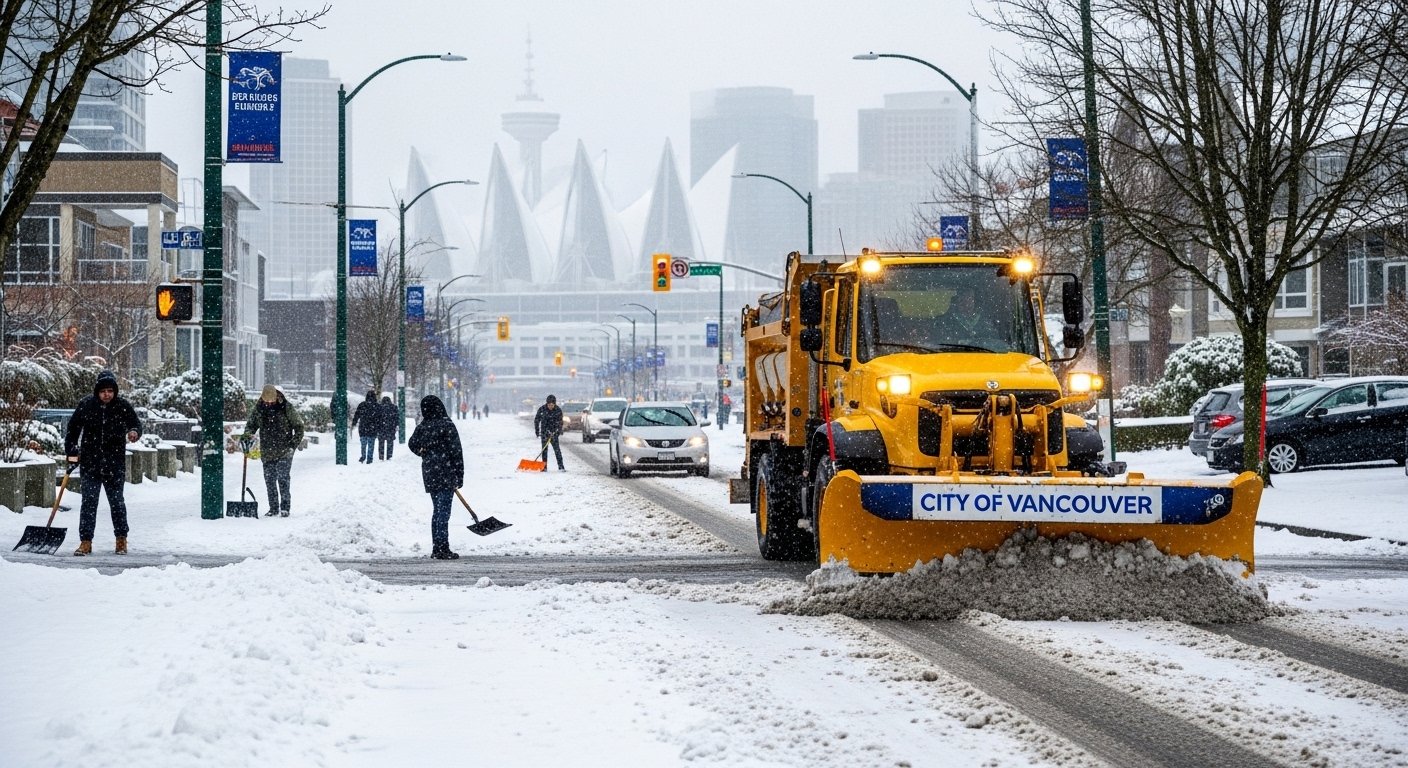
Snow plowing refers to pushing snow away from roads or parking areas with a plow blade attached to a truck or machine. It’s the most visible part of winter operations.
Snow removal is broader. It can include plowing, clearing sidewalks, moving snow piles, and spreading materials like salt or sand to prevent ice from forming.
In Vancouver that last step becomes especially important. Because temperatures frequently hover around the freezing point, snow may partially melt during the day and then refreeze at night. Without treatment, that frozen layer can become very slippery.
That’s why Snow Removal Vancouver often focuses as much on ice control as on clearing snow.
Vancouver Winters Are Mild — But Complicated
Compared with most Canadian cities, Vancouver winters are considered mild. The Pacific Ocean keeps temperatures from dropping too far below freezing.
But that same ocean also brings moisture, and that moisture changes how winter storms behave.
Rain can turn into snow for a few hours and then switch back again. One neighborhood might see snow while another gets rain at the same time. Conditions can shift quickly, sometimes within a single afternoon.
For road crews and residents, those constant changes make winter maintenance less predictable than people expect.
Clearing Sidewalks Is Part of the Responsibility
City crews focus mainly on roads and major routes, but winter safety in Vancouver also depends on residents.
Property owners are required to clear snow and ice from the sidewalks beside their homes or businesses. The city asks that sidewalks be cleared by 10 a.m. the day after snowfall.
If sidewalks remain uncleared, fines can be issued.
The reason is simple. Snow that sits on sidewalks overnight becomes compacted as people walk across it. When temperatures fall again, that compacted snow freezes and turns into a slippery surface.
Clearing it earlier prevents that layer from forming.
Hills Make Everything More Challenging
Another thing about Vancouver that sometimes gets overlooked is the terrain.
The city isn’t flat. Many neighborhoods include steep roads, especially near the North Shore mountains and surrounding communities like Burnaby. Even a thin layer of ice can make those slopes difficult for vehicles.
Drivers without winter tires sometimes struggle to maintain traction, and a single stalled car can slow traffic across an entire street.
When that happens, snow clearing crews trying to reach other areas may also be delayed.
Winter Here Is Mostly About Timing
People often assume winter problems come from large snowstorms. In Vancouver the bigger issue is timing.
A snowfall during the evening commute behaves very differently from one that arrives overnight. Snow that melts slightly during the day and freezes again after sunset can actually be more dangerous than a heavier snowfall that stays frozen.
Because conditions change quickly, response time matters more than snowfall totals.
Snow Removal Vancouver is less about clearing giant snowbanks and more about reacting quickly to surfaces that shift between snow, slush, and ice.
A Different Kind of Winter
Vancouver doesn’t experience the harsh winters found in many Canadian cities. But that doesn’t mean winter here is simple.
Moist coastal air, temperatures hovering near freezing, steep streets, and occasional snowfall create a winter environment that behaves differently from what many people expect.
A few centimeters of snow might not look dramatic at first glance. Yet once that snow mixes with traffic, moisture, and a drop in temperature overnight, the entire city can feel different the next morning.
And that’s usually when people remember that winter on the coast plays by its own rules.