Every summer, the headline appears in the news, heartbreaking and preventable: a family returns to their RV after a day of hiking to find tragedy. They thought they did everything right. They left the air conditioning running. They locked the door. They left plenty of water.
But while they were gone, the campground power grid flickered. A breaker tripped. The A/C unit shut down silently. Within thirty minutes, the aluminum and fiberglass box sitting in the direct sun turned into an oven.
For the modern RVer, this is the single greatest anxiety of the lifestyle. We rely heavily on technology to keep our animals safe, but we often misunderstand the fragility of the systems we trust. The “shore power” pedestal at a campground is not like the grid at your house; it is often outdated, overloaded, and prone to failure. Trusting it blindly isn’t just risky; it is a statistical gamble.
The “Shore Power” Illusion
When you plug your 30-amp or 50-amp cord into the campground pedestal, you assume a steady flow of electricity. But in a crowded RV park during a heatwave, every single rig is pulling maximum power to run their A/C. The voltage drops.
This “brownout” condition is dangerous. When voltage drops, amperage spikes to compensate. This surge can trip the breaker on the pedestal, or worse, fry the compressor in your A/C unit.
In either scenario, the result is the same: the cooling stops. The fan might still blow warm air (if it’s 12-volt), or everything might go dead.
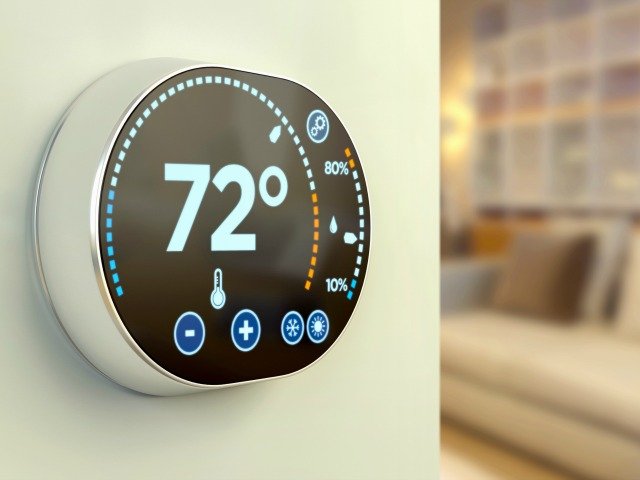
If you are relying on a standard residential WiFi thermostat (like a Nest) installed in your RV, you have a second point of failure. If the campground power goes out, the campground WiFi usually goes out too. Your “smart” thermostat has no way to send you an alert because the internet connection is dead. You are hiking five miles away, happily unaware that the temperature inside your rig is climbing past 100 degrees.
The Redundancy Requirement
The solution to this problem is not “better luck”; it is redundancy. Safe travel requires a monitoring system that is completely independent of the RV’s power and the campground’s internet.



This has given rise to a specific class of device: the Cellular Temperature Monitor.
Devices like the Marcell or the Waggle Pet Monitor operate on their own internal batteries and use their own 4G/5G cellular data signal. They do not care if the campground power fails. They do not care if the WiFi goes down.
If the temperature inside the RV rises above a set threshold (say, 80 degrees), the device sends a text message and an email to your phone immediately. It is a “dead man’s switch” for climate safety.
The “Run-Back” Plan
However, a monitor is only useful if you can do something about the alert. This brings us to the logistics of location.
When you leave your pet in the RV, you need a “Run-Back Plan.”
- Proximity: Are you close enough to return within 20 minutes if you get an alert?
- Access: Do you have a key hidden or a door code that a neighbor could use?
- Community: Have you introduced yourself to the camper next door?
Savvy RVers often leave a “In Case of Emergency” card in their windshield. It lists the number of pets inside, the owner’s cell phone number, and a permission statement: “If power fails and dogs are in distress, please break window.” It is a grim preparation, but a necessary one.
The “Auto-Start” Solution
For those with high-end rigs, there is an even better technological solution: The Automatic Generator Start (AGS).
An AGS system is wired into the RV’s thermostat and the generator. If the shore power fails and the temperature climbs, the RV’s computer detects the heat. It automatically cranks the onboard generator, disconnects from the dead shore power, and fires up the A/C unit.
It is a loud, fuel-burning solution, and your neighbors might hate the noise of a generator kicking on at noon, but it keeps the interior cool until you can return.
Conclusion
The freedom of the open road is the primary allure of RVing, but that freedom comes with a heavy burden of stewardship when animals are involved. We cannot explain to a dog why it is hot; we can only ensure that it isn’t.
The mistake many new travelers make is assuming that an RV is just a “house on wheels.” It isn’t. It is a vehicle, subject to the intense physics of solar gain and the vagaries of sketchy electrical grids.
True Pet-Friendly RV Camping isn’t just about finding a park with a dog run; it is about building a safety net of technology and protocol that ensures your best friend is safe, even when the power goes out. Don’t trust the plug; trust the monitor.