The global charcoal industry is experiencing rapid transformation driven by innovation, sustainability, and rising consumer demand — especially in niche markets like hookah and eco-friendly fuel products. Two standout solutions for entrepreneurs and manufacturers today are the hookah charcoal manufacturing plant and efficient methods that explain how to make charcoal from sawdust. Together, these approaches unlock high-value production lines with strong market demand, low waste, and scalable operational models.
In this article, we’ll explore what a hookah charcoal manufacturing plant involves, how sawdust can be turned into premium charcoal, the advantages of these systems, and why investing in modern equipment is a smart business move.
What Is a Hookah Charcoal Manufacturing Plant?
A hookah charcoal manufacturing is an industrial production system designed to produce high-quality charcoal specifically for use with hookahs (also known as shisha or water pipes). Unlike traditional fuel charcoal used for grilling or heating, hookah charcoal must meet stricter quality standards — including:
- Low ash content
- Consistent burning time
- Stable heat output
- Minimal odor or sparks
These characteristics make hookah charcoal ideal for recreational smoking environments where a smoother, longer-lasting burn is preferred.
Core Components of a Hookah Charcoal Manufacturing Plant
A full hookah charcoal manufacturing plant typically includes:
- Raw Material Preparation
Raw biomass such as hardwood, coconut shells, or sawdust is cleaned, crushed, and sized for processing. - Drying System
Moisture reduction is crucial. A drying unit ensures raw material reaches optimal dryness for efficient carbonization. - Carbonization Equipment
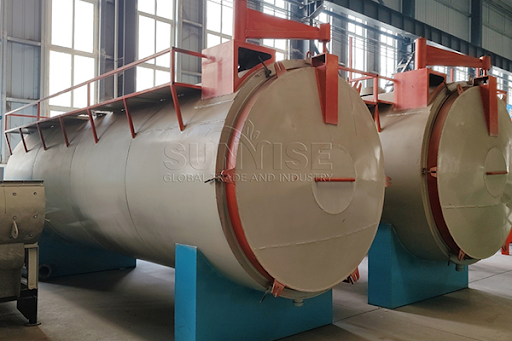
Using advanced carbonization furnaces or reactors, the biomass is heated in low-oxygen conditions to create charcoal. - Mixing and Briquetting
Charcoal powder is mixed with binders and shaped into cubes or tablets that meet hookah specifications. - Drying and Cooling
Finished charcoal pieces are dried and cooled to ensure stability during packaging and transport. - Screening and Packing
After quality checks, charcoal products are screened for size consistency and packaged for sale.
By integrating these steps into one seamless workflow, a hookah charcoal manufacturing plant delivers high throughput and consistent product quality — essential for competitive markets.
How to Make Charcoal from Sawdust: Sustainable and Profitable
Understanding how to make charcoal from sawdust opens the door to cost-effective charcoal production. Sawdust is a widely available by-product generated by woodworking, lumber mills, and furniture factories. Historically considered waste, sawdust is now one of the most sought-after raw materials for charcoal production due to its low cost and abundance.


Process: How to Make Charcoal from Sawdust
- Collection and Drying
Sawdust often contains high moisture content. The first step in learning how to make charcoal from sawdust is efficient drying. Industrial dryers or dehumidifiers reduce moisture, which is key to achieving good carbonization rates. - Carbonization
Dried sawdust is fed into a carbonization unit — such as a continuous or chamber carbonizer — where it is heated in oxygen-limited conditions. This process converts the sawdust into char while releasing gases that can be reused for thermal energy. - Forming and Shaping (Optional)
Depending on the end product, charcoal from sawdust can be left as loose char, compressed into briquettes, or formed into custom shapes for specific applications like hookah charcoal or industrial fuel. - Cooling and Finishing
Finished charcoal is cooled, screened, and prepared for packaging.
This approach is not only economical but also environmentally responsible. Turning sawdust, an otherwise wasted by-product, into valuable charcoal reduces waste and makes production more sustainable.
Advantages of Modern Charcoal Production Systems
High Efficiency and Automation
Both a how to make charcoal from sawdust and modern sawdust-to-charcoal production lines are designed for automation and operational efficiency. This reduces labor costs, minimizes errors, and supports large-scale production.
Automation also allows precise control over carbonization temperature and speed — resulting in uniform charcoal quality.
Energy Savings and Sustainability
Contemporary carbonization systems are engineered to reuse pyrolysis gases (released during charcoal making) as fuel. This reduces external energy requirements and enhances overall sustainability. When combined with sawdust utilization, the environmental footprint of charcoal manufacturing becomes significantly lower compared to legacy methods.
Consistent Product Quality
Whether producing hookah charcoal or general biomass charcoal from sawdust, modern equipment ensures consistent output. This is vital for market acceptance, especially in export markets where quality standards are strict.
Versatile Market Opportunities
Charcoal is used in many industries, including:
- Recreational hookah/shisha smoking
- Industrial fuel
- Barbecue and grilling
- Agricultural biochar
- Filtration and purification applications
By understanding how to make charcoal from sawdust and using a dedicated hookah charcoal manufacturing plant, manufacturers can diversify their product lines and capture multiple revenue streams.
Choosing the Right System for Your Business
When planning your charcoal production business, consider:
- Raw material availability: Sawdust vs hardwood vs coconut shells
- Target market: Hookah users, BBQ consumers, industrial buyers
- Production capacity: Small, medium, or large-scale
- Automation level and budget
A tailored hookah charcoal manufacturing plant delivers turnkey production capable of turning raw biomass into finished, packaged charcoal. Meanwhile, mastering how to make charcoal from sawdust enables cost-effective, eco-friendly fuel production with strong profitability.
Final Thoughts
The future of charcoal manufacturing lies in innovation and efficiency. As consumer demand grows for cleaner, higher-quality charcoal — particularly in specialized markets like hookah — systems like a hookah charcoal manufacturing plant and processes that explain how to make charcoal from sawdust become essential investments.
By combining sustainable raw materials with advanced production technology, manufacturers can create high-value products, reduce waste, and maximize profitability in a competitive global marketplace.