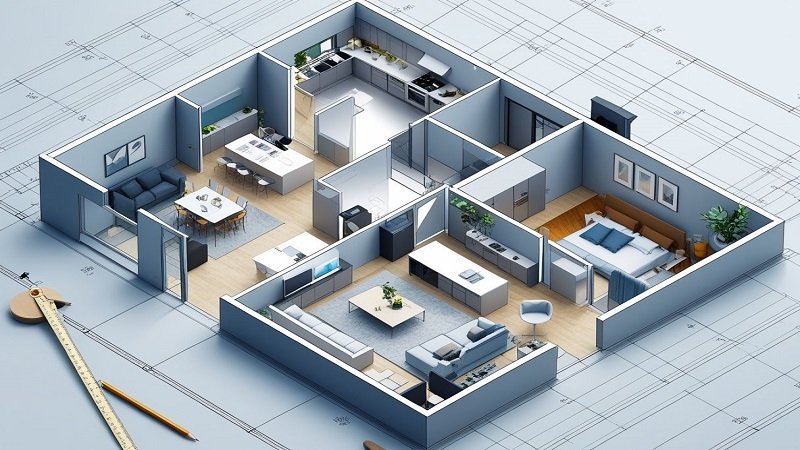
A well-designed floor plan serves as the foundation for any successful interior space, determining how people move, interact, and feel within their environment. While standard layouts may work for some properties, they often fail to address the unique needs and preferences of individual homeowners or businesses. Custom floor plans offer a strategic approach to space planning that maximizes functionality, improves flow, and creates environments tailored to specific lifestyle requirements.
The difference between a generic layout and a thoughtfully designed custom plan can be substantial. Custom floor plans account for factors like natural light patterns, traffic flow, furniture placement, and the specific activities that will occur in each area. This level of detail transforms ordinary rooms into purposeful spaces that work with inhabitants rather than against them.
Recent advances in design technology have made custom floor planning more accessible and practical for a wider range of projects. From residential remodels to commercial developments, the ability to visualize and modify layouts before construction begins helps property owners make informed decisions about their spaces.
Leveraging Custom Floorplans for Transformative Spaces
Custom floor plans reshape how people interact with their living and working environments by addressing specific functional requirements and lifestyle preferences. Detailed floor plans provide the framework for creating spaces that adapt to changing needs while maintaining efficiency and aesthetic appeal.
Why Custom Floorplans Matter in Modern Design
Standard floor plans often force occupants to adapt their lifestyles to rigid spatial constraints. Custom floor plans eliminate this compromise by establishing room layouts that align with actual usage patterns and daily routines.
Modern households require flexibility that generic designs cannot provide. A customizable floor plan accommodates diverse needs such as remote work areas, multi-generational living arrangements, or specialized hobby spaces. These designs account for how occupants move through spaces, where natural light enters, and how different zones connect or separate based on function.



Professional floor plans also address resale value concerns. While personalized, well-executed custom designs maintain broad appeal through thoughtful spatial organization and logical flow. The key lies in balancing individual preferences with fundamental design principles that support various lifestyle configurations over time.
How Customizable Floor Plans Empower Space Planning
Customizable floor plans give designers and homeowners precise control over spatial allocation. This approach starts with analyzing actual space requirements rather than accepting predetermined room dimensions.
The customization process includes:
- Spatial allocation based on priority activities and time spent in each area
- Traffic flow optimization to minimize wasted corridor space
- Flexible zones that serve multiple purposes through adaptable design elements
- Storage integration built into the floor plan rather than added as an afterthought
This methodology transforms inefficient layouts into purposeful environments. A home office might incorporate soundproofing elements within the floor plan structure, or a kitchen might extend into adjacent spaces for seamless entertaining. Each decision stems from specific functional goals rather than convention.
The Role of Room Layouts in Optimizing Functionality
Room layouts determine how effectively spaces serve their intended purposes. A bedroom positioned near street-facing walls experiences more noise disruption than one placed toward a property’s interior. These placement decisions directly impact daily comfort and usability.
Detailed floor plans map relationships between spaces to enhance functionality. Bathrooms positioned between bedrooms reduce plumbing costs while improving convenience. Kitchen layouts that consider the work triangle principle between sink, stove, and refrigerator streamline meal preparation.
Room layouts also influence energy efficiency and maintenance requirements. South-facing rooms capture more natural light and warmth, reducing heating costs. Clustering wet rooms (kitchens, bathrooms, laundry) simplifies plumbing infrastructure and future repairs. These technical considerations embedded within professional floor plans create lasting value beyond initial aesthetics.
Innovative Tools and Trends in Creating Custom Floorplans
Modern floor plan creation has evolved beyond manual drafting through the integration of artificial intelligence and advanced digital platforms. These technologies enable faster design iterations, personalized spatial layouts, and seamless visualization of architectural concepts.
Harnessing AI-Powered Design for Personalized Spaces
AI-powered design transforms how professionals and homeowners approach spatial planning by analyzing user requirements and generating optimized layouts automatically. Machine learning algorithms process inputs such as room dimensions, functional needs, and lifestyle preferences to produce tailored floor plans that maximize space efficiency.
These systems can interpret photographs, laser scans, or basic sketches to identify structural elements like walls, doors, and windows. The technology then converts this information into precise digital layouts within minutes rather than hours. This rapid processing allows designers to explore multiple configuration options and present clients with diverse solutions that align with specific requirements.
Advanced algorithms also optimize natural light distribution, traffic flow patterns, and functional zones based on occupancy data and usage patterns. The result is personalized spaces that adapt to individual needs while maintaining structural integrity and building code compliance.
Utilizing Floor Plan Generators and Online Editors
A floor plan generator provides accessible tools for creating professional-quality layouts without extensive technical training. These platforms offer drag-and-drop interfaces, pre-built templates, and customizable elements that simplify the design process for both professionals and DIY users.
Key features include:
- Real-time 2D and 3D visualization
- Extensive libraries of furniture and fixtures
- Automatic dimension calculations
- Export options for construction documents
Online editors enable collaborative work environments where architects, contractors, and clients can review and modify designs simultaneously. Users can adjust wall placements, experiment with room configurations, and visualize different furniture arrangements before finalizing plans. Many platforms integrate measurement tools that ensure accuracy and help estimate material requirements for construction or renovation projects.
Integrating Architectural Styles and Interior Design
Custom floor plans gain depth when architectural styles inform spatial arrangements and aesthetic choices. Different styles dictate specific layout characteristics, from open-concept modern designs to compartmentalized traditional arrangements.
Contemporary architectural styles often emphasize fluid transitions between indoor and outdoor spaces, requiring floor plans that accommodate large openings and flexible room divisions. Traditional styles may call for defined rooms with dedicated purposes and formal circulation patterns. The floor plan serves as the foundation for expressing these stylistic preferences through spatial organization.
Interior design considerations merge with architectural planning during the floor plan stage to ensure cohesive results. Designers account for furniture placement, lighting requirements, and decorative elements while establishing room dimensions and doorway locations. This integrated approach prevents conflicts between structural limitations and desired interior aesthetics.
Adopting AI-Powered Interior Design for Space Transformation
AI interior design tools analyze existing floor plans and suggest improvements that enhance functionality and visual appeal. These systems evaluate room proportions, furniture arrangements, and color schemes to recommend modifications that align with current design trends and user preferences.
The technology can generate multiple design variations for a single space, allowing users to compare options and select solutions that best fit their vision. AI-powered interior design platforms also consider practical factors such as budget constraints, maintenance requirements, and material availability when proposing transformations.
Machine learning models trained on thousands of successful designs can identify spatial inefficiencies and propose remedies. They suggest optimal furniture sizes, recommend traffic flow improvements, and highlight opportunities to increase storage capacity without compromising aesthetics.