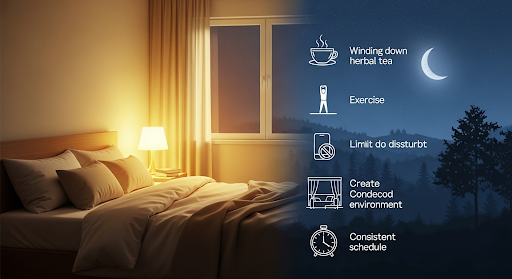
Struggling to fall asleep or waking up tired can affect every part of your life. Poor sleep doesn’t just make you feel sluggish, it impacts your focus, mood, and long-term health. Many people turn to quick fixes like medication, even searching terms, but these solutions often don’t address the root problem.
- Common Causes of Poor Sleep
- Strategies to Improve Sleep Quality
- Optimize Your Sleep Schedule
- Optimize Your Sleep Environment
- Managing Light Exposure
- Create a Restful Bedroom Environment
- Establish a Pre-Sleep Routine
- Adjust Daily Habits and Diet
- When to Seek Professional Help?
- FAQs
- 1. What is the fastest way to improve sleep quality?
- 2. Are sleeping pills a long-term solution?
- 3. How does diet affect sleep?
- 4. Why do I feel tired even after sleeping 8 hours?
- Better Sleep Starts with Better Habits
The real solution lies in understanding how sleep works and building habits that support it naturally. By improving your sleep hygiene, environment, and daily routine, you can significantly improve sleep quality without relying heavily on medication.
This guide explores practical, evidence-based strategies that are essential for quality sleep and sustainable well-being.
Common Causes of Poor Sleep
Understanding what disrupts your sleep is the first step toward improvement. From daily habits to deeper health issues, multiple factors can interfere with rest, making it essential to identify and address the root causes effectively.
Lifestyle Factors
Modern lifestyles are one of the biggest contributors to poor sleep. Irregular schedules, late-night scrolling, and inconsistent bedtime routines disrupt your internal clock. When your body doesn’t know when to sleep, falling asleep becomes difficult.
Caffeine consumption is another major factor. Drinking coffee or energy drinks late in the day keeps your nervous system active, delaying sleep onset. Even small amounts can affect sensitive individuals.
Lack of physical activity also plays a role. When your body isn’t physically tired, it becomes harder to enter deep, restorative sleep stages. This reduces overall sleep efficiency.
Overworking or staying mentally stimulated late into the night keeps your brain alert. This prevents your body from transitioning into a relaxed, sleep-ready state.



Environmental Factors
Your sleep environment has a direct impact on how well you rest. A room that is too bright, noisy, or warm can interfere with your ability to fall and stay asleep.
Temperature is particularly important. A cooler room helps regulate your body temperature, signaling that it’s time to sleep. Warm or stuffy rooms often lead to restless nights.
Light exposure, especially from artificial sources, can suppress melatonin production. Even small light sources like phone notifications can disturb sleep cycles.
An uncomfortable mattress or poor-quality pillows can cause physical discomfort. This leads to frequent waking and reduced deep sleep stages.
Psychological Factors
Stress and anxiety are among the most common reasons people struggle with sleep. Racing thoughts make it difficult to relax, even when you feel physically tired. Overthinking about work, finances, or personal issues keeps your brain active. This mental stimulation delays the transition into sleep.
Sleep-related anxiety can also develop over time. Worrying about not sleeping creates a cycle where the fear itself prevents rest. Emotional imbalances, including depression, can disrupt sleep patterns. These conditions often alter both sleep duration and quality.
Medical and Biological Factors
Certain medical conditions can significantly impact sleep. Disorders like insomnia, sleep apnea, and restless leg syndrome interfere with normal sleep cycles. Hormonal changes, especially in women, can disrupt circadian rhythms. These fluctuations often lead to irregular sleep patterns.
Medications can also affect sleep quality. While some people rely on solutions like buy zopiclone 7.5 mg online UK, long-term use may not address underlying issues. Chronic health conditions such as pain or respiratory issues can make it difficult to stay asleep. These require proper diagnosis and management.
Strategies to Improve Sleep Quality
Improving sleep quality requires consistent habits and intentional changes. By combining lifestyle adjustments, environmental improvements, and mindful routines, you can create a strong foundation for better, deeper, and more restorative sleep every night.
- Maintain a consistent sleep schedule
- Create a cool, dark, and quiet bedroom
- Reduce screen exposure before bed
- Follow a calming pre-sleep routine
- Adjust diet, caffeine, and exercise habits
Optimize Your Sleep Schedule
Consistency is one of the most important habits to improve sleep quality. Going to bed and waking up at the same time daily trains your body’s internal clock. This makes falling asleep easier over time.
Even on weekends, maintaining a similar schedule prevents disruption. Sudden changes confuse your circadian rhythm and reduce sleep efficiency.
Aim for 7–9 hours of sleep each night. Sleeping too little or too much can negatively affect how rested you feel. If you need to adjust your schedule, do it gradually. Small changes of one hour at a time are more effective than sudden shifts.
Optimize Your Sleep Environment
Your bedroom should be designed specifically for rest. A quiet, dark, and cool environment signals your brain that it’s time to sleep. Use blackout curtains or sleep masks to block light. Even minimal light exposure can interfere with melatonin production.
Noise control is equally important. White noise machines or earplugs can help create a consistent sound environment. Investing in a comfortable mattress and pillows supports proper posture. This reduces discomfort and improves deep sleep.
Managing Light Exposure
Light plays a critical role in regulating your circadian rhythm. Exposure to natural light during the day helps your body stay alert and balanced. Morning sunlight is especially beneficial. It resets your internal clock and prepares your body for restful sleep at night.
At night, reducing blue light is essential for quality sleep. Screens from phones, tablets, and TVs suppress melatonin production. Try limiting screen use at least one hour before bed. This simple habit can significantly improve sleep onset and depth.
Create a Restful Bedroom Environment
Your bedroom should be a place of relaxation, not activity. Avoid using your bed for work, eating, or entertainment.This helps your brain associate the bed only with sleep. Over time, this strengthens your natural sleep response.
Keep your room clean and clutter-free. A calm environment reduces stress and promotes relaxation. Simple changes like dim lighting and soft bedding can make a big difference. These small adjustments are essential for quality sleep.
Establish a Pre-Sleep Routine
A consistent wind-down routine helps signal your body that it’s time to sleep. Spend 30–60 minutes doing calming activities before bed. Avoid electronics during this time. Blue light from screens interferes with your body’s natural sleep signals.
Instead, try relaxing activities such as reading, meditation, or listening to soft music. These help slow down your mind. If your thoughts are racing, write them down. Journaling or creating a to-do list can clear mental clutter.
Adjust Daily Habits and Diet
What you do during the day directly affects how you sleep at night. Limiting caffeine intake in the afternoon is crucial. Avoid heavy meals close to bedtime. Digestion can interfere with your ability to fall asleep comfortably.
Regular exercise improves sleep quality, but timing matters. Try to avoid intense workouts just before bedtime. Consider exploring alternatives to sleeping pills for insomnia, such as lifestyle changes and behavioral techniques. These approaches offer long-term benefits without dependency risks.
When to Seek Professional Help?
If sleep problems persist despite lifestyle changes, it may be time to consult a professional. Chronic insomnia can indicate deeper issues that require attention. Symptoms like loud snoring, gasping during sleep, or extreme daytime fatigue may point to sleep apnea. This condition requires medical evaluation.
If you frequently rely on medication or feel dependent on it, seeking guidance is important. Behavioral therapies like CBT-I are highly effective alternatives. A healthcare provider can help identify underlying causes and recommend personalized treatment plans for better sleep.
FAQs
1. What is the fastest way to improve sleep quality?
The quickest improvement comes from maintaining a consistent sleep schedule and reducing screen time before bed. These changes help regulate your circadian rhythm effectively.
2. Are sleeping pills a long-term solution?
Sleeping pills can provide short-term relief but are not ideal for long-term use. Exploring alternatives to sleeping pills for insomnia is a safer and more sustainable approach.
3. How does diet affect sleep?
Caffeine, alcohol, and heavy meals can disrupt sleep cycles. A balanced diet supports better sleep and overall health.
4. Why do I feel tired even after sleeping 8 hours?
Poor sleep quality, frequent awakenings, or underlying conditions may be the cause. Deep sleep stages are essential for feeling refreshed.
Better Sleep Starts with Better Habits
Improving sleep isn’t about quick fixes, it’s about building consistent, healthy routines. While some may consider options like buying zopiclone 7.5 mg online UK, long-term results come from sustainable lifestyle changes.
By optimizing your schedule, environment, and daily habits, you can naturally improve sleep quality. These strategies are essential for quality sleep and overall well-being.
Start with small changes and stay consistent. Over time, these habits will transform your nights and your days into a healthier, more energized experience.