Businesses use custom packaging to protect their products while establishing their brand identity and enhancing their customer engagement. The custom box functions as a packaging solution that provides more than just its basic purpose.
The box protects products during shipping as it acts as a brand identity that influences consumer buying decisions. Companies can identify optimal materials and design better packages and build better brand identities by understanding custom box usage throughout their entire life cycle.
This article provides a comprehensive insight into the custom box manufacturing process that begins with raw materials and culminates in the delivery of custom boxes to customers.
1. Raw Material Selection
The raw materials serve as the starting point for the custom box life cycle. Most custom packaging boxes are composed of:
- Corrugated cardboard
- Paperboard
- Kraft paper
- Recycled paper
The production process of raw materials for manufacturing requires two materials, which are wood pulp and recycled paper waste. The majority of packaging companies today focus on creating sustainable packaging solutions, which involve using recycled materials.
The process has minimal negative impacts on the environment while encouraging sustainable business practices. The quality of the custom box is determined by the quality of the raw materials.
2. Paper Production and Corrugation
The packaging manufacturing facility receives paper sheets after the raw materials undergo processing. The paper transforms into corrugated boards, which packaging companies use to create shipping boxes.
Corrugated board consists of three different components, which include:



- Outer liner
- Fluted (wavy) middle layer
- Inner liner
The fluted layer provides two functions that protect all items that it supports. All products that need protection during shipment must be shielded from three types of threats, which include pressure, shocks, and damage.
3. Packaging Design and Structural Planning
Before production begins, the box design is finalized. This stage includes:
- Determining box dimensions
- Selecting material thickness
- Choosing box style (mailer box, folding carton, shipping box, etc.)
- Planning printing layout
Packaging design is important for both protection and branding. The box needs to match the product dimensions exactly because any incorrect fitting will result in shipping errors. The design needs to show all elements of the business brand to reflect its identity.
Packaging design creates professional results that enhance product display and change how customers view products.
4. Printing and Branding
Once the structure is approved, the design is printed on the cardboard sheets. Common printing methods include:
- Offset printing
- Digital printing
- Flexographic printing
During this stage, brand elements are added, such as:
- Company logo
- Brand colors
- Product details
- Handling instructions
Businesses use custom printed boxes to establish their professional image. The unboxing experience of eCommerce packaging benefits from high-quality printing, which enhances the overall experience.
The combination of clear printing and sharp printing leads to better brand recognition while establishing customer trust.
5. Die-Cutting and Shaping
After printing, the large sheets move to the die-cutting stage. Die-cutting machines cut the cardboard into the required box shape. They also create:
- Fold lines
- Tabs
- Slots
- Openings
Accuracy is very important in this stage. Incorrect cutting can lead to poor fitting or a weak structure. This step transforms flat printed sheets into usable packaging components.
6. Folding and Gluing
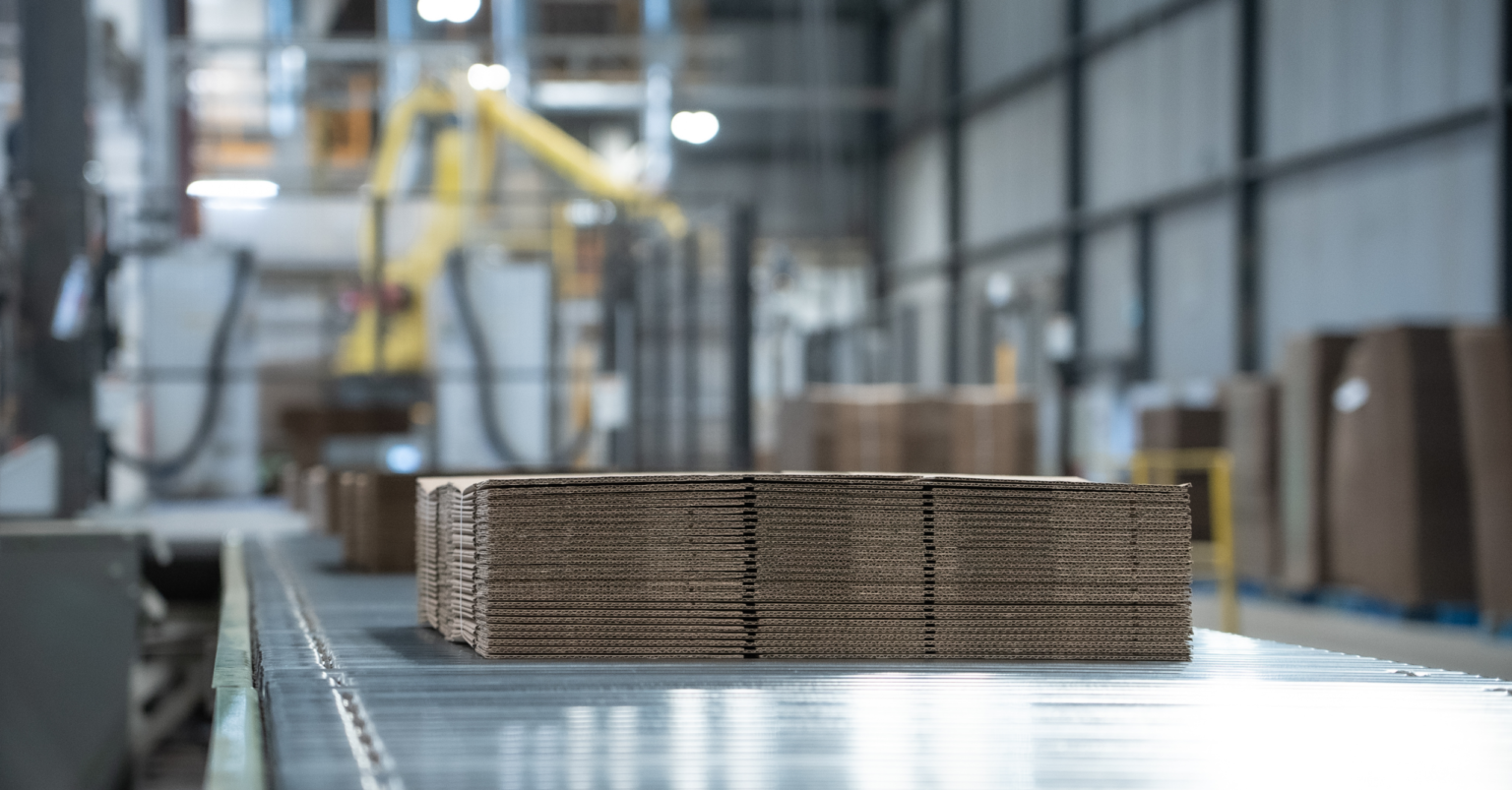
In this stage, the cut sheets are folded along pre-made crease lines. Adhesive is applied where necessary to hold the box structure together. Some boxes are delivered flat to save storage space, especially for bulk orders.
Others are partially assembled depending on the client’s needs. Quality control checks are performed to ensure:
- Correct dimensions
- Strong bonding
- Clean finishing
- Proper printing alignment
Only approved boxes move to the final stage.
7. Distribution to Businesses
The businesses receive their custom boxes after the manufacturing process ends and their packaging process begins. These businesses include the following types of companies:
- Online stores
- Retail brands
- Food and beverage companies
- Cosmetic brands
- Subscription services
The boxes remain in storage until the time arrives when products need to be packed.
8. Product Packaging and Shipping
The custom box reaches its primary function during this particular phase of its existence. The process begins when products enter the box, which staff members seal before they send it to customers. The box must protect the product from:
- Physical damage
- Moisture
- Dust
- Pressure during transport
For eCommerce businesses, packaging is often the first physical interaction customers have with the brand. A custom packaging box, which designers create through their research process, leads to better customer experiences, which result in people buying from the business again.
9. Customer Use and Recycling
The customer who receives the product can use the box for three purposes:
- Reused for storage
- Used for returns
- Recycled
Most custom boxes are recyclable, especially those made from corrugated cardboard and kraft paper. The majority of businesses today choose sustainable packaging options because they want to decrease waste and achieve their environmental protection objectives.
Recycling enables the packaging system to maintain its operational cycle while decreasing the demand for fresh natural resources.
Conclusion
The custom box lifecycle begins with raw material extraction and continues through corrugation, design work, printing, cutting, assembly, distribution, and final recycling. The process requires various stages to establish three essential factors, which include product safety, brand visibility, customer satisfaction, and environmental responsibility.
Custom packaging exists as an extra element beyond its function as a packaging solution. The packaging solution serves as a business tool that protects products while promoting the brand and maintaining environmental sustainability.
The custom box manufacturing process enables businesses to improve their operational decision-making, which results in better customer service delivery.