Landscaping challenges can turn even the most beautiful property into a source of frustration. Sloped yards, soil erosion, drainage issues, and unusable outdoor space are common problems homeowners face — especially in areas with uneven terrain or heavy rainfall, points out TrueDoor Property Management professionals. Fortunately, retaining walls offer practical solutions that go beyond aesthetics.
- Managing Sloped or Uneven Terrain
- Preventing Soil Erosion
- Improving Drainage and Water Control
- Creating More Usable Outdoor Space
- Supporting Landscaping and Hardscaping Features
- Protecting Foundations and Structures
- Enhancing Aesthetic Appeal While Solving Problems
- Reducing Long-Term Maintenance Challenges
- Addressing Property Line and Boundary Issues
- Why Proper Design and Construction Matter
- When a Retaining Wall Is the Right Solution
- Final Thoughts
Retaining walls are not just decorative features. When designed and built correctly, they solve structural problems, protect your property, and make outdoor spaces more functional. This article explores the most common landscaping problems retaining walls help solve and why they’re such a valuable addition to many residential properties.
Managing Sloped or Uneven Terrain
One of the most common reasons homeowners install retaining walls is to manage sloped land. A steep or uneven yard can limit how you use your outdoor space and make maintenance difficult.
Retaining walls help by:
- Creating level areas for patios, gardens, or play spaces
- Preventing soil from shifting downhill
- Making steep properties safer and more accessible
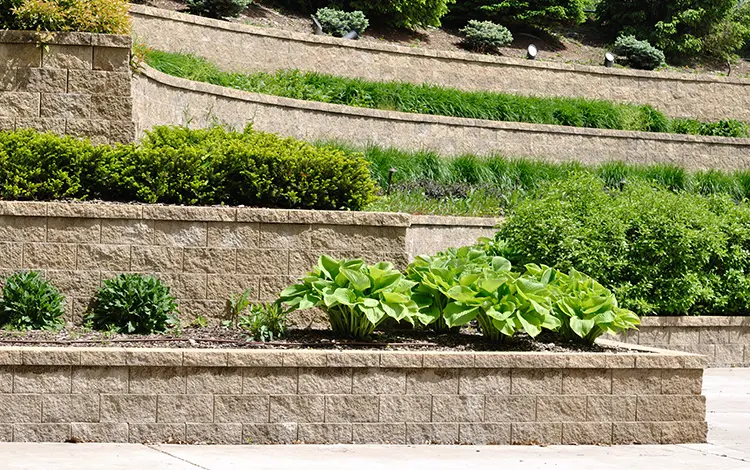
By transforming slopes into terraced levels, retaining walls turn awkward landscapes into usable outdoor environments.
Preventing Soil Erosion
Soil erosion is a serious issue, particularly on sloped properties or areas exposed to heavy rain. Over time, erosion can strip away valuable topsoil, damage plant roots, and even threaten nearby structures.
Retaining walls act as a barrier that:
- Holds soil in place during rainfall
- Reduces runoff velocity
- Protects landscaping investments
Without erosion control, homeowners may find themselves repeatedly replacing soil, plants, and mulch — a costly and ongoing problem.


Improving Drainage and Water Control
Poor drainage is another common landscaping issue that retaining walls can help address. Water pooling near foundations, patios, or walkways can cause long-term damage if left unchecked.
Well-designed retaining walls often include drainage systems that:
- Redirect water away from structures
- Reduce hydrostatic pressure behind the wall
- Prevent soil saturation and instability
Proper drainage not only protects your landscaping but also helps preserve the integrity of your home’s foundation.
Creating More Usable Outdoor Space
Many homeowners struggle with yards that look spacious but offer limited functionality. Slopes, elevation changes, or awkward layouts can prevent effective use of outdoor areas.
Retaining walls allow you to:
- Expand flat areas for entertaining or relaxation
- Add garden beds at comfortable working heights
- Define distinct outdoor “rooms”
By maximizing usable space, retaining walls increase the practical value of your property — not just its visual appeal.
Supporting Landscaping and Hardscaping Features
Retaining walls play a critical role in supporting other landscaping elements. Without proper support, features like patios, driveways, or walkways may shift or crack over time.
Walls provide stability for:
- Raised garden beds
- Outdoor staircases
- Driveway edges
- Hardscape installations
This structural support helps prevent costly repairs and ensures your landscaping holds up over the years.
Protecting Foundations and Structures
When soil shifts or erodes near a home, it can compromise the foundation. This is especially concerning for properties built on slopes or near hillsides.
Retaining walls help by:
- Stabilizing soil around foundations
- Reducing pressure caused by water buildup
- Preventing gradual land movement
Protecting your home’s structural integrity is one of the most important — and often overlooked — benefits of retaining walls.
Enhancing Aesthetic Appeal While Solving Problems
While retaining walls are highly functional, they also offer design flexibility. Modern retaining walls come in a variety of materials, colors, and styles that can complement your landscape.
Design benefits include:
- Adding visual structure to the yard
- Highlighting elevation changes creatively
- Integrating seating or planters into the design
When thoughtfully designed, retaining walls blend seamlessly into the landscape while solving underlying issues.
Reducing Long-Term Maintenance Challenges
Landscaping problems often lead to ongoing maintenance headaches. Slopes can be difficult to mow, erosion requires constant repair, and water issues can damage plants.
Retaining walls simplify maintenance by:
- Reducing soil movement
- Creating manageable planting areas
- Improving water flow control
This results in a cleaner, more stable landscape that’s easier to maintain year after year.
Addressing Property Line and Boundary Issues
In some cases, retaining walls help clearly define property boundaries or manage elevation differences between neighboring lots. This can prevent disputes and protect landscaping investments on both sides.
Walls are often used to:
- Support shared boundaries on sloped properties
- Prevent runoff onto neighboring land
- Clearly define landscape edges
When installed correctly, retaining walls promote harmony rather than conflict between adjacent properties.
Why Proper Design and Construction Matter
Not all retaining walls are created equal. Poorly designed walls can fail, lean, or collapse over time — especially if drainage and soil conditions aren’t properly addressed.
That’s why working with experienced retaining wall builders is essential. Professionals understand soil mechanics, drainage requirements, and load-bearing considerations that ensure walls remain safe and durable.
A well-built retaining wall should:
- Account for soil type and slope
- Include proper drainage systems
- Use materials suited to the environment
- Meet local building codes and regulations
Cutting corners in design or construction often leads to costly repairs later.
When a Retaining Wall Is the Right Solution
Not every landscaping problem requires a retaining wall, but when elevation, erosion, or drainage issues are present, it’s often the most effective option.
A retaining wall may be right for your property if:
- Your yard has steep slopes or uneven terrain
- Soil erosion is damaging landscaping
- Water runoff threatens structures
- Usable outdoor space is limited
Consulting with a professional can help determine whether a retaining wall is the best solution for your specific needs.
Final Thoughts
Retaining walls are powerful problem-solvers in residential landscaping. From stabilizing slopes and controlling erosion to improving drainage and expanding usable space, they address some of the most common challenges homeowners face.
When designed thoughtfully and built correctly, retaining walls do more than fix problems — they enhance functionality, protect property value, and create outdoor spaces that are both beautiful and practical. By understanding the issues they solve, homeowners can make confident, informed decisions that lead to long-lasting landscaping success.